
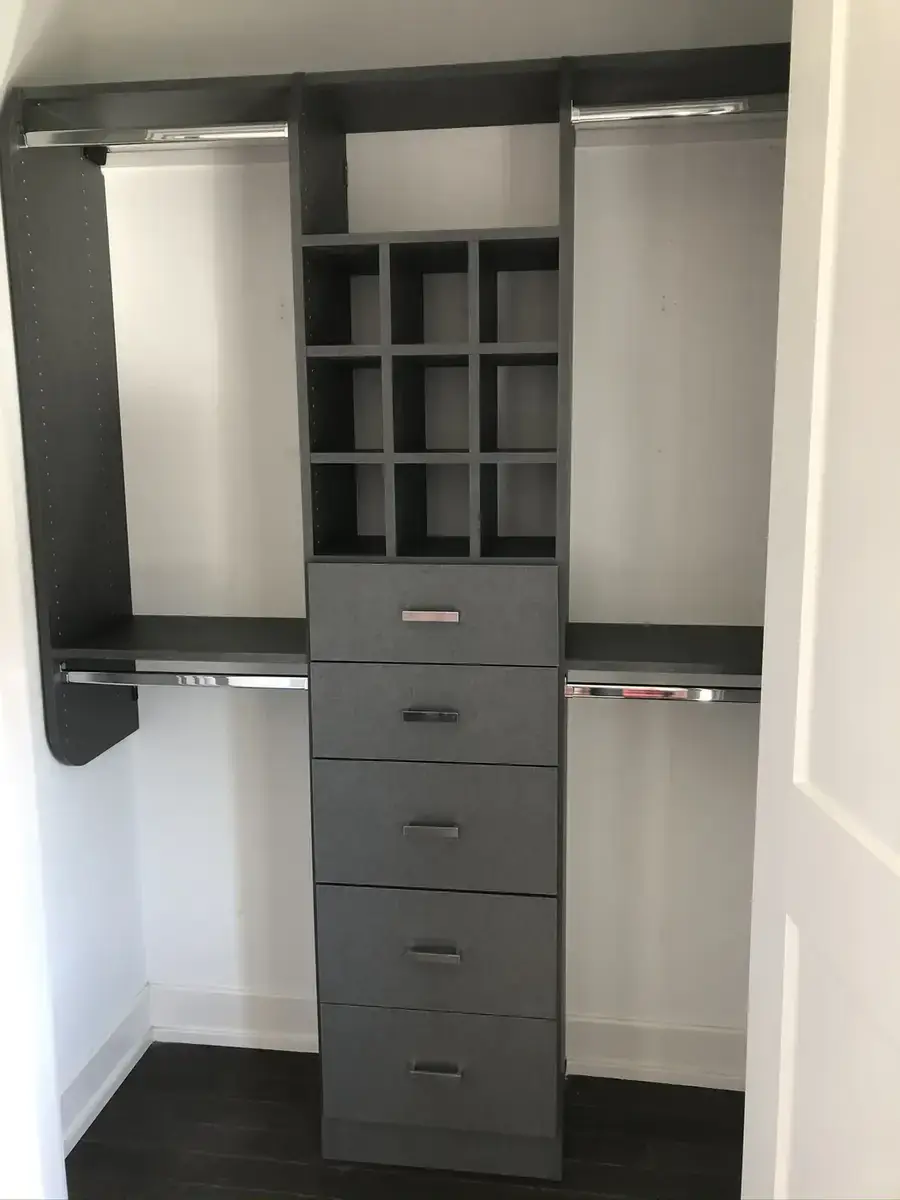
Buying a custom closet system is not like buying furniture. Furniture arrives and you arrange it to fit your space. A custom closet is designed around your specific room, your specific wardrobe, and your specific habits — and then built to fit perfectly. That means the questions you bring to a consultation shape the result in a direct way. Ask good questions, get a better design. Arrive without having thought it through, and you'll get something functional but not necessarily optimal.
This guide covers the questions worth asking before and during your consultation, organized by theme.
Questions About Your Life and Daily Habits
How do I actually use this closet every morning?
Walk through your real routine mentally. Do you dress in the closet or carry items to another room? Do you access shoes daily or seasonally? Does the closet need to function in low light before the rest of the house is awake? The answers to these questions shape where hanging rods go, whether lighting matters, and how accessible each storage zone needs to be.
What do I own, and how much of it?
Designers can only design around what you actually have, not what you think you have. Before your consultation, count your hanging items — broken into short (shirts, jackets) and long (dresses, suits) — along with your shoes, folded garments, and accessories. Most people discover they own significantly more than they estimated. That discovery is important before the design is drawn, not after.
What frustrates me most about the current setup?
Your biggest daily frustrations are your most useful design brief. If you spend five minutes every morning digging for something on the floor, shoe storage is the priority. If folded items avalanche every time you pull something out, drawer storage solves it. Be specific about what fails you. That specificity is where the design earns its value.
Who else uses this space, and how do we each use it differently?
Shared closets need clearly defined zones. Before the consultation, talk with your partner about how you want to divide the space — equal halves, or allocations based on wardrobe size and type? Are there height differences that affect rod and shelf placement? Does one person need significantly more hanging, while the other primarily folds? These questions, answered in advance, prevent the design from defaulting to a generic split that works equally poorly for both of you.
Questions About the Space Itself
What are the actual dimensions of the closet?
Measure width, depth, and ceiling height before you arrive. Note anything that complicates the space: doors that swing inward, windows that block wall sections, outlets, light switches, or HVAC registers. Your designer will take precise measurements at the consultation, but arriving with your own numbers shows you've thought about the project and accelerates the conversation.
Are there constraints I haven't noticed?
Ask your designer to identify anything in the space that limits what's possible — or creates an opportunity. Some closets have soffits or slopped ceilings that require custom solutions. Others have underused corners or awkward nooks that a good designer can turn into bonus storage. Knowing the constraints early prevents surprises late.
What finishes will complement the room it's connected to?
A closet that clashes with the bedroom it opens into looks wrong even when it's well-organized. Bring photos of your bedroom — walls, floors, and any adjacent furniture — to the consultation. If possible, visit a showroom where you can see finish options in person and under real lighting conditions. Colors look significantly different on a screen than they do in an installed space.
Questions About the Investment
What is my realistic budget, and what does it include?
Be honest with yourself and with your designer about your budget before the design conversation begins. This isn't about capping the outcome — it's about directing the design toward real options. Ask clearly what the quoted price includes: design fees (if any), materials, delivery, installation, and removal of your existing system. A quote that omits installation is not a complete quote.
Are there ways to phase the project if I want to spread the cost?
Yes — and this is worth discussing early if budget is a consideration. A good designer can create a complete plan and build the first phase now, leaving the second and third phases for later. If the plan is designed with expansion in mind from the start, later additions integrate cleanly rather than looking like afterthoughts.
Questions About the Process and Warranty
Who installs the system, and how long does it take?
Ask whether the company uses its own installation team or subcontracts. There's a meaningful quality difference between installers who are accountable to the company and those who are not. Most well-designed custom closet systems install in a single day for a standard room. Projects with complex layouts or multiple spaces may take longer.
What happens if something isn't right after installation?
This question separates companies that stand behind their work from those that don't. A company with a genuine warranty gives you a clear, no-hesitation answer: they come back and fix it. At Comfort Concepts QCA, that is exactly what we do — if something is not right, we come back and make it right, full stop.
One More Thing Worth Asking
After you've worked through all of the above, there's one more question worth sitting with: What does success actually look like? Not just "organized" in a general sense, but specifically — what would make your life meaningfully better every morning? When you can describe that clearly, a good designer can build toward it.
If you're ready to have this conversation, schedule a free consultation. And if you want to go deeper on the buying process before you do, our custom closet buying guide covers the full landscape.