
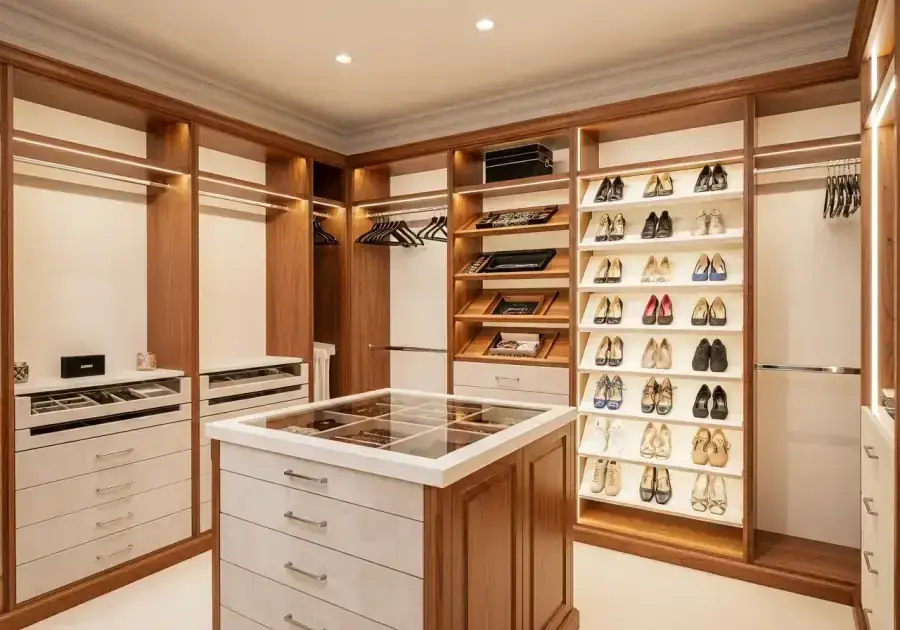
The reach-in closet is the most underestimated storage opportunity in most homes. Most reach-ins have a single shelf and one hanging rod — a configuration that uses roughly 25–35% of the closet's actual storage capacity. The other 65–75% is wasted vertical space.
Here are the ideas that actually work — not just the ones that photograph well for Pinterest.
Double-Hang First
If you have a reach-in closet that currently has one hanging rod, adding a second rod below it is the single highest-impact change you can make. Double-hang sections hold twice the hanging garments in the same width of closet. This works for shirts, jackets, and folded pants hung on pants hangers — anything that does not need the full height of the closet.
The only items that should stay on a single rod are long dresses, full-length coats, and suits. Everything else can double-hang.
Add a Drawer Tower
The most common reason closets feel disorganized is the absence of drawer storage. Without drawers, folded clothing goes onto shelves where it inevitably topples, or into a bedroom dresser that takes up floor space the room needs.
A full-height drawer tower — 12 to 18 inches wide, with 6 to 8 drawers — built into one side of a reach-in closet changes how the entire room functions. T-shirts, workout clothes, underwear, and socks all have a dedicated, contained home. The bedroom dresser can go.
Think Vertically
Standard reach-in closets have 8-foot ceilings but most builders install shelving only at the 6-foot mark. The space above the top shelf — often 18 to 24 inches — is wasted. Add a higher shelf for seasonal items, bulky blankets, or rarely accessed storage. A step stool makes it accessible.
Dedicated Shoe Storage
Shoes on the floor of a reach-in closet create the chaos that makes the whole closet feel unmanageable. Angled shoe shelves installed at a comfortable height — typically in the lower half of the closet — hold shoes visibly and accessibly. For a standard reach-in, you can fit 12 to 18 pairs on angled shelves in the space that usually holds 4 to 6 pairs piled on the floor.
The Kids' Closet Case
Kids' closets are the reach-in most often neglected — and they benefit most from good design. The key adjustments:
- Lower the hanging rod to child height (48 to 52 inches for school-age)
- Add cubbies at their level for shoes and small items
- Use adjustable shelving so the configuration grows with them
An organized kid's closet that makes sense to a child is one they will actually use. Chaos begets chaos.
Linen Closets Are Often the Worst
Hall linen closets are typically a stack of shelves where towels, cleaning supplies, and random household items fight for space. Custom linen closet design includes:
- Deeper shelves for bulky towels and bedding
- Narrower shelves for folded sheets
- A low section with a pull-out or basket for cleaning supplies
- Labeled zones so every item has a logical home
A well-organized linen closet saves you from the Sunday scavenger hunt for matching pillowcases.
See It In Person
Visit our Bettendorf showroom at 1741 State Street to walk through reach-in closet displays and see exactly what is possible in your space. Free consultation — (563) 355-8295.