
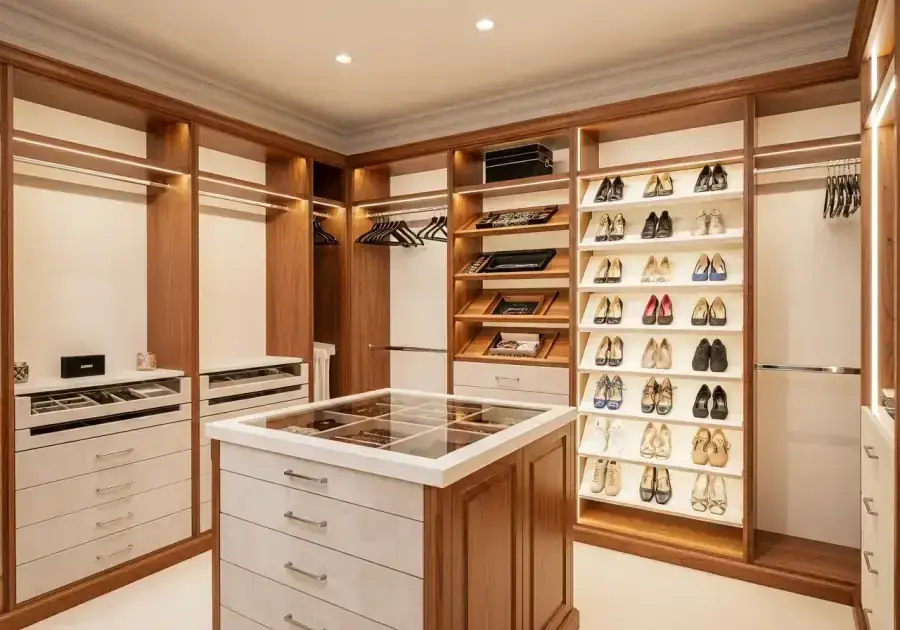
If you own a pantry with standard fixed shelves, you know the problem: items at the back get pushed there during grocery unloading and essentially disappear. They only re-emerge when you clean out the pantry and discover canned goods that expired two years ago.
Pull-out shelves solve this problem completely.
What Pull-Out Shelves Are
A pull-out shelf is exactly what it sounds like: a shelf that slides forward on drawer slides, bringing everything on it to the front. When you open your pantry, you pull the shelf out toward you — the entire contents move forward and become visible and accessible. Nothing is "in the back." Nothing gets lost.
The Impact on Daily Cooking
The immediate behavioral change when you install pull-out pantry shelves is striking. Finding ingredients becomes fast. Putting groceries away becomes intuitive — everything goes where you can see it next time. Buying duplicates of things you already own drops dramatically.
Clients consistently cite pull-out shelves as one of the three features they use most and value most in their custom pantry systems.
Full-Extension vs. Partial-Extension
Pull-out shelves come in two types:
Full-extension: the shelf slides completely out of the cabinet or pantry space, exposing 100% of its contents. This is what we recommend and what we install.
Partial-extension: the shelf slides partially out, exposing perhaps 75% of its contents. The back of the shelf remains inaccessible. Partial-extension defeats much of the purpose.
Always specify full-extension when ordering or discussing pull-out shelves.
Where to Put Them
Every level of a pantry benefits from pull-out shelves, but some positions deliver more impact than others:
Lower levels: lower shelves are where the heaviest items live — bulk canned goods, appliances, large containers. Pull-outs at the bottom eliminate the need to kneel and dig to the back.
Middle levels: eye-level shelves in a pantry are the highest-traffic zone. Pull-outs here make daily grocery retrieval the fastest it can be.
Upper levels: upper shelves hold less-used items. Fixed shelving here is more acceptable, but tall pull-out shelves can work even on upper levels if the pantry has enough height clearance.
What They Cost
Pull-out shelves add cost to a pantry project — typically $80 to $200 per pull-out unit depending on size and the quality of the drawer slides. For a full walk-in pantry with 8 to 12 pull-outs, this adds $800 to $2,000 to the project.
Almost every client who has pull-out shelves considers them worth every dollar.
To see pull-out pantry shelves in action, visit our showroom at 1741 State Street in Bettendorf or call (563) 355-8295.