
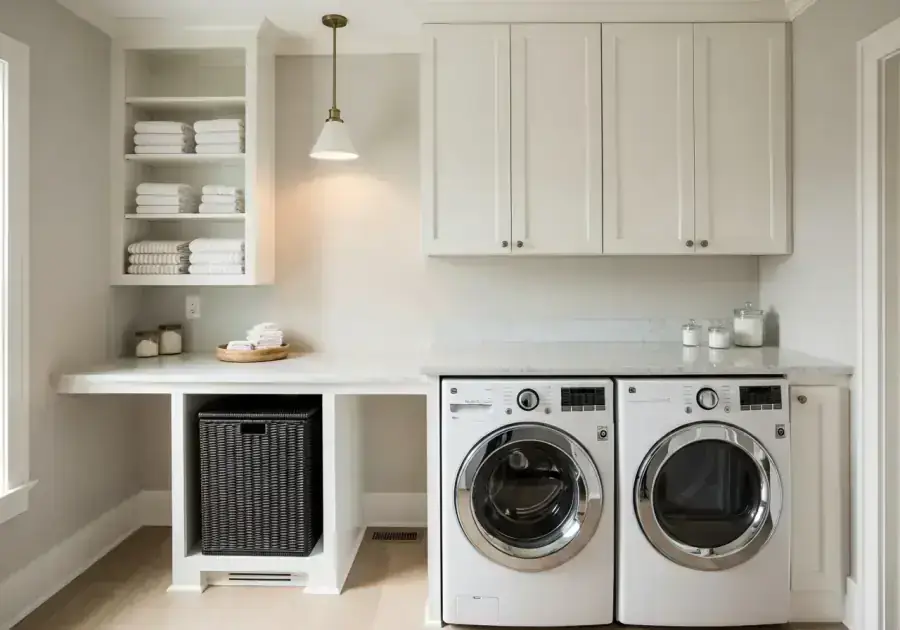
The laundry room is one of the most actively used rooms in any home, and one of the least thoughtfully designed. Most laundry rooms have the bare minimum: machines, a rod for hanging, and maybe a shelf above the washer. That leaves a lot of function on the table. The right storage system turns a stressful chore into a manageable routine — and makes the room genuinely pleasant to spend time in.
Build a Real Folding Station
Folding on top of the washing machine is the default for most households because there's no better option. But it's not a great option: the surface vibrates during cycles, items fall off the back, and the height is wrong for most adults.
A purpose-built folding station — a wide, flat surface at counter height — changes the experience entirely. It creates room to spread garments flat, fold neatly, and sort items into stacks before moving them to rooms. When you have counter space dedicated to folding, the task moves faster and feels less chaotic.
Custom laundry room systems can incorporate built-in countertops above front-loading machines, or freestanding counter sections on adjacent walls. Either way, a real folding surface is one of the highest-impact upgrades any laundry room can have.
Sort at the Source With Smart Hamper Placement
How your household sorts dirty laundry — or whether it sorts at all — should drive hamper placement decisions. If you separate darks, lights, and delicates before washing, you need three hamper zones accessible when clothes come off. If you sort at the machine, you need easy transfer from a central hamper to the drum.
Built-in pull-out hampers — drawer-style bins that slide behind cabinetry — keep dirty clothes completely out of sight. They're particularly useful when the laundry room is visible from an adjacent space, or when you simply don't want to look at laundry in progress.
If floor space is limited, a vertical hamper column with two or three pull-out bins fits in a space as narrow as 18 inches and handles sorting for most households.
Shelf Height for Supplies Matters More Than You'd Think
The standard approach is one shelf above the machines, high enough to clear open lids. The problem is that one shelf isn't enough, and high shelves make heavy detergent bottles difficult to grab safely.
A better approach: two or three shelves at accessible heights, with the lowest shelf dedicated to heavy, daily-use items like detergent and fabric softener. Reserve higher shelves for lighter, less-frequent items like stain removers, spare dryer sheets, and backup supplies.
Adjustable shelving makes this easy to tune to your exact supply inventory. And if you have upper cabinets, dedicating one section to dangerous cleaning products keeps them out of reach of young children while keeping the supplies you use daily accessible.
Create Drying Space for Delicates
Every household has items that can't go in the dryer: sweaters, silk, athletic wear, certain work clothes. Without a designated drying solution, these pile up on any flat surface available — countertops, chairs, doorknobs.
A wall-mounted or ceiling-mounted drying rack provides dedicated hang space that folds away when not in use. A pull-out drying rod built into a cabinet section is another option that keeps the room looking clean when the rack isn't needed.
For households with significant delicate laundry, a purpose-built drying zone — with rod space above a small counter or drain — handles the task without disrupting the rest of the room's function.
Organize Cleaning Supplies by Task, Not by Container Size
Laundry rooms often become the default home for cleaning supplies that don't have anywhere else to go: mops, brooms, vacuums, and a collection of spray bottles. When these share space with laundry supplies without a clear system, the room becomes cluttered and hard to use.
Assign zones. Laundry supplies stay near the machines. Cleaning supplies for the rest of the house — sprays, rags, and tools — get their own cabinet or shelf section. Tall items like mops and brooms get a floor-to-ceiling storage column with hooks and clips, keeping them vertical and out of the way.
When every item in the room has an assigned home, putting it away takes no more effort than leaving it out. That's the standard a well-designed laundry room should meet.
Small Laundry Rooms Are Not an Excuse
Many Quad Cities laundry rooms are small — a closet converted for the machines, a narrow galley room, or a combined laundry-bath layout. Custom storage design works within tight dimensions by using every available surface and height.
In small spaces, wall-mounted systems, stacked components, and pull-out storage become especially valuable. Vertical space that would go unused in a larger room becomes essential real estate in a compact one.
Our designers regularly transform narrow laundry rooms into highly functional spaces. The key is designing around the specific dimensions of the room rather than fitting generic products into a space they weren't made for.
If you're ready to stop working around your laundry room and start working in it, schedule a free consultation. You can also explore the full range of custom storage options for your home on our services page.