
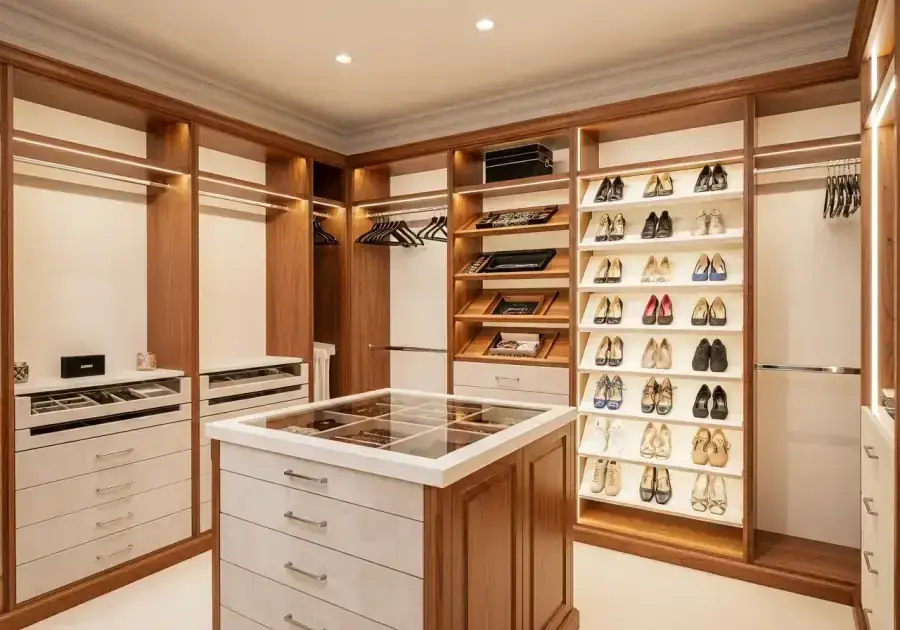
Kids' closets are the storage challenge that most parents accept as unwinnable. The closet fills up. Toys migrate from the toy box to the closet floor. Clothes get stuffed onto shelves in no particular order. Getting dressed in the morning involves archaeology.
Good design changes all of this. Here is what it looks like.
Design Around the Child, Not the Adult
Most closets are designed for adult reach heights and adult organizational instincts. A child who cannot reach a shelf does not use it — they pile things on the floor or on the lowest accessible surface.
Start by designing storage at your child's height:
- Hanging rod at 42–52 inches (school-age child can reach and hang independently)
- Lower shelves with bins and cubbies at 24–36 inches
- Shoes at their level — cubbies or a low angled shelf they can access
When a child can actually use their storage system independently, they are significantly more likely to maintain it.
Use Adjustable Systems
Children grow. Their wardrobes change. The closet that works perfectly for a 6-year-old will need to change for the same child at 10 and again at 14.
Adjustable shelving that repositions without tools is the most practical feature in a kids' closet. Double-hang rods that can be reconfigured as one single-hang rod when the wardrobe shifts from children's clothing to adult-length garments extend the life of the system.
Dedicated Zones
Kids' closets work best with clearly defined zones for different categories. Labeled zones reduce the "where does this go?" confusion that leads to pile-ups:
- Hanging zone: school clothes and dress clothes
- Shoe zone: cubbies or low shelf
- Toy zone (if toys live in the closet): bins on low shelves
- Book zone: accessible shelf at child's reading height
- Seasonal and rarely used: upper shelves (parent-managed)
Labeling bins with pictures for younger children and words for older children makes returning items effortless.
The Uniform Challenge
For school-age children with school uniforms, the closet needs a clear, dedicated, always-accessible spot for the uniform. A specific hook or cubby that holds the entire uniform — shirt, pants, belt — ready to grab in the morning reduces school-morning friction dramatically.
Growing the System
One of the most practical aspects of custom storage is that it can be expanded. As your child ages and their needs change, components can be added, rearranged, or replaced. The initial investment does not become obsolete.
To design a kids' closet in your Bettendorf or Quad Cities home, schedule a free consultation or call (563) 355-8295.