
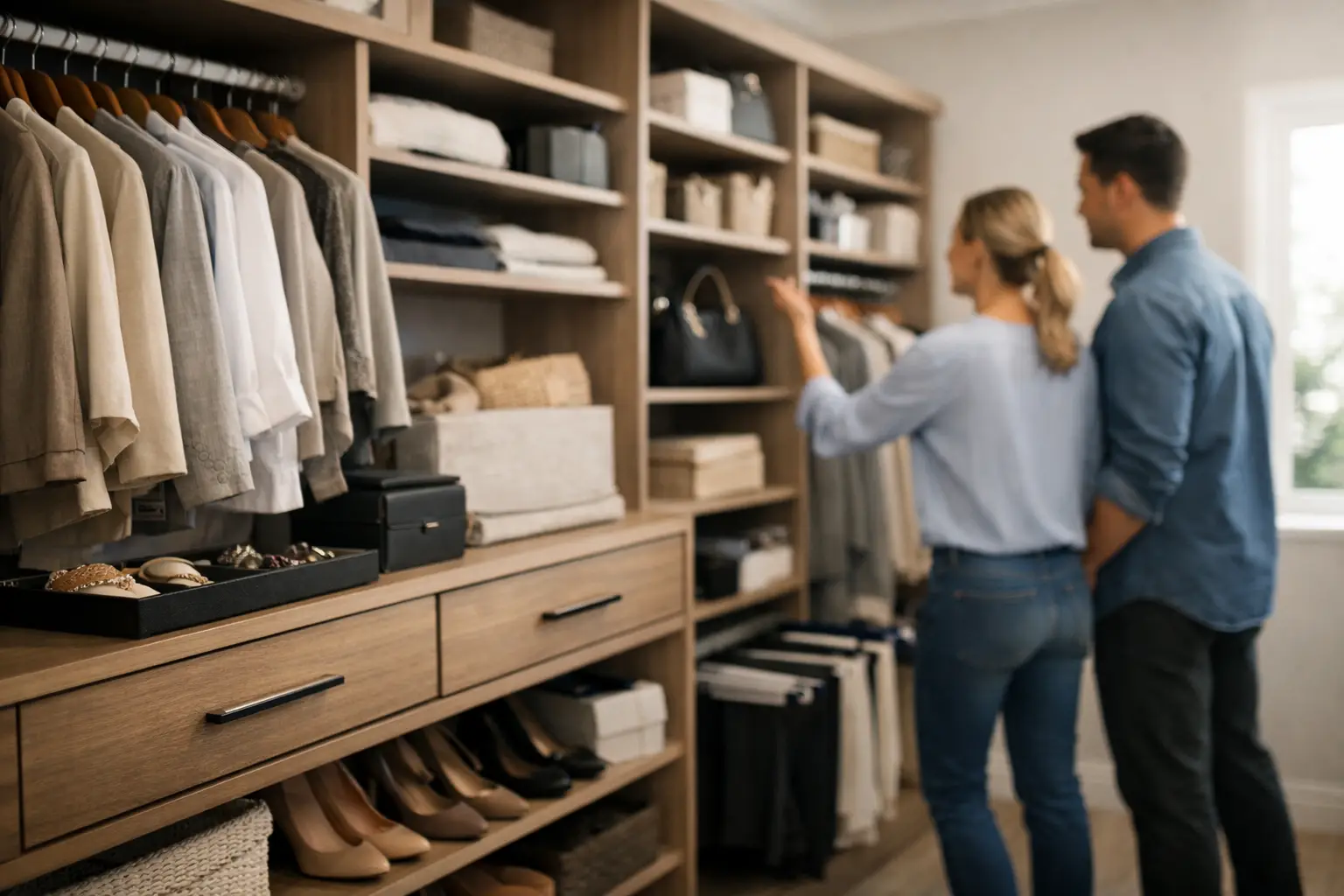
A closet can look spacious and still create a daily mess. When shelves are too deep, hanging space is poorly placed, or drawers are missing, getting dressed and putting laundry away becomes harder than it should be. This custom closet systems review focuses on what homeowners should look for before investing in a solution that is meant to make everyday life easier.
The best system is not necessarily the one with the most accessories or the most dramatic showroom appearance. It is the one that fits the room, supports the people using it, and holds up to years of normal family use. For Quad Cities homeowners, that usually means starting with practical needs instead of a standard package.
What Makes a Custom Closet System Different?
A basic closet organizer adds shelves or a hanging rod to an existing space. A custom closet system is designed around the actual dimensions of the closet, including corners, wall height, doors, trim, outlets, and other obstacles. It also accounts for what must be stored there.
That distinction matters. Two closets with the same square footage can need entirely different layouts. A primary closet shared by two adults may need long-hang areas, double-hang sections, drawers, shoe storage, and a place for bags. A child's reach-in closet may work better with adjustable shelves, lower rods, and room to change as clothing sizes and storage needs grow.
Custom design helps use vertical space that often goes unused. It can also reduce the frustrating gaps that occur when off-the-shelf components do not fit the wall correctly. Still, customization should solve a real problem. A complicated layout is not automatically a better one.
Custom Closet Systems Review: The Features Worth Comparing
When reviewing closet systems, look past finish samples and focus on the parts that affect daily use. Material quality, layout, hardware, and installation all influence whether the space stays organized or becomes another source of clutter.
Materials and construction
Many custom closet systems use engineered wood panels with a durable laminate finish. This can be a practical choice for closets because it provides a clean, consistent appearance and is available in many colors and wood-grain styles. The quality difference often comes down to panel thickness, edge treatment, backing, and how well the system is secured to the wall.
Ask how shelves are supported and whether wide spans may sag over time. Consider where moisture, heavy items, or frequent use may affect the system. A closet built for folded clothing has different demands than a garage storage area or laundry room. The right material should match the room and its workload, not just its appearance.
Layout and storage zones
Good closet design gives each category of belongings a clear home. Hanging clothes, folded items, shoes, accessories, seasonal pieces, and laundry should not all compete for the same shelf.
Double-hang sections are efficient for shirts, pants, skirts, and children's clothing. Long-hang space is necessary for dresses, coats, and longer garments. Drawers can replace bulky furniture and keep smaller items contained. Adjustable shelving provides flexibility, especially in children's closets, guest rooms, and spaces that may change over time.
A strong design also leaves enough open room to use the closet comfortably. In a walk-in closet, an island or dressing area may be useful, but only if there is adequate clearance to open drawers and move around. In a narrow reach-in closet, shallow shelves and thoughtful hanging placement can be more valuable than trying to fit every possible feature into the space.
Hardware and everyday access
Hardware is easy to overlook until it starts sticking, loosening, or failing to close properly. Drawer slides should operate smoothly and support the weight they are intended to carry. Pull-out accessories, hampers, belt racks, and valet rods should feel secure and remain easy to reach.
Accessories are helpful when they solve a known storage issue. A pull-out hamper can simplify laundry in a primary closet. A jewelry tray may be worthwhile for someone who uses it daily. But accessories can add cost and take up valuable room, so they should earn their place in the design.
Lighting deserves consideration as well. A well-lit closet makes it easier to see clothing colors, find items, and keep the room feeling clean and comfortable. Lighting plans should be appropriate for the closet layout and installed safely.
Professional installation
Even quality components can perform poorly if installation is rushed. Walls are not always straight, floors are not always level, and older homes can have trim, vents, and other details that affect the fit. Professional installation allows the system to be measured, adjusted, secured, and finished with those conditions in mind.
Before choosing a provider, ask who will install the system, how long the process is expected to take, and what preparation is needed. It is also reasonable to ask about warranties, cleanup, and what happens if an adjustment is needed after installation. Clear answers are a good sign that the company stands behind its work.
How to Judge Value Instead of Price Alone
The price of a custom closet system can vary widely because the scope varies widely. A simple reach-in closet with shelves and hanging rods is a different project from a large walk-in with drawers, specialty storage, lighting, and a center island.
It helps to compare proposals based on what is included, not only the final number. A lower quote may use fewer materials, omit installation details, or provide a layout that does not fully address the storage problem. A higher quote may be worthwhile if it includes stronger construction, better hardware, more useful organization, and professional service from design through installation.
At the same time, homeowners do not need to add every premium feature to get meaningful results. A well-designed basic system can make a major difference when the current closet has one rod, one shelf, and no logical place for everyday items. The right budget is the one that creates lasting function without paying for features that will rarely be used.
Questions to Ask Before You Commit
A design consultation should feel like a conversation about your home, not a sales pitch for a preset system. Be prepared to discuss who uses the closet, what currently causes frustration, and whether your needs may change in the next few years.
Ask whether the design includes enough long-hang and double-hang space for your wardrobe. Ask which shelves are adjustable, what materials and drawer hardware are being used, and how the system attaches to the wall. If the proposal includes specialty accessories, ask how they will improve your routine.
It is also wise to ask about the timeline. Some projects can be completed quickly once materials are ready, while larger or more detailed designs may take longer. Knowing what to expect helps minimize disruption in a busy household.
When Custom Is the Right Choice
Custom closets make the most sense when a standard organizer leaves space unused, fails to fit the room, or does not support the way your household lives. They are especially valuable in primary closets, small reach-ins, shared closets, older homes with unusual dimensions, and spaces where clutter regularly spills into the bedroom.
They can also be a practical improvement before a renovation, a move, or a home sale. Organized storage helps a room feel more usable and cared for. However, a custom system is not a substitute for editing what you own. The most effective closets pair a smart layout with a realistic amount of clothing and household items.
Comfort Concepts QCA approaches custom storage as a design-and-installation project, not a one-size-fits-all shelf package. That means the goal is to create a closet that feels orderly, accessible, and comfortable to use from the first morning through years of changing household needs.
A closet should make leaving the house easier and coming home calmer. Start with the items you use most, choose features that support your routine, and let the layout do the hard work of keeping everyday life in order.