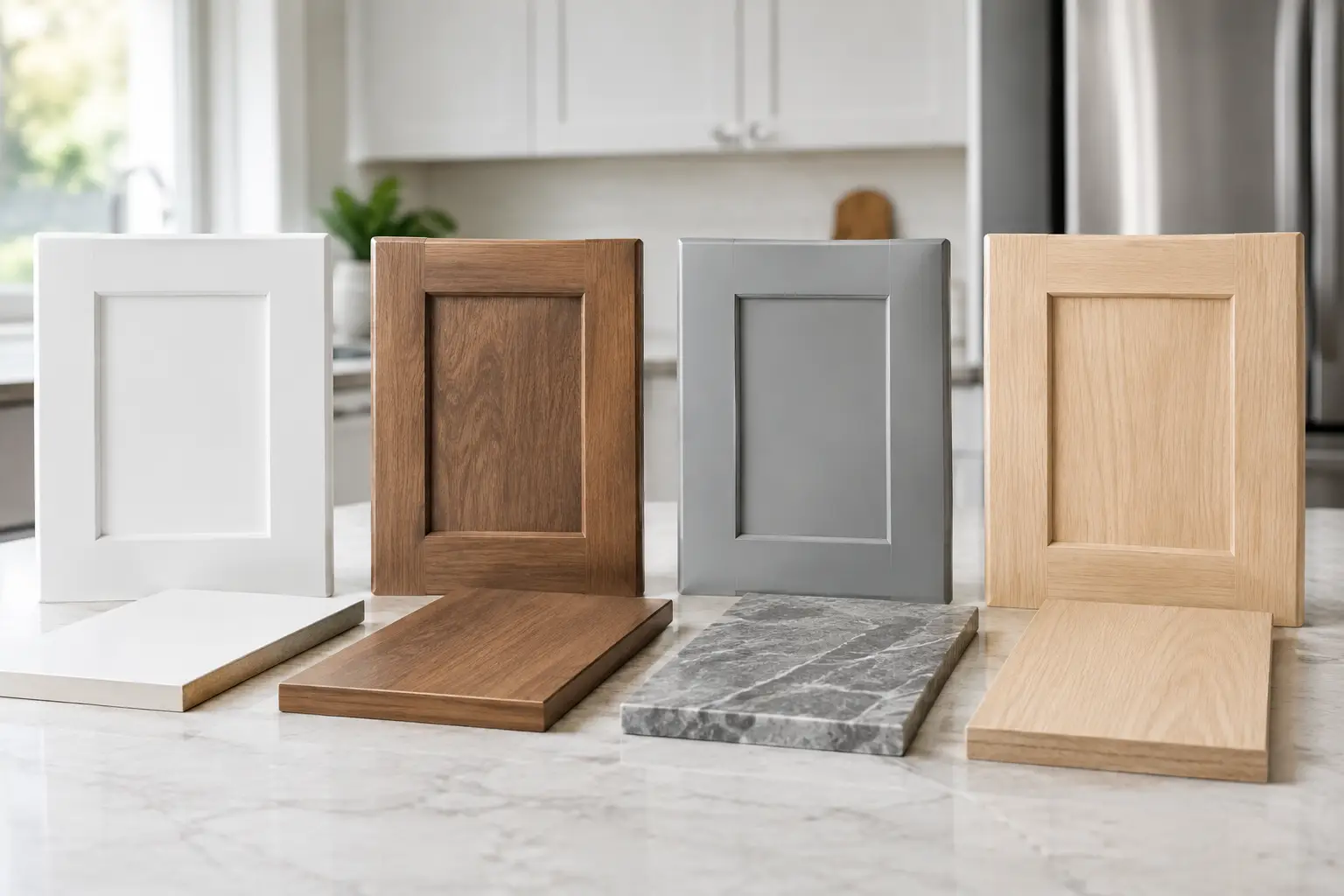
A custom storage system can look great on installation day and still disappoint years later if the cabinet material does not fit the room, the load, or the way your household lives. This cabinet materials comparison looks past appearance to help Quad Cities homeowners choose material that holds up to everyday use, changing seasons, busy schedules, and real storage needs.
For closets, pantries, mudrooms, laundry rooms, garages, and home offices, there is no single best cabinet material. The right choice depends on moisture exposure, expected wear, desired finish, budget, and whether the system needs to support heavy items. A thoughtful design starts by matching those conditions to the material rather than selecting a color first.
Cabinet Materials Comparison: What Matters Most
When comparing cabinet materials, homeowners often focus on whether a finish looks like wood. Appearance matters, but cabinet construction affects how shelves perform, how drawers operate, how easily surfaces clean, and how the system ages.
Start with five practical questions. Will the space see humidity, water, dirt, or temperature swings? Will shelves hold folded clothing, pantry goods, tools, or heavy files? Do you want a consistent modern finish or the character of real wood? Are custom paint colors part of the plan? Finally, how long do you expect the storage system to serve your household?
The answers guide the material choice. A garage cabinet faces a very different job than a dressing-room island, and a laundry room needs more moisture awareness than a home office wall unit.
Melamine: A Practical Choice for Everyday Storage
Melamine is one of the most common materials used in custom closets and organized living spaces. In simple terms, it is a durable decorative surface bonded to an engineered wood core, usually particleboard or MDF. It comes in a wide selection of solid colors, woodgrains, and textured finishes.
For many homes, melamine offers the best balance of performance, appearance, and cost. Its smooth, nonporous surface is easy to wipe clean, which makes it well suited to closets, pantries, home offices, mudrooms, and laundry rooms. It also creates a clean, coordinated appearance across shelves, drawers, vertical panels, and cabinetry.
Quality matters. Better melamine products use stronger core material, more durable surface layers, properly finished edges, and hardware designed to support the system. A well-designed installation also places vertical supports where they are needed, helping prevent long shelves from sagging under clothing, books, or pantry supplies.
Melamine does have limits. Standing water and prolonged moisture can damage exposed edges or the core if spills are not addressed. It is also less forgiving of deep impact damage than solid wood. That does not rule it out for hardworking rooms, but it does make good design, finished edges, and regular cleanup more valuable.
Plywood: Strong Support for Demanding Spaces
Plywood is made from thin layers of wood veneer bonded together with alternating grain direction. This layered construction gives it strength and stability, particularly for cabinet boxes, longer spans, and applications that carry heavier loads.
A plywood cabinet can be a smart choice where strength is the main concern. Home offices with substantial book storage, utility areas, commercial workspaces, and certain garage applications may benefit from its load-bearing performance. Higher-grade plywood can also resist fastener pullout well, which is useful for hardware and adjustable shelving systems.
The trade-off is cost. Plywood generally costs more than particleboard-based melamine, especially when a project uses furniture-grade panels and finished interiors. Its edges may also need careful treatment to achieve the polished look many homeowners want in a closet or living area.
Plywood is not automatically waterproof. Some products handle moisture better than others, but the grade, adhesive, finish, edge treatment, and installation environment all matter. For a damp basement or garage, ask about materials specifically selected for that setting instead of assuming any plywood will perform the same way.
MDF: Smooth and Ideal for Painted Details
Medium-density fiberboard, usually called MDF, is an engineered wood product made from fine wood fibers pressed with resin. Its smooth, uniform surface makes it especially useful for painted cabinet doors, decorative panels, and detailed profiles.
If your storage project calls for a crisp painted finish, shaker-style doors, routed details, or a built-in furniture look, MDF can be an excellent option. Because it has no natural grain, paint lays down evenly and the finished surface can look refined and consistent.
MDF is dense and stable in dry interior conditions, but it is heavy and does not respond well to water exposure. If it gets thoroughly wet, it can swell and lose its shape. That makes it a better fit for bedrooms, closets, offices, and living spaces than for areas with recurring leaks, unventilated humidity, or direct water contact.
For many custom projects, MDF is used selectively rather than throughout the entire cabinet. A designer may recommend a durable melamine cabinet interior with MDF doors or painted face components. That approach can provide the look you want while putting each material where it performs best.
Solid Wood: Natural Character With More Variation
Solid wood brings warmth, visible grain, and a traditional furniture-quality feel that engineered materials cannot fully duplicate. It is often chosen for door fronts, drawer fronts, decorative trim, and premium statement pieces.
Wood can be durable and repairable, and it may be refinished in some situations. It is a strong choice when natural material and craftsmanship are central to the design. For a luxury dressing room, built-in entertainment center, or carefully finished home office, solid wood accents can add depth and value.
However, solid wood responds to seasonal humidity changes. In the Quad Cities, where homes move between dry winter heat and humid summer weather, wood can expand and contract. Skilled construction accounts for that movement, but homeowners should expect natural variation in grain and tone. Solid wood also carries a higher material and labor cost than most engineered alternatives.
That does not mean solid wood is always the most durable choice for every cabinet component. Engineered panels can remain flatter and more consistent across broad cabinet sides and shelves. Often, the best result comes from combining materials rather than insisting that every piece be solid wood.
Particleboard: Budget-Friendly When Properly Built
Particleboard is made from wood particles compressed with resin. It is commonly used as the core beneath melamine surfaces and can provide dependable performance in dry, indoor storage applications when it is high quality and properly supported.
Its advantage is value. Particleboard-based panels help make custom organization accessible while still offering a broad range of attractive finishes. In a closet, pantry, or office with well-supported shelving and normal indoor conditions, it can serve a family well for many years.
Its weakness is moisture. Particleboard can swell if exposed to significant water, particularly along unfinished or damaged edges. It also needs appropriate shelf spans and support. A long particleboard shelf packed with heavy books or canned goods is more likely to sag than a shorter, well-supported shelf designed for that load.
The material itself is only part of the equation. Thickness, backing, edge banding, shelf length, mounting method, and installation quality all affect the final result.
Match the Material to the Room
A bedroom closet usually benefits from easy-clean surfaces, reliable shelf support, and finishes that coordinate with the home. Melamine is often a sensible fit, with optional wood or MDF details where appearance calls for them.
A pantry needs surfaces that clean easily and shelving designed around the weight of food, small appliances, and bulk supplies. Adjustable shelves make sense for changing needs, but their spans should reflect what the shelves will carry.
For a laundry room or mudroom, prioritize moisture-aware materials, finished edges, and a layout that keeps wet items and cleaning products under control. Good ventilation and prompt attention to leaks protect any cabinetry.
In a garage, temperature changes, humidity, dust, sports equipment, and tools create tougher conditions. Material selection should be paired with a layout that keeps cabinets off the floor where appropriate, gives heavy items adequate support, and reserves open storage for gear that is frequently dirty or damp.
Do Not Overlook Hardware and Installation
A cabinet material can only perform as well as the system around it. Full-extension drawer slides, durable hinges, secure wall mounting, accurate leveling, and appropriate shelf supports affect daily use as much as the panel material does.
Professional measurement also helps avoid common problems. A cabinet that blocks a door swing, crowds a laundry appliance, or leaves no room for baskets and hangers will not feel comfortable, no matter how attractive the finish may be. Custom storage should make the room easier to use from the first morning onward.
Comfort Concepts QCA helps homeowners weigh these choices against the room, the budget, and the way their household actually functions. The goal is not to sell the most expensive material. It is to build storage that feels dependable, looks at home in the space, and gives everyday items a place to belong.
Before choosing a finish, think about what will live behind the doors and on the shelves. That simple step leads to a cabinet material choice that supports your home long after the project is complete.