A pantry can look full long before it is actually useful. Bags slide behind cans, cereal boxes block everyday staples, and a quick grocery trip can leave the room feeling more crowded than before. Well-planned pantry organization systems solve that problem by giving each category a clear home and making the food your household uses easiest to reach.
For Quad Cities homeowners, the goal is not a picture-perfect pantry that takes constant attention. It is a dependable storage space that supports busy mornings, weeknight meals, bulk shopping, school lunches, and holiday hosting without adding another chore to the day.
Start With How Your Household Actually Uses the Pantry
The best pantry layout begins with your routines, not with a set of matching containers. A family that buys snacks, lunch items, and breakfast foods in quantity needs different storage than a household that cooks from scratch most nights. A pantry that serves as the main food storage area needs more capacity than one supported by a nearby utility cabinet or basement shelves.
Before choosing shelves, drawers, or accessories, take stock of what is already there. Notice which items disappear quickly, which ones are purchased in bulk, and which categories create the most clutter. This simple review often identifies the real issue: the pantry may not be too small, but its available space is not assigned in a useful way.
Also consider who reaches into the pantry every day. Frequently used food should sit between waist and eye level. Children’s snacks can be placed on a lower shelf where they are easy to access. Less-used serving pieces, seasonal baking supplies, and backup paper goods belong higher up or farther back.
Build Pantry Organization Systems Around Zones
A reliable pantry works in zones. Instead of placing items wherever there is an open spot, group similar products together and give each group a defined area. This makes grocery put-away faster and reduces the chance of buying duplicates because something was hidden behind another item.
Common zones include breakfast foods, snacks, baking ingredients, canned goods, dry goods, meal prep staples, beverages, and backstock. You do not need every category if it does not fit your household. The point is to create a layout that makes sense at a glance.
Keep Everyday Items Within Easy Reach
The middle shelves should do the most work. Reserve this prime space for the foods your family reaches for several times a week, such as cereal, pasta, sauces, lunch supplies, and snack bins. Adjustable shelving is especially helpful here because package sizes change. A tall shelf that works for cereal may waste space when the household switches to shorter boxes or jars.
Deep shelves can hold a great deal, but they can also become frustrating when smaller items get lost. Pull-out shelves, roll-out trays, and shallow bins make the back of a deep cabinet accessible without requiring you to unload the front row first. That convenience matters over time. A system only works if it remains easy to use on an ordinary Tuesday evening.
Give Bulk Purchases Their Own Plan
Warehouse shopping can save time and money, but it can overwhelm a pantry that was designed only for standard grocery-store packages. Large packs of paper towels, cases of drinks, oversized snack boxes, and extra canned goods need sturdy storage and dedicated space.
Place heavier items on lower shelves, where they are safer to lift and less likely to strain shelving. Consider a specific backstock area for extras rather than mixing backup items with the products currently in use. When one container or package runs low, the replacement is easy to find without crowding the everyday zone.
Make Small Items Visible
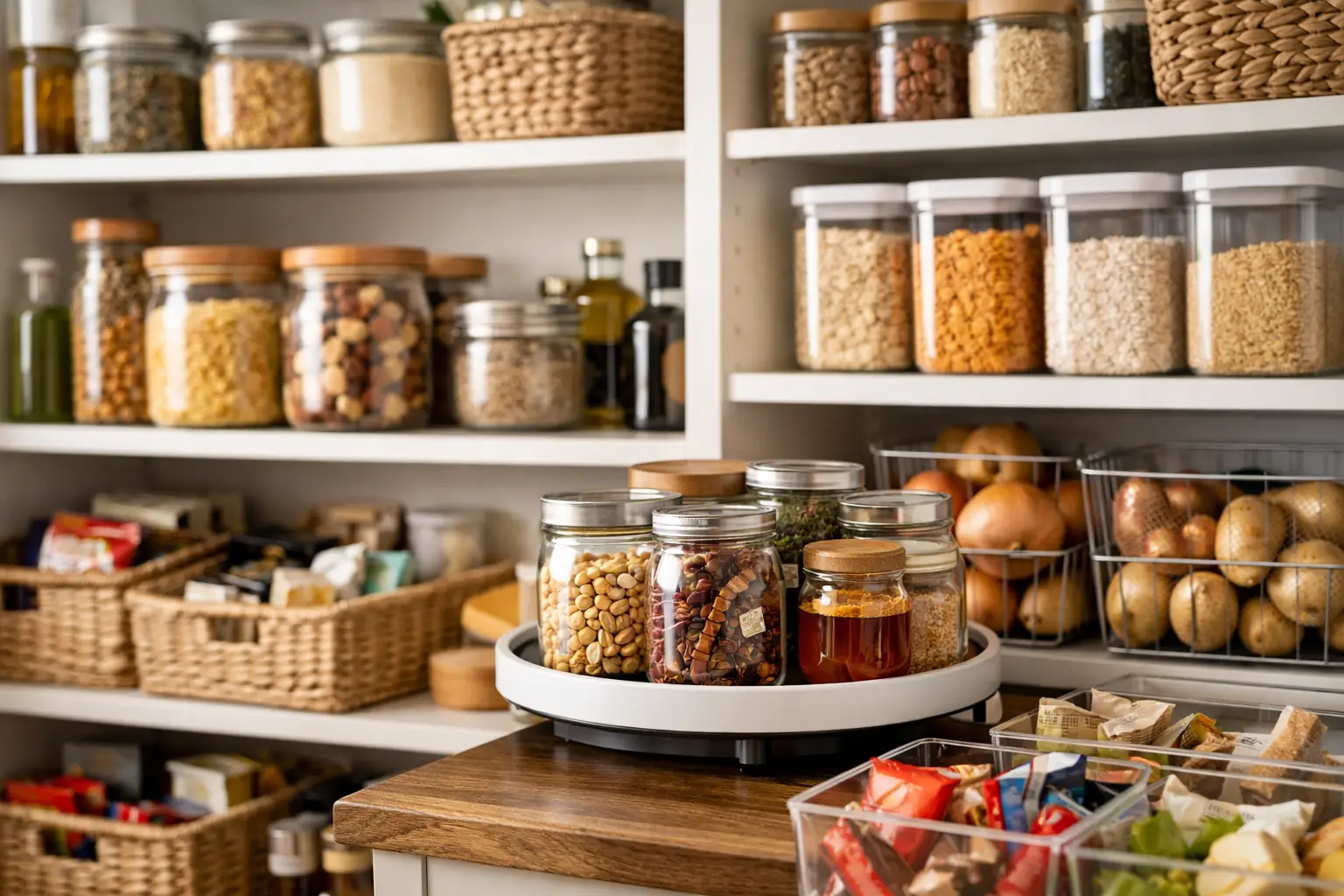
Packets, granola bars, seasoning mixes, tea bags, and snack pouches are often responsible for the messiest shelves. Clear or labeled bins can contain these smaller products and make it simple to see when supplies are running low. Open-front bins work well for grab-and-go items, while drawers are useful when you want a cleaner appearance.
Labels should be practical, not restrictive. A bin labeled “snacks” will adapt better than one labeled for a single brand or product. Leave room for changes in routines, preferences, and seasonal needs.
Choose Storage Features That Reduce Daily Frustration
Shelf space is essential, but a thoughtfully designed pantry can do more than stack boxes. The right features improve access, protect food, and help keep the room orderly with less effort.
Pull-out shelves are one of the most useful upgrades for deep pantry cabinets. They bring food forward and prevent forgotten items from collecting in the back. Full-extension drawers can serve a similar purpose for snacks, baking supplies, or smaller packaged goods.
Vertical dividers are useful for baking sheets, cutting boards, trays, and platters that otherwise get stacked awkwardly. Door-mounted racks can create extra space for spices, wraps, foils, or narrow bottles, although they work best when the door has adequate clearance. A fixed shelf may be less expensive, but it can be the wrong choice if it leaves valuable vertical space unused.
Lighting also deserves attention. Even a well-organized pantry is harder to use when the corners are dark. Integrated lighting can make labels and inventory easier to see, particularly in walk-in pantries or cabinets without nearby windows.
Avoid Designing for a Perfect Snapshot
It is easy to be drawn to rows of identical jars and tightly arranged containers. They can look clean, but they are not always the most practical solution for a working family pantry. Decanting every dry ingredient may be worthwhile for someone who bakes often and wants to track quantities closely. For others, it adds work and makes it harder to keep product information, expiration dates, and cooking directions nearby.
Use containers where they solve a real problem, such as loose bags of flour, rice, pet treats, or frequently used dry goods. Keep original packaging when it is more convenient. A comfortable, organized home should support your routine, not create a new one to manage.
Leave a little open space, too. A pantry that is filled to the edge has no room for a large grocery trip, a holiday meal, or a temporary change in household needs. Some breathing room makes the system more forgiving and easier to maintain.
When Custom Pantry Storage Makes Sense
Standard shelving can be enough for a small, simple pantry. However, custom pantry organization systems are especially valuable when the room has unusual dimensions, deep corners, limited floor space, or a mix of food and household storage needs. They can also make a strong difference when a pantry is part of a kitchen remodel or a new home build.
A custom design can combine adjustable shelves, pull-outs, drawers, vertical storage, and dedicated areas for appliances or serving pieces. Rather than forcing your groceries into a preset configuration, the storage is built around the way your home functions. Durable materials and professional installation also help ensure shelves remain level and secure under the weight of everyday use.
Comfort Concepts QCA works with homeowners to measure the space, identify storage challenges, and create pantry solutions that fit both the room and the household. The right plan can make a narrow reach-in pantry feel more capable or turn a walk-in pantry into a calm, useful extension of the kitchen.
Keep the System Working With Simple Habits
No pantry needs a complete reset every weekend. The most effective maintenance happens in small moments. Put groceries directly into their zones, return items to the same shelf after use, and check dates or low supplies before making a shopping list. A quick review every few months is usually enough to remove expired products and adjust categories that are no longer serving your household.
A pantry should make daily life feel easier, from packing lunches to preparing dinner after a long day. When every shelf has a purpose and the items you use are easy to find, the space becomes one less thing to manage and a dependable part of a comfortable home.