
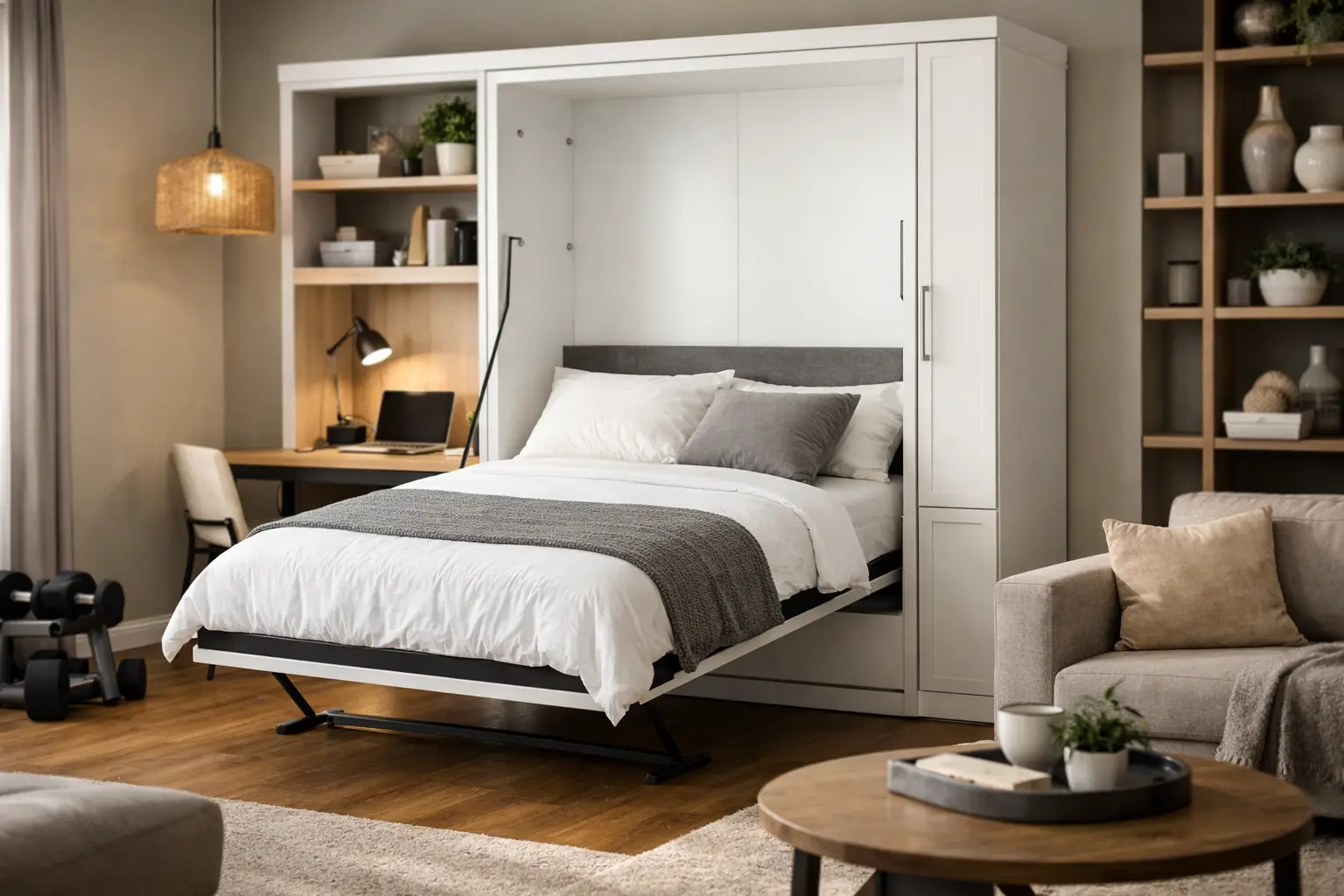
A spare bedroom is useful until it becomes the room no one enters except during holiday visits. Murphy beds give that square footage a second purpose, letting a home office, craft room, playroom, or den become a welcoming place for overnight guests when needed. For Quad Cities homeowners who want more function from the home they already have, that flexibility can make a real difference.
A well-designed wall bed is not simply a mattress that folds away. It is a carefully planned storage and sleep solution that needs to fit the room, support everyday routines, and remain easy to use. The best results come from looking at how the room works now, how it needs to work later, and what should stay accessible when the bed is open.
When Murphy Beds Make Sense
Murphy beds are especially practical when a dedicated guest room feels like a luxury your home cannot afford. Rather than leaving a full-size bed in place year-round, you can use the room for work, hobbies, storage, or family activities and still be prepared for visitors.
They work well in homes where adult children visit occasionally, grandparents stay overnight, or friends and family come in from out of town. They can also be a smart choice for homeowners planning to stay in their homes long term. A flexible room can change with your needs without requiring an addition or a major remodel.
The trade-off is that the room needs enough clear floor space to lower the bed safely. Before choosing a size, consider where doors swing, how much space is needed to walk around the open bed, and whether a desk, chairs, or other furniture must be moved. A good design solves those practical details before installation day.
A better fit for multipurpose rooms
The most successful Murphy bed rooms have a clear primary purpose. In a home office, the desk and work storage should serve you comfortably every day, while the bed remains neatly tucked away. In a hobby room, supplies should have designated cabinets or drawers so they are not piled onto the bed when guests arrive.
This is where custom planning matters. Standard furniture often leaves awkward gaps, wasted corners, and nowhere to put the items that make a room useful. A wall bed can be built into a larger system with shelving, cabinets, drawers, and work surfaces that fit the actual dimensions of your room.
Choosing the Right Murphy Bed Size
Mattress size affects more than sleeping comfort. It determines the wall width required, the amount of open floor space needed, and how the rest of the room can be arranged.
A twin Murphy bed can be a sensible solution for a child's room, a narrow office, or occasional single guests. A full-size bed gives one person more room and may work for a smaller guest space. Queen Murphy beds are often the best choice for couples and overnight guests, but they need more wall and floor space. King options can be comfortable, though they are typically best reserved for larger rooms with a generous clear area in front of the unit.
Do not choose a smaller mattress simply to make the cabinetry fit. If the room is intended for frequent adult guests, sleep comfort matters. On the other hand, if the bed will be used only a few times a year, preserving space for the room's daily role may be the better priority. There is no single right size, only the size that suits your household and layout.
Vertical or horizontal opening
A vertical Murphy bed folds down from the headboard end. It is a familiar look and often works well on a wall with enough ceiling height. A horizontal model folds down from the side, requiring less vertical clearance but taking up more width along the wall.
The choice usually comes down to room proportions. A horizontal bed may fit neatly beneath a window or in a room with a lower ceiling. A vertical bed may leave more room for narrow cabinets on either side. Measuring the full wall, including trim, outlets, vents, and windows, helps prevent surprises.
Storage Makes the Room More Useful
A Murphy bed becomes more valuable when the surrounding cabinetry is planned for the way you live. Open shelves can display books, photos, or a few favorite pieces. Closed cabinets keep office supplies, craft materials, linens, and everyday clutter out of sight. Drawers can hold guest bedding so it is ready when the bed is lowered.
Think through what guests need as well. Nearby shelves or nightstands give them a place for a phone, glasses, or a book. Integrated lighting can make the room feel more comfortable without adding floor lamps that must be moved. If the room functions as an office, plan for power access and cable management instead of relying on extension cords.
The goal is not to fill every inch with cabinetry. It is to give important items a dependable home while keeping the room open enough to feel calm. In many homes, a simpler arrangement with the right mix of concealed storage and accessible surfaces works better than a wall packed with features.
Safety and Everyday Use Matter
Quality Murphy beds are designed with mechanisms that help the bed raise and lower in a controlled way. The hardware should be selected for the mattress size and installed correctly so the unit remains stable and easy to operate. A bed that is difficult to open will not be used as intended, and one that feels unstable is not worth the worry.
Professional installation is particularly important because wall construction varies. The system must be properly secured, level, and aligned with surrounding cabinetry. It also needs sufficient room to open without striking ceiling fixtures, doors, or furniture.
Daily habits matter, too. Keep the floor area in front of the bed reasonably clear. Use bedding that can stay in place when the bed closes, if the design allows it, and store extra blankets nearby rather than overloading the unit. These small choices make preparing for guests feel simple rather than like a project.
Finishes That Belong in Your Home
Because a Murphy bed becomes part of the room's architecture, its finish should feel at home with your existing style. A warm wood tone can bring comfort to a den or traditional home office. A clean white or light neutral finish can brighten a compact room. Deeper colors may create a more tailored look in a library, media room, or guest suite.
Hardware, door styles, lighting, and surrounding storage all shape the final result. The room does not need to look like it contains a hidden bed at all times. It can look like a polished office, entertainment center, or built-in library, then quickly become a comfortable guest space.
Comfort Concepts QCA can help homeowners look beyond a single piece of furniture and plan a complete built-in solution around the room's dimensions, storage needs, and daily use.
Questions to Answer Before You Design
Before moving forward, take a realistic look at how often the bed will be used and who will sleep in it. Consider mattress size, the clear floor area when the bed is open, the furniture that needs to remain in the room, and the storage you currently lack. Also think about the room five years from now. A children's playroom may become a study space, while a home office may need to accommodate aging parents or more frequent family visits.
A Murphy bed should make your home easier to use, not create another area that needs constant rearranging. With a thoughtful layout, quality hardware, and storage that supports your routine, one room can comfortably serve more than one purpose whenever your household needs it.