
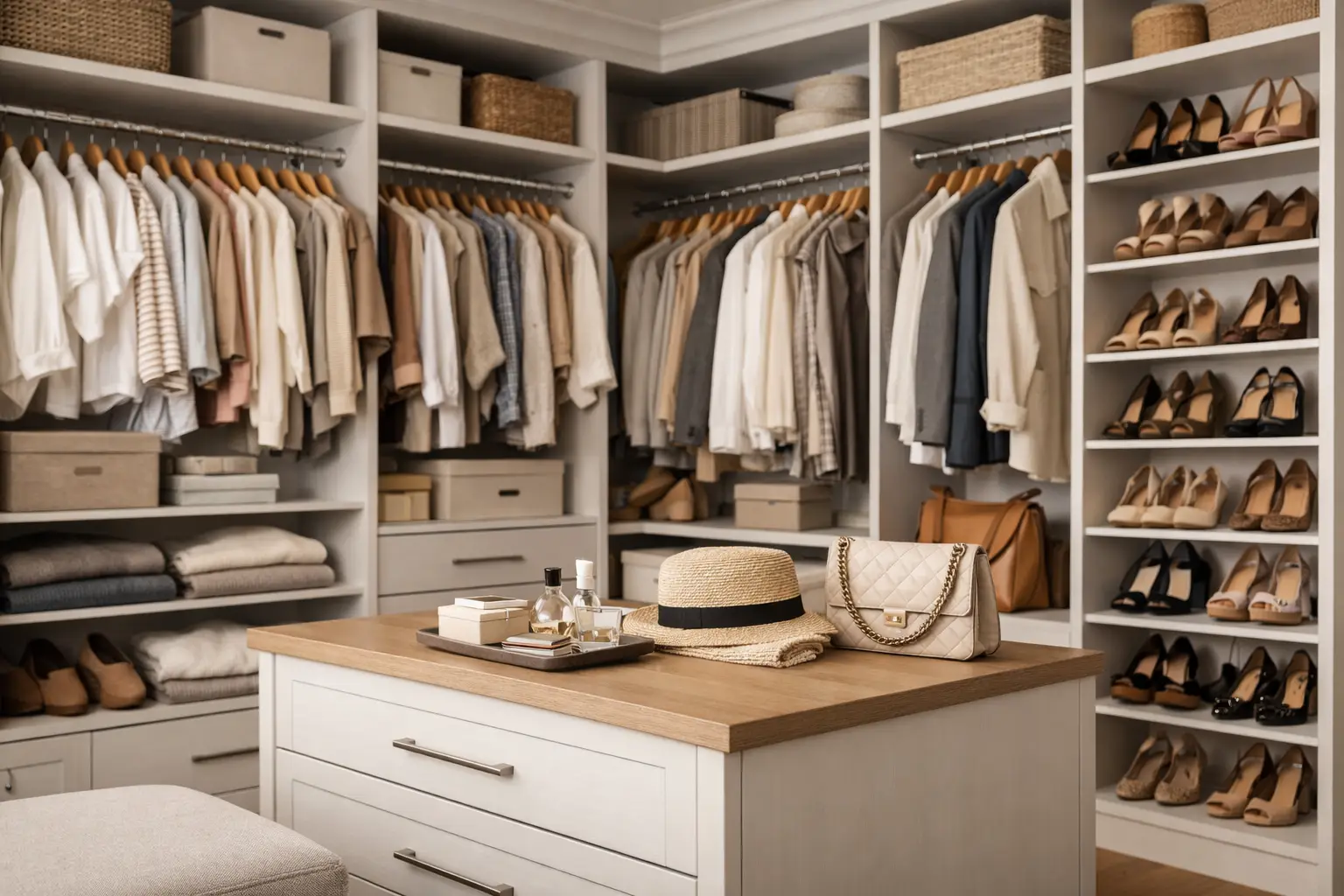
That crowded shelf, the pile on the floor, the sweaters you forgot you owned - most walk-in closets do not have a storage problem as much as an organization problem. If you are figuring out how to organize walk in closet space so it works every day, the goal is not to fit more stuff. It is to make the space easier to use, easier to maintain, and better matched to your routine.
A well-organized walk-in closet should help you get dressed faster, protect the clothes you wear most, and cut down on the constant cycle of rearranging. The best setup is not always the one with the most shelves or the fanciest accessories. It is the one that reflects what you actually own, how you get ready, and where clutter tends to build up.
How to organize walk in closet space with a clear plan
Before moving bins or buying organizers, start by looking at the closet as a working part of your home. Think about what belongs there and what does not. Many walk-in closets become overflow storage for luggage, seasonal decor, random boxes, and laundry that never got folded. If that sounds familiar, your first win is simply reclaiming the room for its intended purpose.
Take everything out by category if possible. Group shirts with shirts, shoes with shoes, handbags together, and so on. This gives you an honest view of how much space each category needs. It also shows where your current setup is out of balance. You may have room for twelve folded sweaters but own thirty pairs of shoes, or you may have long hanging space you never use and not enough drawers for smaller items.
As you sort, be realistic. Keep what fits, what you wear, and what supports your current lifestyle. A closet should serve the season of life you are in now, not the one you were in five years ago. If you work from home most days, your closet needs may look very different from someone who dresses for an office every morning.
Build zones around how you use the closet
The easiest way to keep a walk-in closet organized is to assign parts of the space to specific functions. That means creating zones instead of placing items wherever they happen to fit.
Your prime zone should hold the items you reach for most often. This usually means everyday clothes, most-used shoes, undergarments, and accessories you wear regularly. Keep these between waist and eye level whenever possible. The less bending, digging, and stretching required, the more likely the closet stays in order.
A secondary zone can hold occasion wear, out-of-season items, or pieces you use less often. High shelves work well for storage boxes, labeled bins, and less-used handbags. Lower shelves can handle backup items if they remain accessible and not crammed.
If two people share the closet, define separate sides or sections early. Shared closets get messy fast when categories overlap. Clear boundaries prevent hangers, shoes, and folded items from drifting into a general mixed pile.
Hanging space should match your wardrobe
One of the most common mistakes in a walk-in closet is using the same hanging layout for every type of clothing. Short hanging sections work well for shirts, folded pants, skirts, and jackets. Double hanging rods can be efficient if you have a lot of shorter garments. Long hanging space is better reserved for dresses, coats, robes, or anything that wrinkles easily.
It depends on your wardrobe. If you mostly wear casual clothing, you may need more shelves and drawers than hanging rods. If you own suits, dresses, or uniforms, hanging space matters more. Good organization starts with matching the closet layout to the clothing, not the other way around.
Shelves work best when they are not overloaded
Shelves can make a closet look clean, but only if they are sized and used well. Deep shelves often become black holes where folded items disappear into stacks you cannot see. Narrower shelves or shelf dividers usually work better because they help keep categories visible and separate.
Keep folded items in small, stable stacks. If you pile sweaters or jeans too high, the bottom items become impossible to reach without disturbing everything above them. That is how neat shelves turn into clutter in a week.
Drawers help with the small items that create visual mess
If your closet always feels untidy even after you clean it, smaller items may be the reason. Socks, belts, undergarments, workout gear, and sleepwear create visual noise when they are left on shelves or tossed in baskets. Drawers solve that quickly.
Drawer inserts can help if you have many accessories, but you do not need a complicated system. The key is giving each group a defined home. When every small item has a place, cleanup becomes faster and less frustrating.
Make room for shoes, bags, and accessories
Shoes are often the hardest category to manage in a walk-in closet. They are bulky, seasonal, and easy to pile. Open shelves are usually the most practical solution because they keep pairs visible and easy to grab. If shelf space is limited, store your everyday shoes at floor level and move special occasion or off-season pairs higher up.
Avoid stacking shoes in a way that hides what you own. If you cannot see them, you are less likely to wear them and more likely to create duplicate clutter. The same idea applies to handbags and accessories. Visibility matters.
For bags, use shelves with enough height to maintain their shape. For jewelry, sunglasses, scarves, and belts, choose one consistent method. A drawer, a tray, hooks, or divided storage can all work. Mixing too many systems in one closet usually creates confusion instead of convenience.
Use the floor and corners carefully
A walk-in closet can feel roomy until the floor becomes storage space. Once that happens, the closet starts looking smaller and functioning worse. Try to keep the floor as open as possible, aside from a laundry hamper or a small bench if space allows.
Corners also need a clear purpose. If they are left undefined, they collect clutter. A corner shelf tower, accessory storage, or a dedicated hamper area can make awkward space more useful. But if adding furniture or freestanding pieces makes the closet tighter, less may be better.
Lighting matters more than most homeowners expect
Good closet organization is not just about shelves and rods. If the lighting is poor, even a neat closet becomes harder to use. Dark corners, deep shelving, and shadowed hanging sections make it easy to overlook what you have.
Bright, even lighting helps you maintain order because you can actually see each zone. It also makes matching outfits and finding accessories easier in the morning. If your current closet feels dim, improving the lighting can make the entire space feel more functional without changing the footprint.
Keep the system simple enough to maintain
This is where many closet makeovers go wrong. A setup can look great on day one and still fail in real life if it asks too much from your routine. If every item requires perfect folding, exact color coding, or multiple steps to put away, the system may not last.
The best closet organization is practical. Everyday shirts should go where you naturally reach. Laundry should return to spots that make sense. Donation items should have an easy exit path. If your morning schedule is busy, your closet needs to support quick decisions, not add friction.
That is also why custom storage can make such a difference. A well-designed system uses your exact dimensions and priorities, rather than asking you to adapt to generic shelving. Comfort Concepts QCA helps homeowners create storage that fits the way they actually live, which is often the difference between a closet that looks nice and one that keeps working.
When to upgrade instead of just rearrange
Sometimes the problem is not clutter. It is that the closet was never designed well in the first place. If you constantly run out of hanging space, cannot access shelves, or have no place for shoes and accessories, rearranging may only help so much.
That is usually the point when a more tailored solution makes sense. Adjustable shelving, built-in drawers, double hanging sections, better shoe storage, and improved lighting can change how the entire closet functions. The right setup can also add value to the home, especially when it makes storage feel intentional rather than improvised.
If you are deciding whether to reorganize what you have or invest in a better system, think about how long the current frustrations have been going on. A temporary fix is fine for a temporary problem. But if the same clutter keeps returning, the layout may be working against you.
A walk-in closet should not feel like one more room you have to battle every week. When each section has a purpose and the storage matches your routine, the whole space feels calmer, cleaner, and easier to live with. Start with what you use most, keep the system honest, and let the closet earn its square footage every day.