
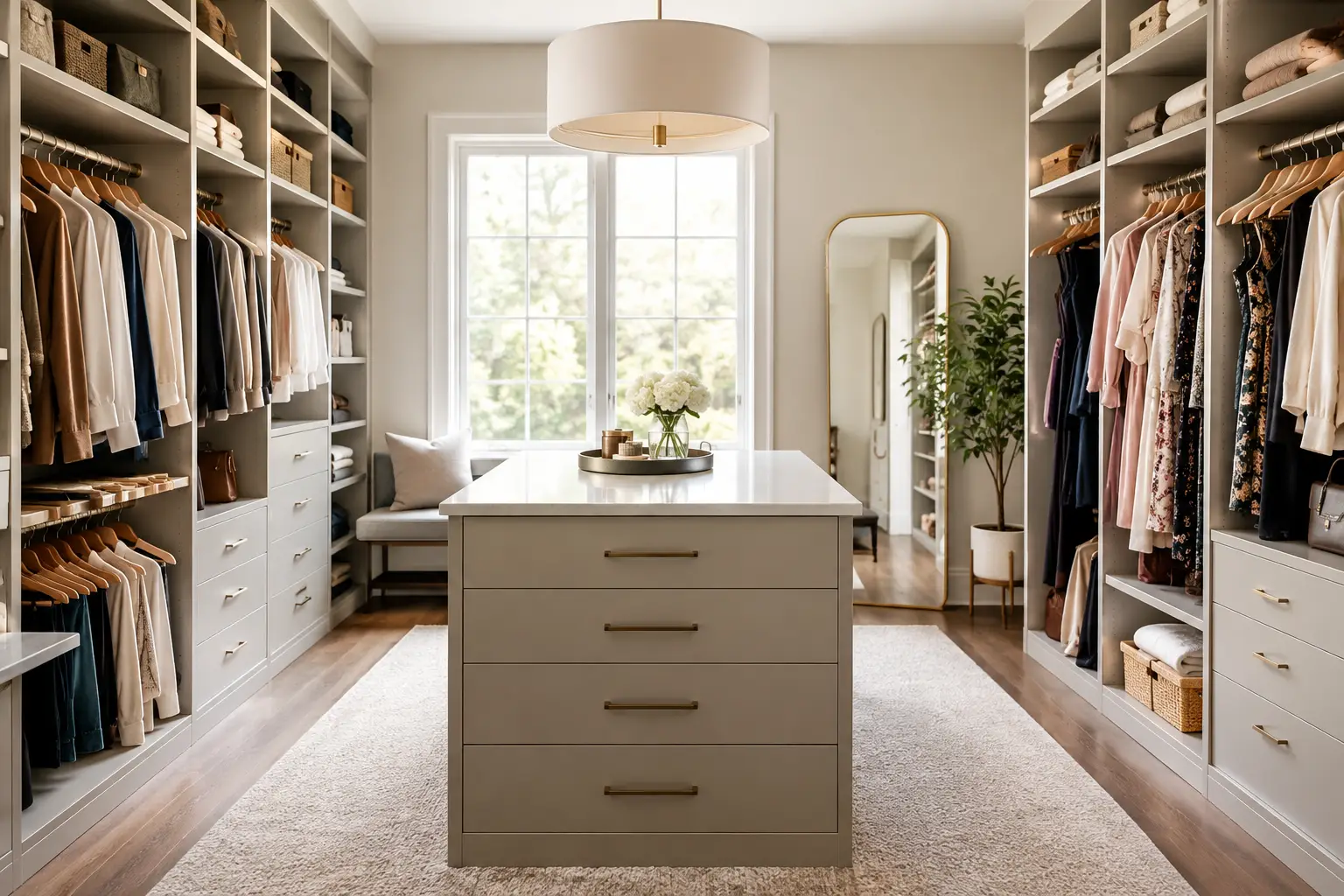
A dressing room should make the morning easier, not add another room to manage. The best dressing room closet ideas start with the way you actually get ready: the clothes you reach for, the items that pile up, and the amount of time you have before heading out the door. A beautiful finish matters, but a closet that keeps your wardrobe visible, accessible, and protected will serve your home much better over time.
For Quad Cities homeowners, a dressing room can be part of a primary suite remodel, a converted spare bedroom, or a thoughtfully planned walk-in closet. The right design is less about copying a showroom and more about giving every part of your routine a dependable place.
Start With Your Daily Routine
Before choosing drawers, finishes, or accessories, consider how the room needs to work on an ordinary weekday. One person may need quick access to work clothes, shoes, and a watch collection. Another may want room for seasonal layers, handbags, and folded casual clothes. Couples often need both open hanging space and private storage that keeps personal items from becoming mixed together.
A useful design begins by taking inventory of what you own now, not what you hope to own after the project. Count long garments, short-hang clothing, shoes, folded items, and accessories. Notice where clutter gathers. If a chair becomes the landing spot for clothes that are clean but not ready to be put away, the design may need a valet rod, an open shelf, or a dedicated hamper nearby.
It also helps to identify what should not live in the dressing room. Bulky suitcases, out-of-season sports equipment, and household supplies usually belong elsewhere. Giving the closet only the items connected to dressing and personal care prevents valuable storage from disappearing too quickly.
Dressing Room Closet Ideas for Better Zones
A well-designed dressing room uses zones rather than treating every wall the same. Each zone should support a task, whether that is selecting clothes, getting dressed, storing accessories, or preparing for the next day.
Build hanging space around garment length
Double-hang sections are one of the most efficient choices for shirts, blouses, jackets, skirts, and folded-over pants. They use vertical space well and keep everyday pieces at eye level. Reserve a separate long-hang section for dresses, coats, jumpsuits, and longer garments. Trying to fit everything into a single hanging height often wastes space or leaves clothes dragging against a lower shelf.
If two people share the room, creating clearly defined sides can make the room easier to maintain. The sections do not need to match exactly. One person may need more shoe shelving while the other needs more hanging space. Custom storage allows the layout to reflect the household instead of forcing both wardrobes into the same pattern.
Add drawers where visual clutter builds up
Open shelving looks clean when it is styled, but drawers are usually more practical for smaller items. Underwear, socks, workout clothing, sleepwear, belts, scarves, and everyday accessories are easier to find when they are contained.
Drawer dividers make a noticeable difference. Without them, even a large drawer can become a tangled catchall. Shallow drawers work well for jewelry and accessories, while deeper drawers can hold sweaters, denim, or handbags. Soft-close hardware is a worthwhile detail in a room used at the beginning and end of every day.
Give shoes a real home
Shoes stored in a pile are difficult to see and harder to keep in good condition. Adjustable shelves allow the space to change as your collection changes, from low-profile flats to taller boots. Angled shoe shelves can make pairs easier to view, while flat shelves offer more flexibility for boxes, boots, or handbags.
Avoid placing every shoe shelf at floor level. Bringing part of the collection up to waist or eye height makes getting ready faster and reduces bending. A lower shelf can still be useful for everyday sneakers, slippers, or shoes that need to be grabbed quickly.
Use a center island only when the room supports it
An island can add drawers, a folding surface, and a natural place to set out clothing. It works best when there is enough walking space on every side. A cramped island makes a dressing room feel smaller and can block access to drawers and cabinets.
If the room is narrow, a drawer tower or a bank of cabinetry along one wall may provide the same storage without interrupting the path through the room. The better choice depends on clearance, door swings, and whether two people need to use the space at once.
Make Lighting Part of the Plan
Lighting is often overlooked until a closet is already finished. A single ceiling fixture can leave shadows inside shelves, under hanging clothes, and near the mirror. Layered lighting makes the room more useful and more comfortable.
Start with bright, even overhead lighting for the full space. Then add lighting where it helps most, such as inside cabinets, beneath shelves, or along hanging sections. Motion-sensor lighting is especially convenient in closets because it turns on when needed and avoids searching for a switch with full hands.
A full-length mirror should have good front-facing light whenever possible. Light from directly above can create harsh shadows on the face, which is not ideal when checking makeup, grooming, or color choices. If there is natural light, enjoy it, but use window treatments or UV-conscious storage planning to protect delicate fabrics from prolonged sun exposure.
Include a Comfortable Getting-Ready Area
A dressing room does not need to be oversized to feel comfortable. A padded bench, small ottoman, or built-in seat can make putting on shoes easier and gives the room a finished, welcoming feel. In a larger space, a vanity area can provide a dedicated location for jewelry, grooming tools, and morning routines.
The trade-off is storage. Seating takes up square footage, so it should earn its place. A storage bench, for example, can hold extra linens, seasonal accessories, or shoes while still providing somewhere to sit. In a compact room, a pull-out valet rod may be more useful than a bench because it creates a temporary staging area without using floor space.
A hamper is another small addition with a big payoff. Built-in pull-out hampers keep laundry off the floor and out of sight. For shared closets, separate hampers can simplify sorting before laundry day.
Choose Materials That Hold Up
A dressing room is a working space, not just a decorative one. Durable shelving, secure mounting, quality drawer hardware, and easy-to-clean surfaces matter more than a trendy look that does not last. A neutral finish can give the room a calm, polished appearance and remain flexible if the rest of the bedroom changes later.
That does not mean every closet should be white or simple. Wood-inspired finishes can add warmth, darker colors can create a more tailored feel, and contrasting drawer fronts can define an island or vanity. The best finish is one that suits the home while making it easy to see and maintain the space.
Ventilation also deserves attention. Closets can become stuffy, especially when they hold seasonal coats, shoes, and heavier fabrics. Keep air pathways clear, avoid overpacking shelves, and consider how the room connects to the home’s heating and cooling. Comfortable temperatures and reasonable humidity help clothing stay fresh and make the room more pleasant to use year-round.
Plan for Change, Not Just the First Day
A closet layout should have room to adapt. Adjustable shelves can accommodate new shoes or changing storage needs. A few empty inches in drawers and hanging sections are not wasted space. They are breathing room for gifts, seasonal wardrobes, and the normal changes that happen in a household.
This is where professional planning can prevent expensive mistakes. Measurements alone do not reveal how drawers will open, whether an island leaves enough clearance, or how to make an awkward corner useful. Comfort Concepts QCA can help homeowners turn those details into a dressing room that feels organized from the start and stays practical long after installation.
The most satisfying dressing room is not the one with the most features. It is the one where getting ready feels calmer, putting things away takes less effort, and every item has a place waiting for it.