A mudroom that collects backpacks, boots, pet supplies, and winter gear can make a home feel crowded long before the rest of the house does. When comparing custom cabinets versus modular storage, the better choice is not always the one with the most features or the lowest starting price. It is the one that solves the way your household actually lives in the space.
For Quad Cities homeowners, storage decisions often need to work through busy school mornings, changing seasons, home projects, and the everyday accumulation that comes with family life. Custom cabinetry and modular systems can both bring order to a room. Their differences come down to fit, flexibility, finish, installation, and how long you expect the solution to serve your home.
Custom Cabinets Versus Modular Storage: The Core Difference
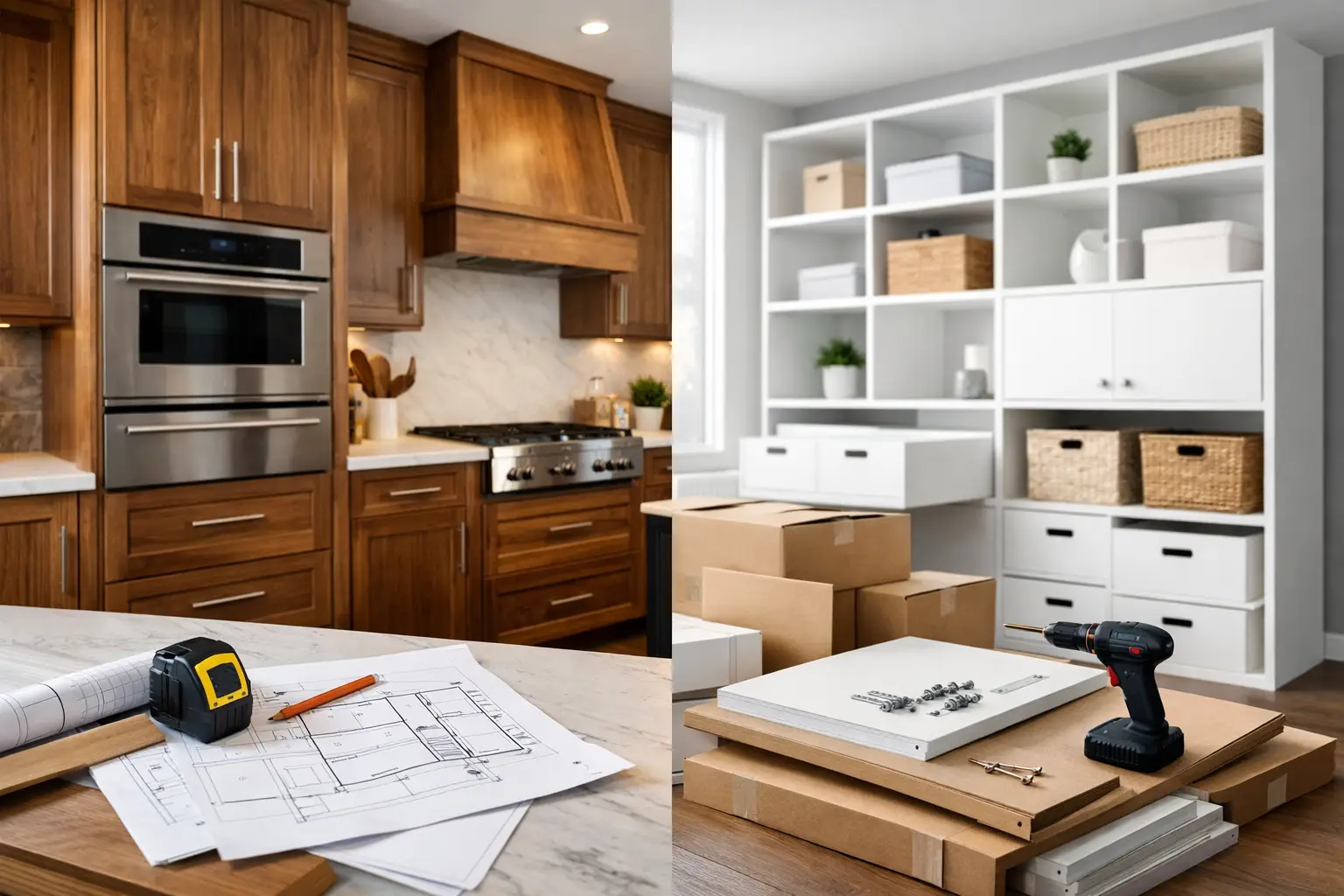
Custom cabinets are designed around your room's exact measurements and your specific storage needs. Rather than selecting from a fixed set of standard units, you decide how the space should function. That may mean deep drawers for pantry appliances, a tall garage cabinet for yard tools, a built-in desk for a home office, or closed mudroom storage that keeps seasonal clutter out of sight.
Modular storage uses pre-sized components that can be combined in different arrangements. Think of standard cabinets, shelf towers, bins, racks, and drawer units that are selected to fit a general layout. A modular system can still look organized and attractive, especially in a straightforward room with clean walls and standard dimensions.
The main question is simple: are you trying to fill a space, or are you trying to make that space work better? Modular storage often fills a need quickly. Custom storage is built to address the details that make a room frustrating in the first place.
When Modular Storage Makes Sense
Modular storage is often a practical choice for homeowners who need a basic improvement without a major project. It can be helpful in a temporary living situation, a rental property, a small utility area, or a room that may change purpose soon. If you expect to move, renovate, or repurpose the room within a few years, the ability to relocate or rearrange components may be valuable.
It can also be a reasonable fit when the layout is simple. A square closet with no unusual corners, low ceilings, or obstructions may not require a fully tailored design to become more useful. Standard shelves and cabinets can give you a clear place for supplies, linens, or seasonal items at a lower initial cost.
That lower upfront cost is the strongest argument for modular storage. Still, homeowners should look beyond the price on the shelf. Add-on pieces, assembly, wall mounting, trim work, replacement parts, and the need to work around unused gaps can change the final value. A less expensive system may be the right call, but it should not become a short-term fix that leaves the same daily frustrations behind.
Where Custom Cabinets Earn Their Value
Custom cabinets are especially useful when every inch matters. Many closets, garages, laundry rooms, and older homes have uneven walls, soffits, outlets, windows, awkward corners, or limited floor area. Standard units may fit near those features, but custom cabinetry can be designed around them.
That precision affects more than appearance. A properly designed system can create usable vertical storage, eliminate wasted corners, and keep frequently used items within easy reach. In a pantry, that might mean pull-out shelves and designated zones for snacks, small appliances, and bulk goods. In a garage, it may mean cabinets that protect tools and supplies from dust while leaving room to park the car.
Custom storage also gives homeowners more control over the look of the room. You can choose the cabinet finish, door style, hardware, drawer depth, hanging areas, lighting, and accessory options that match your home and your routine. For a primary closet or dressing room, this can turn a crowded area into a calmer, easier place to start the day. For a home office, it can create storage that looks intentional rather than pieced together.
There is a cost difference, and it is real. Custom cabinets require professional design, quality materials, and installation. But for a long-term home, the value often comes from durability and usefulness over years of daily use. A well-planned system can also support resale appeal because it makes a room feel more finished and functional.
Compare Fit Before Comparing Price
Price matters, but fit should come first. A modular unit that costs less may leave six inches of unused space on each side, collect dust above the top shelf, or block access to an outlet. Those details can seem minor during a purchase, yet they become noticeable every time you use the room.
Custom cabinets are measured for the available space, including ceiling height and wall conditions. This is particularly helpful in reach-in closets, laundry rooms, and mudrooms, where a few inches can determine whether you have room for a hamper, a bench, or a full-height storage cabinet.
Consider what needs to be stored now and what is likely to change. Families with young children may need lower hooks and cubbies today, then more shelf space as backpacks become sports equipment and school supplies. A custom design can account for that change with adjustable shelving and flexible sections. Modular systems can be reconfigured too, but only within the limits of their available parts and sizes.
Appearance and Finish
If storage will be visible every day, appearance carries more weight. Open modular shelves are convenient, but they require consistent upkeep. A closed cabinet front can make a mudroom, office, or living area feel calmer even when life is busy behind the doors.
Custom cabinetry can be coordinated with the room's colors and style, whether you prefer a clean white finish, warm wood tones, or a more modern look. That does not mean every space needs a high-end dressing room. It means the storage should feel like it belongs in the home rather than looking like an afterthought.
Installation and Durability
Assembly quality matters in both options. A modular system can perform well when it is properly installed and anchored. However, lighter materials, limited drawer hardware, and unsupported spans may not hold up as well in high-use areas.
Custom cabinet systems are typically built with long-term use in mind and professionally installed for a secure fit. That is especially valuable for garages, closets, pantries, and commercial spaces where shelves and drawers carry significant weight. The right materials and hardware reduce sagging, sticking, and the constant adjustments that can come with lower-grade storage.
A Room-by-Room Way to Decide
The room often points toward the best answer. In a garage, modular racks may be enough for a few bins and garden tools. If the goal is to create a clean workspace, hide chemicals and equipment, and keep floor space open, custom cabinets offer more control.
In a pantry, simple modular shelving may work for a small household with limited inventory. A family that buys in bulk, manages food allergies, cooks frequently, or wants better visibility may benefit from custom shelves, drawers, and pull-outs.
Closets are another clear example. A basic modular organizer can improve a guest room closet quickly. A primary closet with two people, different clothing needs, and limited square footage usually benefits from a tailored layout. The same is true for laundry rooms and mudrooms, where storage needs tend to overlap with traffic flow.
Before choosing either approach, take a realistic inventory. Measure the items that cause the most clutter, including tall boots, vacuum attachments, sports gear, small appliances, and cleaning supplies. Then consider who uses the space, how often they use it, and what currently slows them down. A good storage system is not just about holding more. It should make it easier to put things away and find them again.
Get a Plan That Supports Daily Life
The best storage investment is based on a clear plan, not a showroom display. Comfort Concepts QCA works with homeowners to measure the space, identify the pressure points, and design storage around real routines. That may mean a fully customized solution, or it may mean focusing custom features where they will make the biggest difference.
Choose modular storage when flexibility, speed, and a lower initial cost are your priorities. Choose custom cabinets when you want a precise fit, a finished appearance, and a system designed to serve your household for the long run. A well-organized room gives you something more useful than extra shelves: it gives your home a little more breathing room every day.