
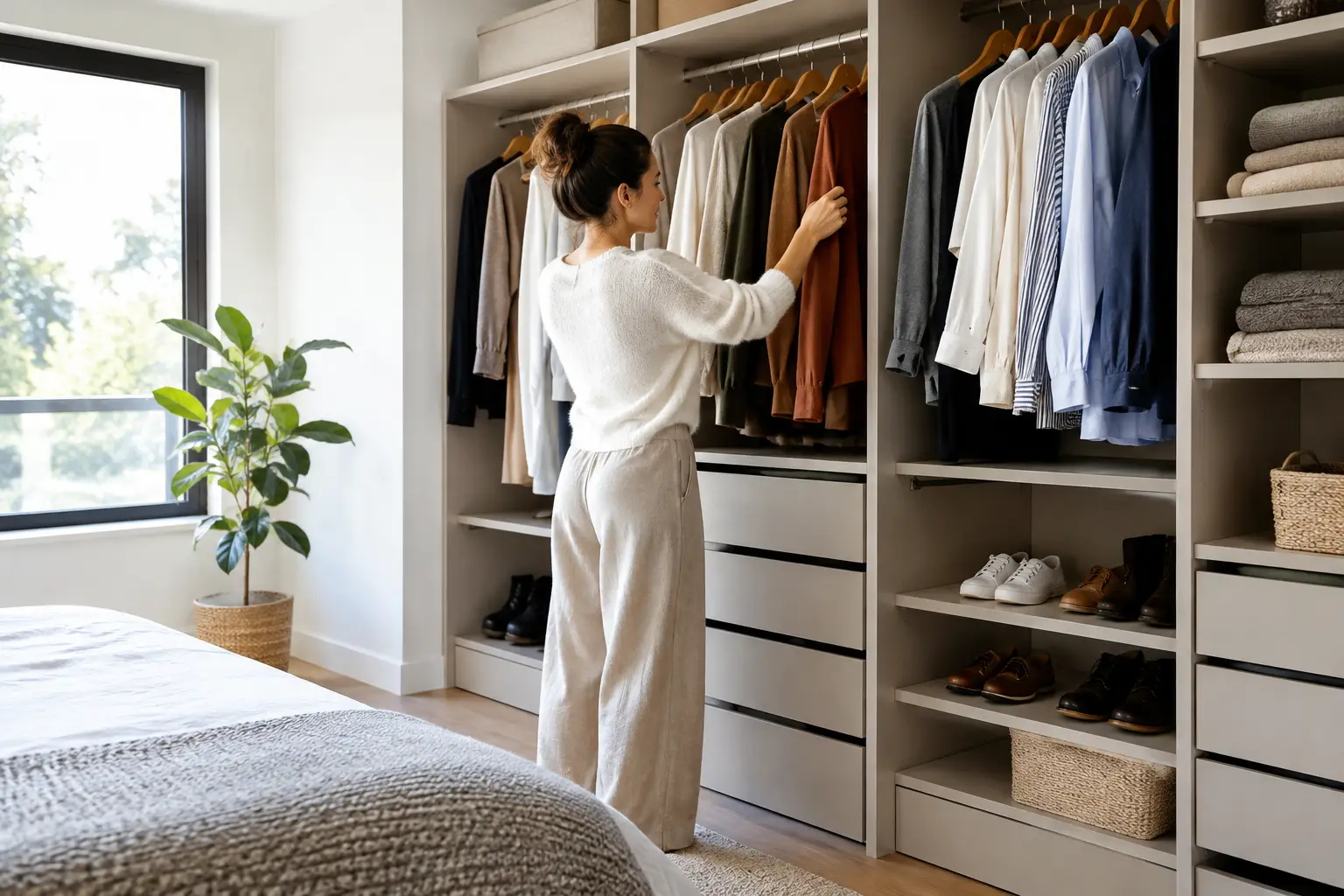
A crowded closet can make an ordinary morning feel harder than it should. When clothing, shoes, laundry, and seasonal items compete for the same limited space, getting dressed becomes a daily search. Well-planned closet systems give every item a sensible home, helping your bedroom feel calmer and your routine run more smoothly.
For homeowners in the Quad Cities, a custom closet is not just a cosmetic upgrade. It is a practical way to use the space you already have better, reduce visual clutter, and make household tasks easier for everyone who uses the room.
What a Closet System Should Solve
The best closet system starts with the problem, not a collection of shelves. A family may need more hanging room for work clothes, a place to sort laundry, or easier access to children’s everyday outfits. Another homeowner may have a walk-in closet that looks large but wastes space because it has one rod and a single high shelf.
A thoughtful design considers what you own, what you reach for most often, and what needs to stay out of sight. It also accounts for how the room is used. A shared primary closet has different needs than a guest closet, a child’s closet, or a narrow reach-in closet near the entryway.
The goal is not to fill every wall with cabinetry. The goal is to make the available space work for your household without making it feel crowded.
Closet Systems Work Best When Zones Are Clear
Most closets function better when storage is organized by purpose. Hanging sections, shelves, drawers, shoe storage, and accessory storage should each earn their place. This makes it easier to put things away and much easier to notice when something no longer belongs there.
Hanging Space for the Clothes You Actually Wear
Double-hang sections are often one of the most useful additions for shirts, folded-over pants, skirts, and children’s clothing. They make use of vertical space that frequently goes unused. Long-hang space is still necessary for dresses, coats, and other longer garments, but it does not need to take over the entire closet.
The right balance depends on your wardrobe. Someone who wears uniforms or dresses daily may need more long-hang storage. A household with mostly casual clothing may gain far more from double hanging and adjustable shelves.
Drawers Keep Small Items From Drifting
Open shelves are convenient, but they can quickly become catch-all areas. Built-in drawers give socks, undergarments, workout gear, jewelry, and other small items a designated place. They are especially helpful in closets without nearby dresser space.
Drawer depth matters. Shallow drawers can be ideal for accessories and folded shirts, while deeper drawers are useful for sweaters or bulky seasonal pieces. Soft-close hardware is a small feature that adds a quieter, more polished feel to a space used early in the morning and late at night.
Shelves and Shoe Storage Need a Real Plan
Shoes are one of the quickest ways for a closet floor to disappear. Dedicated shoe shelves keep pairs visible and protected, whether you prefer flat shelving, angled displays, or cubbies. The right choice comes down to the type and number of shoes you own. Tall boots require more clearance than everyday sneakers, and a collection of dress shoes may benefit from individual compartments.
Adjustable shelving offers flexibility as your needs change. It can hold purses and folded clothing now, then be reconfigured later for bins, linens, or a growing child’s wardrobe. Fixed shelves can look clean and intentional, but they are less adaptable over time.
Choosing Features Without Overbuilding
A custom design gives you options, and that is useful only when each feature solves a real need. Pull-out hampers, valet rods, belt racks, tie organizers, jewelry trays, and integrated lighting can make a closet more convenient. They should not be added simply because they are available.
For example, a pull-out hamper can simplify laundry in a primary closet, particularly when there is enough room to open it comfortably. A valet rod can be helpful for selecting clothes or packing for travel, but it may not be necessary in a compact reach-in closet. Lighting is valuable in deep walk-ins and dark corners, while a small closet with good overhead light may only need a brighter fixture nearby.
It also helps to think about maintenance. Open storage makes it easy to see what you own, but it asks you to keep items orderly. Doors and drawers create a cleaner appearance, though they add cost and may require more room to open. There is no single right answer. The best mix reflects how you naturally live in the space.
Materials and Installation Matter
A closet may be used several times each day, so materials and hardware should be chosen for regular use rather than a showroom look alone. Quality panels, secure mounting, durable drawer hardware, and properly supported hanging rods all contribute to a system that continues to perform.
Professional measurement is equally important. Walls are not always square, floors can vary, and door swings or outlets may affect the layout. A system that looks good on paper can become frustrating if a drawer cannot open fully or a hanging section interferes with the closet door.
Professional installation also helps protect the home. Systems should be anchored correctly, aligned carefully, and finished cleanly around existing walls and trim. For a long-term upgrade, those details are worth getting right from the beginning.
Start With What Is in Your Closet Now
Before planning a new closet, take an honest look at what is currently stored there. This is not about creating a perfectly minimal wardrobe. It is about understanding volume. Count the shoes that need accessible storage, estimate the amount of hanging clothing, and notice which items regularly end up on the floor or chair.
Separate everyday items from seasonal pieces. Heavy winter coats, holiday clothing, luggage, and extra bedding may not need prime closet space all year. Moving those items to higher shelves or another storage area can free up the most convenient locations for the things you use every week.
This step also prevents a common mistake: designing around clutter instead of designing around the life you want the space to support. A new system can organize a lot, but it works best when it has a clear purpose.
A Good Design Should Last Through Changes
Households change. Children grow, work routines shift, and storage needs evolve after a move, renovation, or new addition to the family. Closet systems with adjustable components can continue to serve you through those changes without requiring a complete rebuild.
This is particularly valuable in children’s closets. A layout that works for small clothes and toy bins can later be adjusted for longer garments, sports equipment, and school supplies. In a primary closet, a flexible design can adapt when one person needs more hanging room or when a dresser is moved elsewhere in the bedroom.
Comfort Concepts QCA approaches custom storage with this kind of practical planning in mind. The right layout should look at home in your space while giving your household a dependable place for the items that make up daily life.
Make the Most of Your Consultation
Bring a simple list of frustrations to a design consultation. Mention the areas that feel cramped, the items that are hard to reach, and whether more than one person uses the closet. Photos of the current space can help, but a professional measurement provides the details needed for an accurate plan.
Be clear about your budget and priorities. If drawers and shoe storage matter most, it may make sense to focus there before adding specialty accessories. If you are updating a home for resale, a clean, functional reach-in closet may offer more value than an elaborate design with features that do not fit the room.
A closet should support the rhythm of your home, not add another task to your day. When each item has an accessible place and the layout reflects the way your family actually lives, putting things away becomes simpler and leaving the house feels a little more comfortable.