
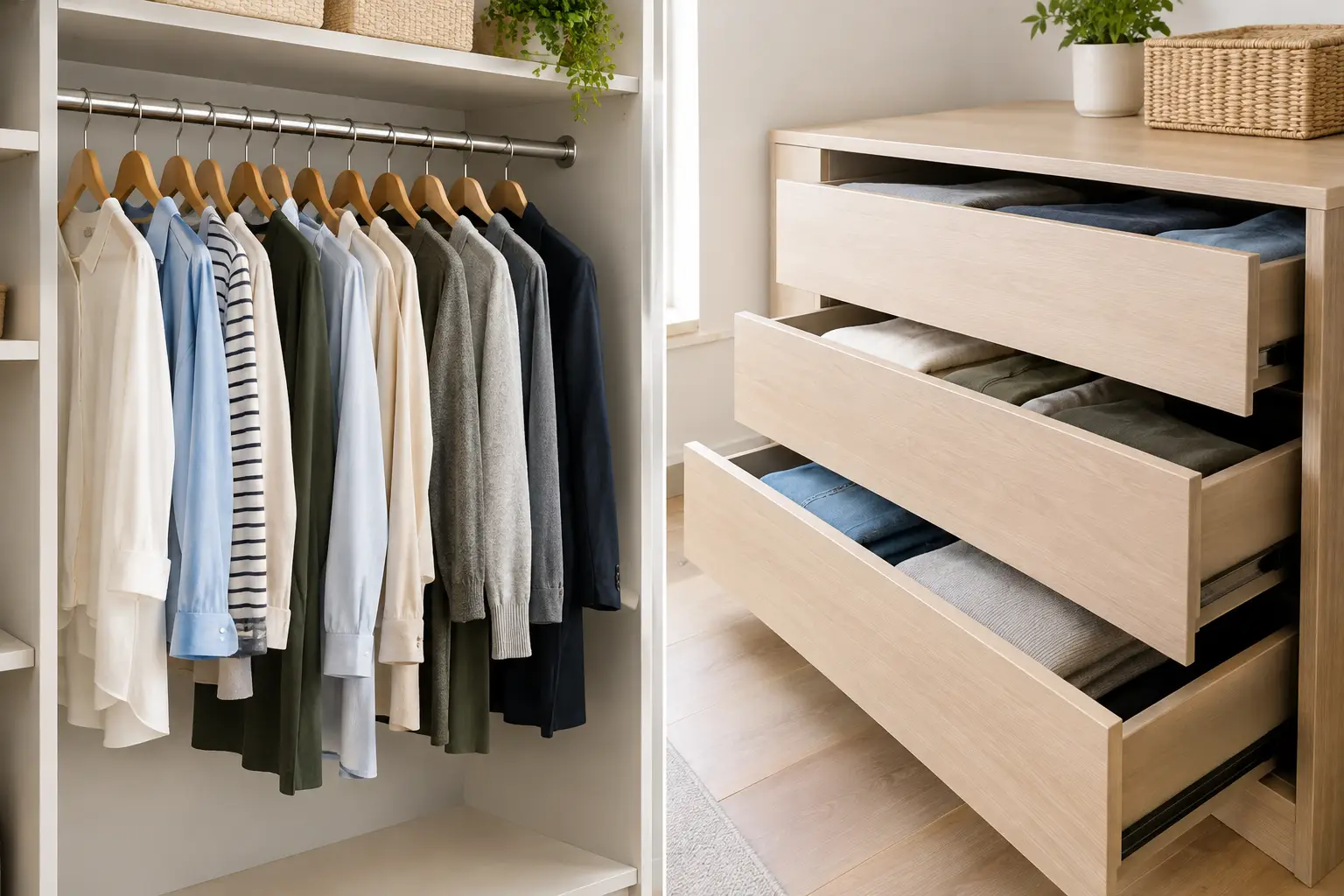
A closet can look spacious and still make getting dressed feel like a daily scramble. That usually happens when the storage mix does not match the clothes actually being stored. When weighing closet rods vs drawers, the better choice is rarely one or the other. Most homeowners need a thoughtful combination of both, sized around their wardrobe, habits, and available space.
Rods keep hanging clothes visible and wrinkle-free. Drawers contain smaller items, create a cleaner appearance, and make use of space that might otherwise be hard to reach. The right balance can turn a crowded closet into a room that supports calmer mornings and easier laundry days.
Closet Rods vs Drawers: The Main Difference
Closet rods are designed for garments that need to hang. Shirts, dresses, blazers, slacks, skirts, coats, and uniforms generally stay in better condition when they are placed on hangers. A rod gives these items vertical room, keeps them easy to see, and prevents the creases that come with folding.
Drawers are better for folded and smaller belongings. T-shirts, sweaters, jeans, underwear, socks, pajamas, workout clothes, accessories, and seasonal items all fit naturally in drawers. They also provide visual relief. Instead of seeing every item at once, you can close the drawer and keep the closet looking orderly.
The decision is not simply about appearance. It affects how much fits in the closet, how quickly you can find what you need, and whether the space remains manageable as your household changes.
When Closet Rods Make the Most Sense
A hanging section is often the foundation of a useful closet. If much of your wardrobe includes office attire, dresses, button-down shirts, jackets, or clothing that wrinkles easily, rods should receive a larger share of the layout.
Double-hang rods are especially effective for shirts, folded pants on hangers, skirts, and shorter jackets. One rod is placed above the other, allowing two levels of hanging storage in the same footprint. This can nearly double usable hanging capacity compared with a single rod, as long as the clothes do not need extra length.
Long-hang sections are necessary for dresses, long coats, jumpsuits, and other full-length garments. These areas take up more vertical room, but they prevent hems from bunching at the floor or sitting on a shelf. A well-planned closet does not need an oversized long-hang section if only a few garments require it. Measuring what you own first prevents wasted space.
Rods also work well for frequently worn items. When clothes are visible, you are more likely to wear what you already have instead of forgetting it behind stacks of folded clothing. For busy households, that visibility can make a real difference during rushed mornings.
That said, rods can become inefficient when they are overloaded. Hangers packed tightly together make it difficult to remove clothing without pulling several pieces along with it. A rod filled with casual T-shirts and sweatshirts may also waste valuable space that drawers could use more effectively.
Consider Rod Placement and Reach
High rods may add capacity, but they are only helpful if they can be used comfortably. Upper hanging areas can be a good fit for off-season clothing or special-occasion pieces, especially when paired with a pull-down rod. Everyday garments should stay within easy reach whenever possible.
For children, low rods encourage independence. A child can hang up a coat, choose an outfit, or help put away laundry without needing an adult to reach overhead. As their clothing needs change, the system can be adjusted with different rod and shelf positions.
When Drawers Are the Better Choice
Drawers bring control to the items that tend to create clutter. Socks, undergarments, belts, leggings, T-shirts, and exercise clothing can quickly become messy when placed on open shelves. A drawer gives every category a defined home and makes it easier to put laundry away properly.
They are also practical for households that prefer folding over hanging. Some people have more denim, knitwear, casual basics, and athletic apparel than dress clothes. In that case, a closet with plenty of rods may look impressive but fail to serve the way the homeowner actually dresses.
Drawer depth matters. Shallow drawers are useful for jewelry, watches, ties, undergarments, and smaller accessories. Medium-depth drawers work well for shirts, shorts, and lightweight pants. Deeper drawers can hold bulky sweaters, jeans, handbags, or extra linens, although overly deep drawers can become a catch-all if they are not organized by category.
Full-extension drawer hardware is worth considering because it lets you access the entire drawer, including the back corners. Quality hardware also helps drawers open smoothly and hold up through years of everyday use. For a closet that serves a family, durability is not a small detail.
Drawers Create a More Finished Look
Open shelving is useful, but it asks homeowners to keep stacks neat at all times. Drawers reduce that pressure. They conceal everyday essentials while still keeping them close at hand, which is helpful in a primary closet, dressing room, or reach-in closet that is visible from the bedroom.
For shared closets, drawers can establish clear boundaries. One person may have a bank of drawers for folded clothing while the other uses more hanging space. This simple division makes it easier to maintain order and reduces the frustration of items spreading into each other's areas.
Build Around Your Actual Wardrobe
The best way to settle the closet rods vs drawers question is to take inventory before designing the space. Look at what is in your closet now, not what you imagine might be there someday. Count long-hang items, short-hang items, folded clothing, shoes, bags, and accessories.
Then consider your routine. Do you fold laundry right away, or do folded items linger in baskets? Do you wear business attire most days, or does your closet need to support school clothes, sports gear, and casual layers? Do you share the closet with a spouse, or are you planning for a child whose needs will change quickly?
A practical layout usually includes hanging space for wrinkle-prone garments, drawers for personal and folded items, and shelves for shoes, bags, or storage bins. The proportions vary from home to home. A professional wardrobe may call for more rods, while a casual wardrobe often benefits from additional drawers.
Use the Whole Closet, Not Just the Walls
A custom closet should make smart use of width, height, and corners. A single rod and shelf can leave substantial space unused, particularly in walk-in closets. Adding drawers below hanging clothes, placing shelves above rods, and using vertical sections for shoes or handbags can make the same footprint work much harder.
In a reach-in closet, drawers may be placed under a short-hang rod, creating a compact but highly useful arrangement. In a walk-in closet, a drawer bank can anchor the center of a wall or serve as a built-in dresser. If there is enough room, a central island can add drawers for folded clothes and accessories while creating a convenient surface for setting out an outfit.
Lighting matters, too. Good lighting helps you see colors accurately and prevents dark corners from becoming forgotten storage. Accessories such as valet rods, belt racks, hampers, and jewelry inserts can add convenience, but they should support the main storage plan rather than replace it.
Plan for Change, Not Just Today
A closet should work well beyond the first week after installation. Clothing styles change, children grow, work schedules shift, and storage needs evolve. Adjustable shelving and flexible rod locations make it easier to update the space without starting over.
Comfort Concepts QCA helps homeowners create custom storage that reflects how their households live, not a one-size-fits-all layout. The goal is not to add every possible feature. It is to create a dependable place for the things you use every day.
The most comfortable closet is one that makes putting things away almost as easy as taking them out. Give hanging clothes enough room, provide drawers for the items that need containment, and let your real routine guide every decision.