
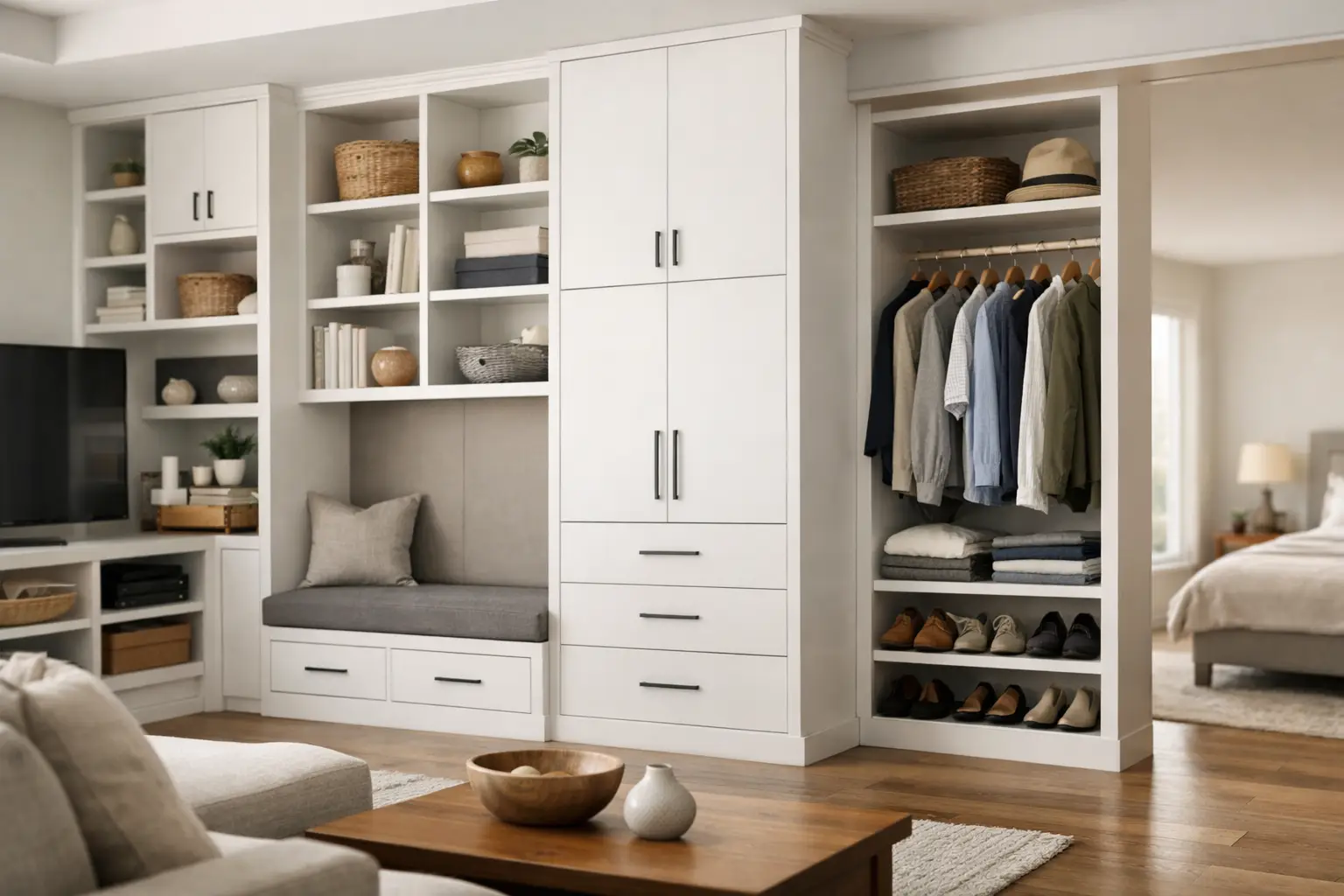
That hallway pile of shoes, the kitchen cabinet that never seems to fit enough, the spare bedroom doing double duty as storage - these are exactly where built in storage benefits show up in real life. For many homeowners, the issue is not owning too much. It is living in spaces that were never set up to hold daily life in a practical, organized way.
Built-in storage changes that by making the room work harder without making it feel crowded. Instead of adding another freestanding shelf or plastic bin, you create storage that fits the space, supports your routine, and looks like it belongs there. The result is a home that feels calmer, more useful, and easier to maintain.
Why built in storage benefits matter more than extra furniture
Freestanding furniture can help, but it often leaves wasted space around it, above it, or behind it. A store-bought cabinet may be close enough, but close enough usually means compromises. You lose inches, flexibility, and often the clean look that helps a room feel finished.
Built-in storage is designed around the exact dimensions of a wall, corner, closet, or alcove. That means more usable storage in the same footprint. In homes where every square foot matters, this is one of the biggest advantages. You are not just adding shelves. You are improving how the room functions from day to day.
There is also a visual benefit. Built-ins tend to reduce the patchwork look that happens when different storage pieces are added over time. Matching finishes, consistent lines, and a layout planned for the room create a more settled appearance. That can make even a busy family home feel more comfortable.
The everyday built in storage benefits homeowners notice first
The first benefit most people notice is less visible clutter. When belongings have a dedicated place, it becomes easier to put things away and easier to find them later. That sounds simple, but it changes how a home feels. Mornings move faster, surfaces stay clearer, and rooms are easier to clean.
Another major benefit is better use of awkward areas. Corners, underused walls, under-stair spaces, and shallow niches often go ignored because standard furniture does not fit them well. A built-in solution turns those problem spots into practical storage without making the room feel overfilled.
Families also appreciate how built-ins can be tailored to specific routines. A mudroom can include hooks, cubbies, and bench seating sized for the people who actually use it. A pantry can be designed around bulk groceries, small appliances, or serving pieces. A laundry room can include hampers, folding space, and cabinets that keep supplies out of sight.
This is where customization matters. Good storage is not only about capacity. It is about putting the right items in the right place so your home supports how you live.
Better organization without wasting space
One reason built-ins work so well is that they use vertical space more effectively. In many homes, the area near the ceiling is underused, especially in closets, garages, and utility rooms. Built-in shelving and cabinetry can take advantage of that height while keeping often-used items within easy reach.
Depth matters too. Storage that is too deep tends to become a catch-all, while storage that is too shallow may not be useful. Custom planning helps avoid both problems. Shelves can be sized for shoes instead of random bins, drawers can be designed for folded clothes instead of loose overflow, and cabinets can fit the items you actually need to store.
That kind of planning also helps avoid duplicate purchases. Homeowners often buy extra organizers, baskets, racks, and temporary fixes when their storage is not working. Over time, those quick solutions add up. Built-ins require a larger upfront investment, but they can replace years of piecemeal spending on storage that never quite solves the problem.
Built-ins can improve how each room functions
Storage is not just about hiding things. It affects how a room is used.
In a bedroom closet, built-ins can separate hanging clothes, folded items, accessories, and shoes in a way that makes getting dressed easier. In a home office, they can keep paperwork, supplies, and electronics organized so the room stays useful instead of becoming cluttered. In a living room, an entertainment center with closed and open storage can manage cords, media, games, and decor without taking over the space.
Kitchens, pantries, mudrooms, and laundry areas often see the biggest practical improvement because they handle constant traffic. These spaces do a lot of work, and poor storage creates daily friction. When cabinets, drawers, shelves, and specialty features are planned around the way your household moves through the space, those routines become simpler.
Not every home needs elaborate features. Sometimes the best solution is straightforward: better shelf spacing, more drawer storage, a built-in bench, or cabinets that reach the full height of the wall. Small upgrades can make a noticeable difference when they are designed with purpose.
Built in storage benefits for home value and appeal
Homeowners often ask whether built-ins add value. In many cases, they can - especially when they improve highly used spaces like closets, mudrooms, pantries, home offices, and garages. Buyers tend to notice storage because they are already thinking about where their own belongings will go.
Well-designed built-ins can also make a home feel more finished and better maintained. That does not mean every project will deliver the same return. It depends on the quality of materials, the design, the neighborhood, and whether the storage suits the home. A timeless closet system or a functional laundry room usually has broader appeal than something overly specific.
The strongest value may be in daily livability while you are still in the home. A house that works better for your family is easier to enjoy, easier to keep organized, and often less stressful to manage. For many homeowners, that is the return that matters most.
Trade-offs to consider before adding built-ins
Built-ins are not the right solution in every situation. If you expect to move soon, need full flexibility to rearrange rooms often, or are working with a very tight budget, freestanding storage may make more sense for now. Built-ins are more permanent, and that permanence is both a strength and a limitation.
Design matters too. Poorly planned storage can leave you with sections that are too narrow, too tall, or not adaptable enough over time. That is why it helps to think beyond the immediate problem. A child’s closet, for example, should still work as that child grows. A home office may need to support changing technology or work habits in the future.
Installation quality is another factor. Storage that looks built in but is not properly fitted can create its own problems, from wasted space to durability issues. A design-build approach helps because measurements, layout, materials, and installation are all considered together instead of as separate steps.
Where built-ins make the biggest difference
Some rooms benefit more quickly than others. Closets are an obvious example because they often waste vertical and side space. Garages also respond well to built-ins because tools, seasonal items, sports gear, and household overflow can easily become hard to manage. Pantries and mudrooms are worth attention because they support everyday traffic and can reduce clutter in adjacent rooms.
Smaller homes often see especially strong results. When square footage is limited, storage has to be smarter, not just bigger. Built-ins can help a smaller room do more without filling it with extra furniture.
This is one reason homeowners in the Quad Cities often choose custom solutions over one-size-fits-all systems. Homes vary, routines vary, and what works in one layout may not work in another. A storage plan should reflect the actual space and the people using it.
Comfort Concepts QCA works with homeowners who want storage to feel like part of the home, not an afterthought. That means looking at daily habits, room dimensions, and long-term use before deciding what belongs where.
Choosing storage that fits your life
The best built-in storage is not the one with the most features. It is the one that solves the problems you deal with every week. Maybe that means a reach-in closet that finally uses the full height of the wall. Maybe it means a garage system that gets bins off the floor. Maybe it means a mudroom that keeps coats, shoes, and backpacks from spreading through the house.
Built in storage benefits are strongest when the design stays practical. Good storage should make life easier, not give you more to manage. When it fits your home, your routine, and your budget, it can turn frustrating spaces into some of the hardest-working areas in the house.
If your home feels like it is always one step behind the clutter, the answer may not be more containers. It may be storage designed to finally fit the way you live.