
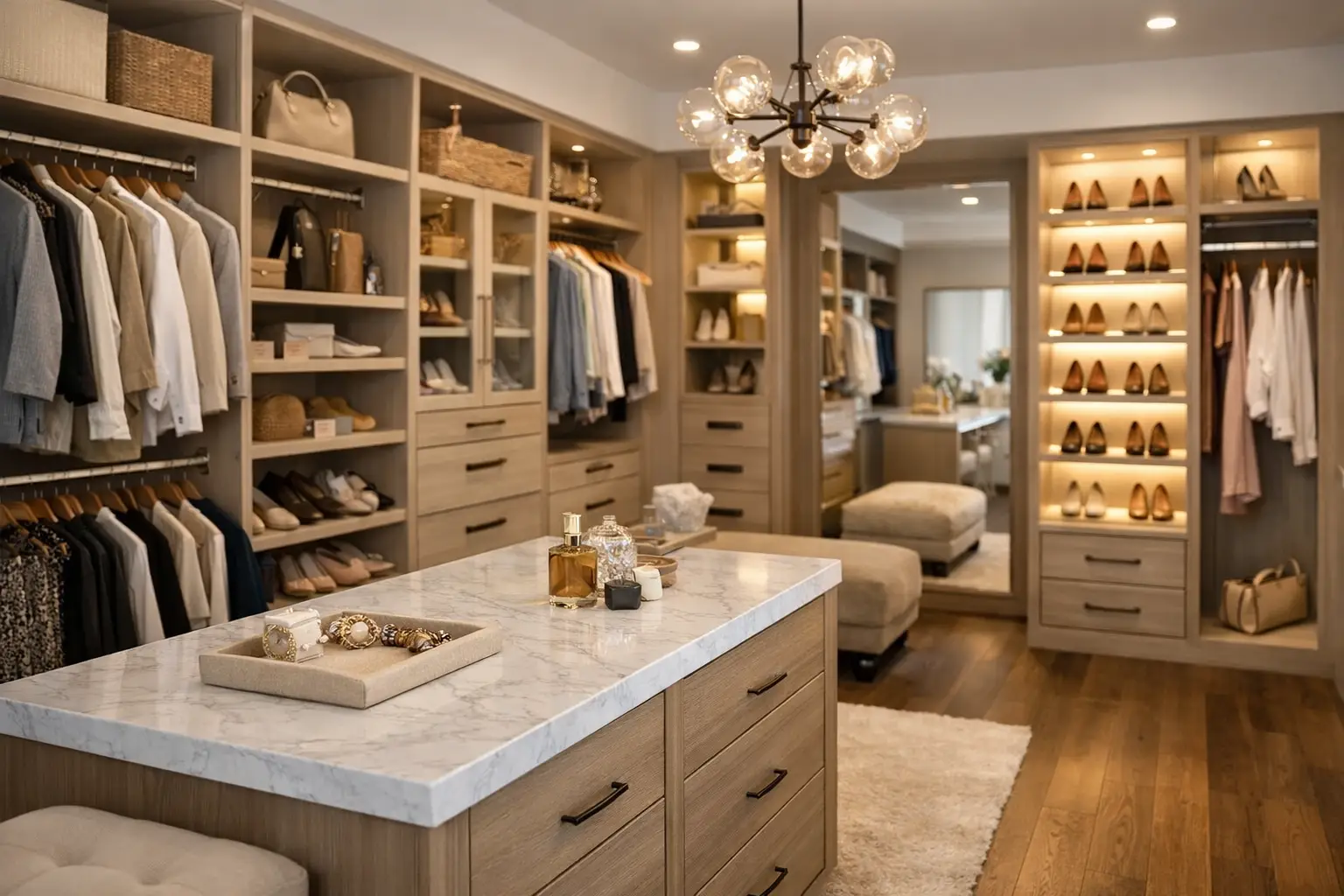
A walk-in closet should make the morning easier, not become another room where clothes, shoes, and storage bins pile up. The best walk in closet features are the ones that reflect how your household actually gets dressed, stores seasonal items, and keeps everyday essentials within reach. A well-planned closet creates order without asking you to work harder to maintain it.
For Quad Cities homeowners, a custom closet is also a practical way to make better use of space already inside the home. Whether you are updating a primary bedroom, planning a remodel, or tired of sharing one crowded hanging rod, the right features can turn a frustrating area into a comfortable part of your daily routine.
Best Walk-In Closet Features Start With a Smart Layout
Before choosing finishes, accessories, or drawer pulls, start with the layout. The most attractive closet will still feel crowded if there is not enough room to move, open drawers, or reach the clothes you wear most often.
A good design separates the closet into clear zones. One area may be for long hanging garments, another for shirts and folded items, and another for shoes or accessories. This gives every category a home and prevents one person’s belongings from taking over the entire room.
The best layout depends on the size and shape of the closet. A narrow walk-in may work best with storage along one or two walls and a clear center aisle. A larger space may have room for storage on three walls, an island, or a dedicated dressing area. The goal is not to fill every open surface with cabinetry. It is to create useful storage while preserving comfortable access.
Double Hanging Space for Everyday Clothing
For many households, double hanging rods deliver more usable storage than almost any other feature. One rod placed higher and one lower can hold shirts, blouses, skirts, folded pants, and shorter jackets without wasting the vertical space below a single rod.
Long hanging space still matters. Dresses, coats, robes, and longer garments need a section with enough clearance to avoid dragging or bunching at the bottom. A practical closet usually combines both types of hanging: double hanging for everyday pieces and a separate long-hang section for items that need it.
Consider who will use the closet, too. Rod heights should be accessible to the person using them most. A design that looks balanced on paper may not be convenient if someone has to reach overhead every day. Custom planning makes it possible to match the storage to real routines rather than a one-size-fits-all layout.
Drawers That Keep Small Items Out of Sight
Open shelves are useful, but not everything belongs on display. Built-in drawers provide a clean place for undergarments, workout clothes, sleepwear, swimsuits, accessories, and other smaller items that can make a closet look cluttered quickly.
Drawer depth should match what you plan to store. Shallow drawers are often better for jewelry, sunglasses, belts, and smaller accessories. Deeper drawers can handle sweaters, denim, or bulkier seasonal clothing. Soft-close hardware is a small upgrade that adds a quieter, more finished feel, especially in a primary suite used early in the morning or late at night.
A mix of drawers and open storage is usually more functional than choosing only one. Too many drawers can make it harder to see what you own, while too few can leave everyday items scattered across shelves. The right balance keeps the closet looking orderly without making it difficult to put things away.
Adjustable Shelving for Changing Needs
Household storage needs change more often than most people expect. A shelf that works well for purses today may need to hold folded blankets, shoe boxes, or seasonal bins a few years from now. Adjustable shelving gives the closet room to adapt.
Shelves are especially helpful for sweaters, jeans, handbags, hats, and storage containers. The key is spacing. Shelves set too far apart invite tall, unstable piles. Shelves set too close together can waste space and limit what fits. A custom design can create practical shelf heights based on the items you already own.
Upper shelves are valuable for less frequently used belongings, including off-season clothing, luggage, keepsake boxes, or extra bedding. Keep daily items at eye level or below whenever possible. This simple choice reduces searching and makes the closet easier to maintain.
Proper Shoe Storage That Protects Your Collection
Shoes often determine whether a closet feels organized or overcrowded. Leaving them on the floor creates visual clutter and makes cleaning harder. Dedicated shoe shelves give each pair a defined place while making it easier to see what is available.
Flat shelves work well for sneakers, flats, and casual shoes. Taller cubbies or adjustable shelves can accommodate boots and heels. If you own a large number of shoes, visibility matters as much as capacity. Storing every pair in a deep, dark cabinet may save a little wall space, but it can also mean forgotten shoes and repeated digging.
For families, shoe storage near the closet entrance can make everyday use easier. For a primary closet, it may make more sense to place shoes near the clothing categories they pair with most often. There is no single correct arrangement. It depends on habits, available room, and how many people use the space.
Lighting That Helps You See What You Own
Good lighting is one of the most overlooked walk-in closet features. It affects everything from choosing colors accurately to finding a dark shirt among other dark clothing. If the closet has limited natural light, well-placed lighting can make the entire room feel more comfortable and useful.
Overhead lighting provides general visibility, while integrated lighting near shelves, hanging areas, or drawers can reduce shadows in hard-to-see spots. Motion-activated lighting can be convenient for early mornings, late nights, or closets where hands are often full.
Lighting should be planned with safety and practicality in mind. It needs to be positioned appropriately around clothing and storage, and electrical work should be handled properly. A closet is not a place for improvised fixtures or dim lighting that leaves corners unused.
An Island When the Room Allows It
A closet island can provide drawers, a folding surface, and a natural place to set out clothing for the next day. It can also create a more finished dressing-room feel. But an island is only a good feature when the room is large enough to support it.
The trade-off is aisle space. If an island makes it difficult for two people to pass, blocks drawers, or leaves no comfortable room to stand, it will become an obstacle instead of an upgrade. In a smaller closet, wall-mounted drawers or a storage bench may deliver similar benefits without crowding the center.
When there is room, an island with a durable top and varied drawer sizes can become one of the hardest-working parts of the closet. It is particularly useful for couples who need shared storage but want separate areas for personal items.
A Full-Length Mirror and a Place to Sit
A full-length mirror belongs in many walk-in closets because it saves a trip back to the bedroom or bathroom when getting ready. It can be mounted on a wall, integrated into a cabinet door, or placed where it will not interfere with traffic flow.
If space permits, a small bench or built-in seating area is another thoughtful addition. It gives you a comfortable place to put on shoes, sort laundry, or set down a bag. In a compact closet, seating may not be worth sacrificing storage. In a larger room, it can make the space more pleasant and easier to use.
Accessories That Solve Specific Problems
The most useful accessories are not necessarily the most elaborate. Pull-out hampers keep laundry from collecting on the floor. Belt racks, tie racks, and jewelry organizers make small items easier to find. Valet rods offer a temporary place to hang tomorrow’s outfit or hold garments while packing.
Choose accessories based on a real need, not just because they look impressive in a showroom. If you rarely wear ties, a dedicated tie rack will not improve your routine. If laundry is constantly left in a corner, a built-in hamper may make an immediate difference. The strongest closet designs solve the small, repeated problems that create daily frustration.
Finishes and Hardware That Fit the Rest of the Home
Your closet should feel like a natural part of the home, not an afterthought. Cabinet color, hardware, drawer fronts, and countertop materials can be selected to coordinate with the bedroom and adjoining bath. Lighter finishes can help a smaller closet feel open, while darker finishes may create a richer, more tailored look in a larger dressing space.
Durability should guide the decision as much as appearance. Closet systems are opened, closed, loaded, and used every day. Quality materials, sturdy shelving, and professional installation help the finished space continue to perform long after the project is complete.
A well-designed walk-in closet is not about adding every possible feature. It is about giving your belongings a dependable place and making the start and end of each day feel less crowded. A personalized design consultation with Comfort Concepts QCA can help you decide which features will make the best use of your space, your budget, and the way your home works.