
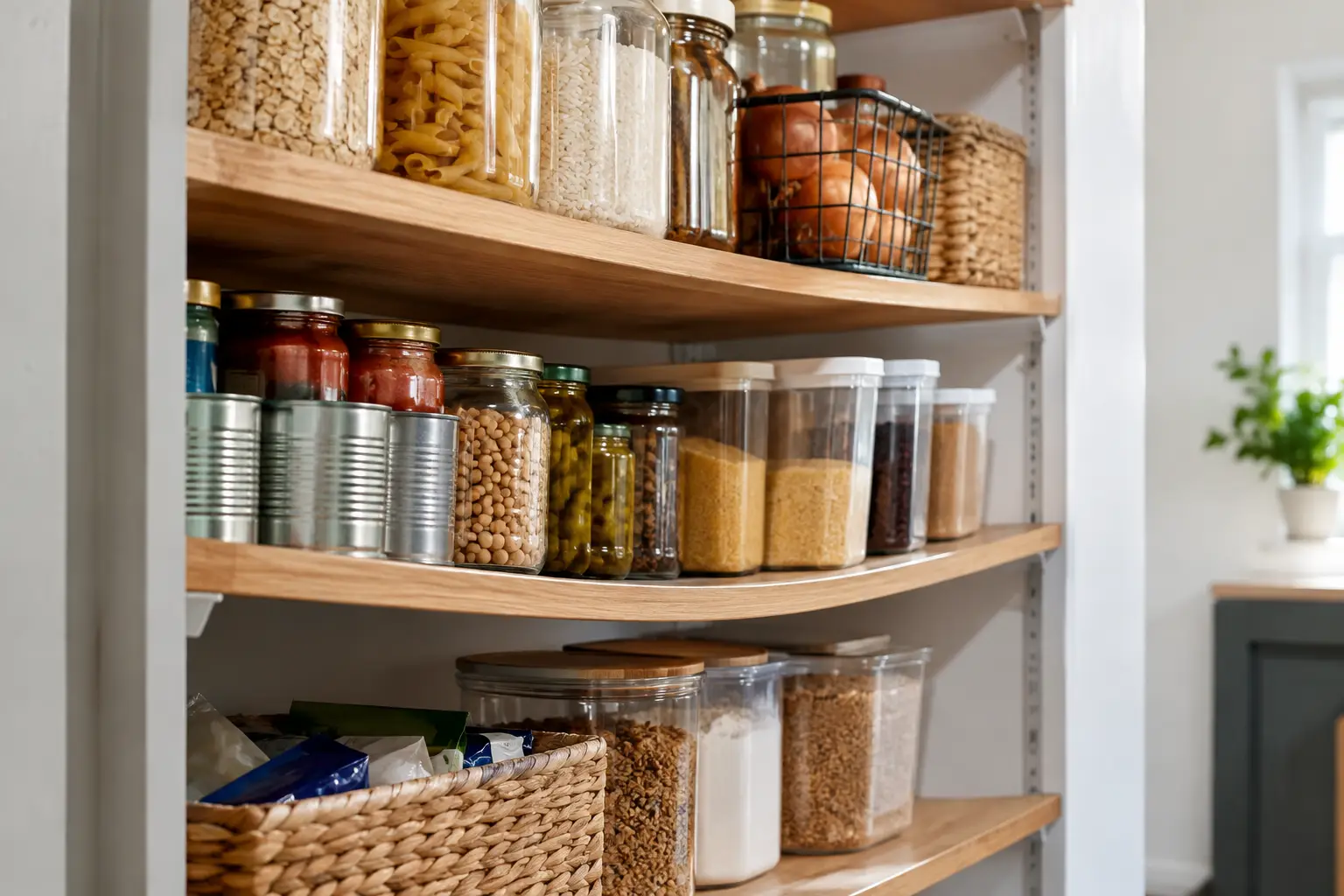
A pantry shelf rarely fails all at once. First, a row of canned goods starts to lean toward the middle. Then a shelf that once looked level develops a visible curve, making jars wobble and baskets slide. If you are asking, “why are pantry shelves sagging,” the answer is usually a combination of too much weight, too little support, and materials that were never meant for heavy everyday storage.
A sagging shelf is more than a cosmetic concern. It can pull away from wall brackets, damage surrounding cabinetry, and eventually spill food and kitchen supplies onto the floor. For Quad Cities homeowners, addressing the issue early is usually simpler and less expensive than waiting for a shelf to crack or fail.
Why Are Pantry Shelves Sagging in the First Place?
Pantries work hard. They hold dense, heavy items in a small footprint: canned vegetables, glass jars, small appliances, bulk paper goods, beverages, and oversized serving pieces. A shelf may look sturdy when it is empty, yet perform very differently once a household fills it for normal use.
The most common cause is an unsupported span that is too wide for the shelf material. A long shelf supported only at both ends bends under load, especially when the heaviest products sit near the center. The longer the distance between supports, the more likely the shelf is to bow.
Material thickness also matters. Thin particleboard or lightweight laminated shelving can be suitable for linens, snacks, or lighter kitchen items, but it may not safely carry rows of cans and countertop appliances. Particleboard is particularly vulnerable when it gets wet. Even a small plumbing leak, a humid basement environment, or repeated cleaning with excess water can cause it to swell, soften, and lose strength.
Poor installation is another frequent issue. Brackets may be spaced too far apart, installed with inadequate fasteners, or attached to drywall rather than wall studs. In some older homes, the shelf system itself was installed as a basic builder-grade feature and was not designed around how the family actually uses the pantry.
The Weight Problem Hiding in Plain Sight
A few individual food items do not seem heavy, but pantry storage adds up quickly. A case of bottled water, a stand mixer, or a shelf full of glass containers can place considerable pressure on a single span. Families who buy in bulk to save shopping trips often discover the limits of standard wire or laminate shelving sooner than expected.
Weight distribution makes a real difference. Putting all canned goods, flour, and appliances on one long shelf creates concentrated stress. Storing the heaviest items toward the ends, where the shelf has more support, can reduce bowing temporarily. It is a practical short-term measure, but it does not correct a shelf that is already undersized or weakened.
It also helps to think beyond the visible shelf surface. A shelf may be bowed because brackets are bending, screws are loosening, or side panels are pulling away from the wall. If the entire system moves when you press on it, the problem is likely structural rather than simply an overloaded board.
Signs That a Shelf Needs Attention Now
A small amount of deflection may be manageable, but certain warning signs call for prompt action. Look for a growing dip in the middle, cracks along the underside, peeling laminate, swollen edges, or brackets that no longer sit flat against the wall. You may also notice doors or drawers nearby becoming misaligned if the pantry cabinet structure is shifting.
Remove heavy items immediately if the shelf is cracking, separating from its supports, or making creaking sounds under normal use. Do not try to prop up a failing shelf with stacked boxes or loose wood scraps. That can create an unstable setup and make access to everyday items less safe.
How to Fix Sagging Pantry Shelves
The right repair depends on the shelf material, its span, and the condition of the supports. A shelf that is only lightly bowed and otherwise sound may benefit from additional support. Adding a center bracket, vertical divider, or support cleat beneath the shelf can reduce the span and help prevent further sagging.
If the shelf itself is swollen, cracked, or permanently distorted, replacing it is usually the better choice. Reinforcing damaged particleboard may buy a little time, but it will not restore the material’s original strength. A replacement shelf made from thicker, more durable material can provide a safer foundation for everyday pantry use.
For wall-mounted shelves, check that brackets are secured into studs or appropriate blocking. Drywall anchors have their place for light-duty storage, but they should not carry the full weight of a heavily stocked family pantry. Proper fasteners and correctly spaced supports are essential, particularly for wide shelves.
Wire shelving can present a different challenge. It often allows small items to tip and can leave pressure marks on bags, boxes, and softer packaging. Adding solid shelf liners may improve usability, but liners do not increase the underlying rack’s weight capacity. If wire shelves are bending, the system may need stronger brackets, closer supports, or replacement with a better-designed pantry solution.
A Quick Repair May Not Be the Best Long-Term Answer
Adding a bracket can be a smart repair when one shelf was overloaded or an otherwise solid system needs a modest upgrade. It is less effective when the pantry layout itself is working against you. For example, deep shelves without pull-out storage often encourage homeowners to stack heavy goods in the back, where they are hard to see and harder to retrieve. That leads to clutter, duplicate purchases, and overloaded surfaces.
In those cases, a redesigned pantry can solve both the sagging problem and the daily frustration behind it. Adjustable shelving, properly supported fixed shelves, drawers, pull-out baskets, and dedicated zones for appliances or bulk items distribute weight more thoughtfully. The goal is not simply to add more shelves. It is to create storage that matches what your household keeps on hand.
Designing Shelves for Real Pantry Use
A durable pantry begins with an honest look at what needs to live there. A household that buys bulk beverages, stores small appliances, or keeps large serving dishes needs a different setup than one used mainly for snacks and dry goods. Shelf depth, spacing, material, and support placement should follow those needs.
Heavy items generally belong on lower shelves where they are easier to lift and where the storage structure can be designed for the load. Mid-level shelves work well for frequently used pantry staples, while upper shelves are better suited for lighter, less-used items. This approach improves safety while making the pantry easier to maintain.
Custom cabinetry also offers an advantage over one-size-fits-all shelving because it can be built around wall dimensions, corners, door swings, and the homeowner’s storage habits. Instead of forcing every item onto long open shelves, the design can include shorter spans where needed, stronger support, and features that keep products accessible.
Comfort Concepts QCA helps homeowners create pantry systems that feel orderly, dependable, and suited to everyday life. A professional design consultation can identify whether existing shelving can be reinforced or whether a replacement system will offer better value over time.
When to Replace Rather Than Repair
Replacement is often the safer decision when multiple shelves are sagging, materials show water damage, or wall supports are compromised. It is also worth considering during a kitchen remodel, after a leak, or when pantry clutter has become difficult to manage. Repairing one shelf at a time can become a cycle if the original system was never built for the weight it carries.
Before installing anything new, clear out the pantry and sort items by weight and frequency of use. This gives you a realistic picture of the storage demands rather than designing around an empty space. It also creates an opportunity to remove expired food, consolidate duplicates, and stop storing heavy items in places that cannot safely support them.
A pantry should make daily routines easier, not leave you wondering whether a shelf will hold through the next grocery trip. With the right materials, support, and layout, it can stay level, organized, and ready for the way your household really lives.