
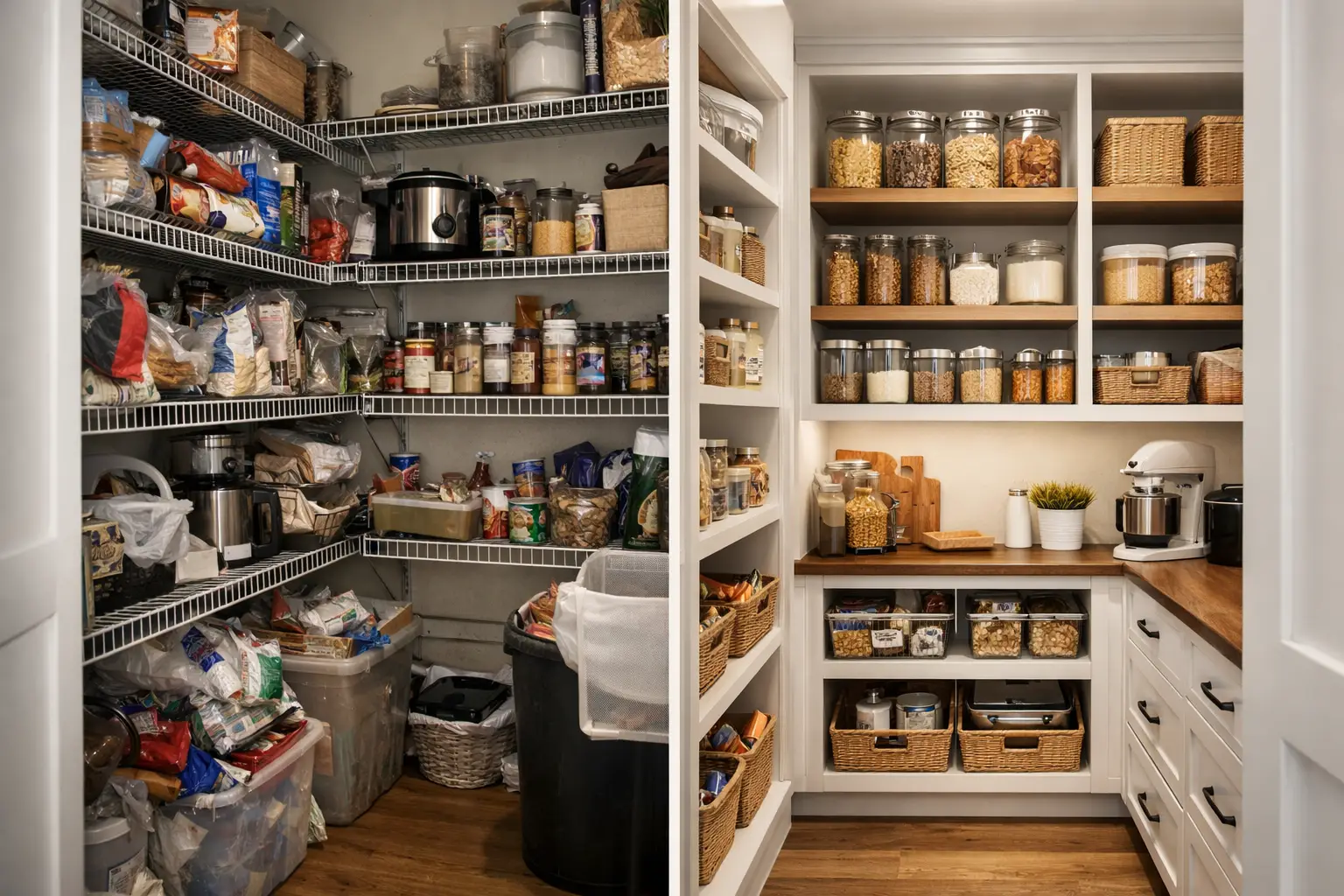
A pantry remodel before after is often more dramatic than homeowners expect. What begins as a cramped closet with deep shelves, forgotten food, and countertop overflow can become a calm, useful part of the kitchen - one that makes weekday meals, grocery trips, and family routines easier.
The biggest difference is rarely just appearance. A well-planned pantry gives every category a place, makes supplies easier to see, and uses the available space in a way that fits how your household actually lives. For Quad Cities homeowners, that can mean less waste, less daily searching, and a kitchen that feels more comfortable to use.
What a Pantry Looks Like Before a Remodel
Most pantry problems are not caused by having too little food storage. They come from storage that does not match the items being stored. Standard wire shelves or a few fixed shelves may leave tall cereal boxes leaning over, small packets disappearing behind cans, and bulky appliances taking up valuable kitchen cabinet space.
Deep shelves are a common frustration. They can hold a lot, but they do not provide easy access to what is at the back. Homeowners often buy duplicate ingredients because they cannot see what they already have. Snacks get mixed with baking supplies, paper goods compete with groceries, and cleaning products end up wherever there is an open spot.
A pantry can also become the catch-all for the rest of the home. Lunch boxes, water bottles, pet food, serving trays, slow cookers, and seasonal items all find their way inside. That is not necessarily a problem. It simply means the pantry needs a design that accounts for more than canned goods.
The Pantry Remodel Before After Difference
After a custom pantry remodel, the space should feel easier to use at a glance. Instead of stacking items wherever they fit, homeowners can see distinct zones for everyday staples, snacks, baking ingredients, small appliances, and bulk purchases. The goal is not to make the pantry look staged. It is to make it work on a busy Tuesday evening.
Adjustable shelving is often one of the most meaningful upgrades. It allows shelf heights to fit the household's real inventory, whether that includes tall oil bottles, large cereal boxes, or shorter jars and canned goods. Narrower shelves can be especially helpful for small items because nothing gets lost several rows deep.
Drawers and pull-out storage can change how a pantry functions. A full-extension drawer brings items from the back within reach, which is helpful for snacks, packets, and baking supplies. Pull-out baskets can work well for produce, potatoes, onions, or frequently used packaged foods. The right choice depends on what you store and how often you need access to it.
A finished pantry also tends to look more intentional. Durable cabinetry, clean lines, and a coordinated finish can make a small pantry feel like a built-in extension of the kitchen. That visual improvement matters, but it should support the practical design rather than replace it.
Start With Household Habits, Not Shelf Ideas
Online pantry photos can be useful for inspiration, but copying one without considering your routine can lead to another space that looks good and performs poorly. Before selecting drawers, shelves, or accessories, think about how food and household supplies enter and leave the pantry.
A family that shops in bulk may need more space for paper towels, beverages, and large packages. A household that cooks from scratch may benefit from visible bins for baking tools, dry goods, spices, and pantry staples. Someone who entertains often may want a dedicated area for serving pieces and drinkware. Parents may prefer a lower snack zone that children can reach without pulling everything else down.
It also helps to decide what should not be in the pantry. If it is holding seldom-used items, old kitchen gadgets, or supplies that belong in the garage or laundry room, clearing those out may create more usable room before the remodel even begins. A good design addresses storage needs honestly instead of trying to force every item into one small space.
Features That Make Daily Use Easier
The best pantry features are the ones that remove recurring frustrations. Open shelving keeps frequently used items visible. Drawers reduce bending and digging. Vertical dividers can hold baking sheets, cutting boards, trays, and wraps upright instead of piling them in a cabinet.
Lighting deserves attention, particularly in a deep walk-in pantry or a pantry without a window. Good lighting helps homeowners see labels, check inventory, and keep the space orderly. It can be a simple improvement, but it makes the room more pleasant to use every day.
There are trade-offs. More drawers can provide excellent access, but they may reduce the flexible open space needed for unusually large items. Decorative containers can create a tidy appearance, but transferring every grocery item into matching bins takes time. Labeling is helpful for family members and guests, though labels should be easy to update as routines change.
For many households, a balanced approach works best: open adjustable shelves for flexible storage, a few drawers or pull-outs for smaller items, and specialized features where they solve a clear problem.
Why Professional Design Makes a Difference
A pantry may be compact, but small spaces require careful planning. Every inch has a job to do. A professional designer can measure the room, identify awkward corners or clearance issues, and build a layout around your specific storage needs instead of relying on one-size-fits-all shelving.
Custom storage also provides choices that standard pantry systems may not. Homeowners can select finishes that complement the kitchen, drawer configurations that fit their inventory, and hardware designed for dependable everyday use. The result is a pantry built for the home, not simply installed in it.
Comfort Concepts QCA works with homeowners to turn underperforming storage into spaces that support daily life. The process starts with listening: what feels crowded, what gets misplaced, what needs to be within reach, and what would make the kitchen routine less stressful. That practical conversation is where a successful pantry design begins.
Planning a Pantry Remodel That Holds Up
Before committing to a design, take a realistic inventory. Include food, small appliances, pet supplies, paper products, and any items that regularly migrate into the pantry. Consider how your needs may change over the next several years as children grow, shopping habits shift, or entertaining becomes more frequent.
Budget matters as well. A modest update with well-positioned adjustable shelves may solve the primary problem in one home. In another, custom cabinetry, drawers, lighting, and specialized storage may be worth the investment because the pantry is heavily used. The right plan is the one that improves daily function without adding features you will not use.
Do not overlook access and maintenance. Shelves should be easy to wipe down, drawers should open comfortably, and the layout should allow you to put groceries away without rearranging the entire pantry. Organization is much easier to maintain when the design does most of the work.
A successful pantry remodel before after should not leave you wondering where things belong. It should give you a place that supports the way your household moves through the day, from putting groceries away to packing lunches to preparing dinner without the usual clutter and frustration.