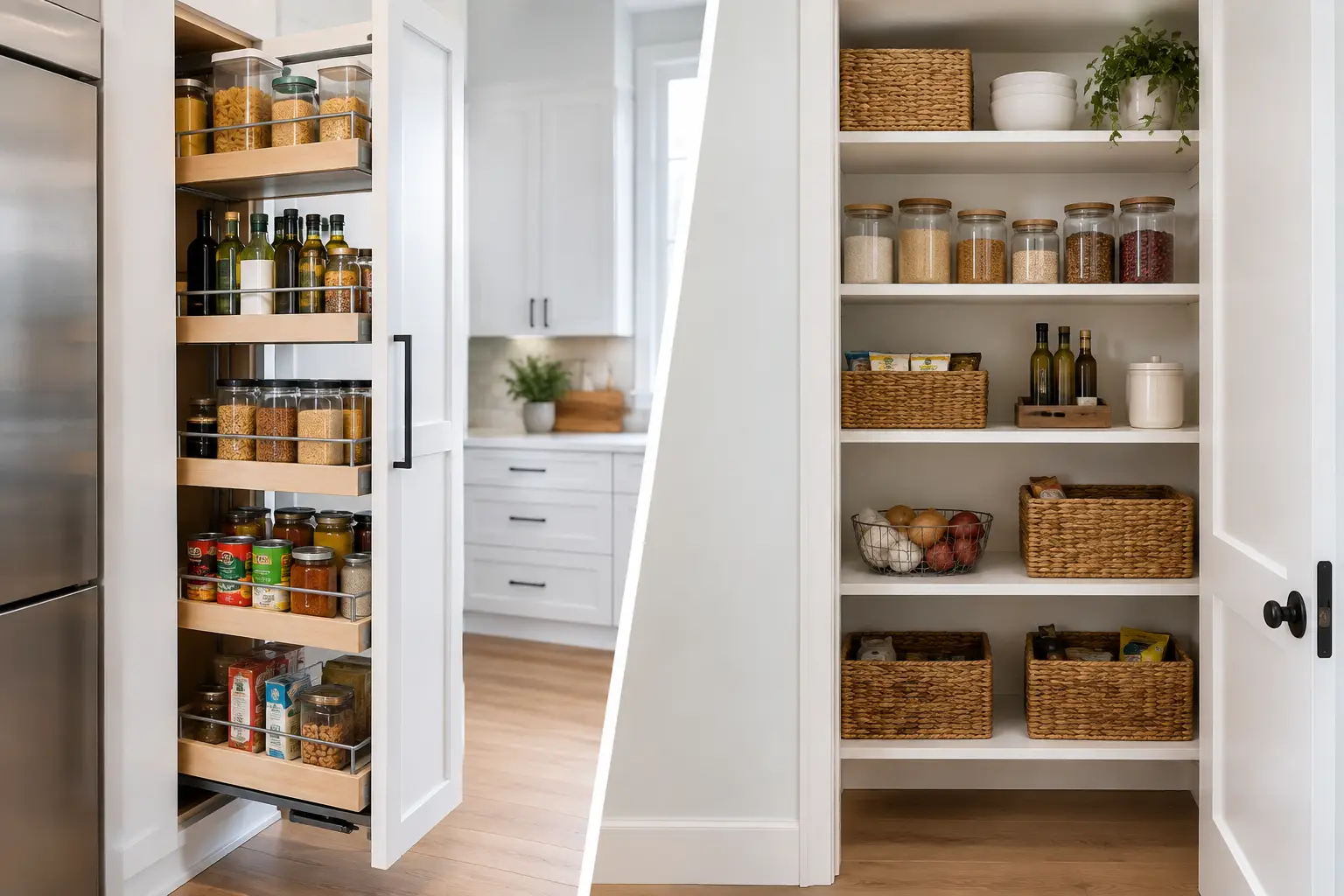
A pantry should make weeknight meals easier, not turn finding a can of soup into a search mission. When comparing pantry pullouts versus shelves, the right choice comes down to how you shop, what you store, and how easily everyone in your household can reach what they need.
Both options can create a clean, attractive pantry. Fixed shelves are familiar, durable, and cost-effective. Pullout shelves bring stored items forward, making better use of deep cabinets and reducing the chance that food gets forgotten in the back. For many Quad Cities homeowners, the best pantry uses a thoughtful combination of both.
Pantry Pullouts Versus Shelves: Start With Daily Use
Think about the items you reach for most often. If you regularly buy canned goods, snacks, breakfast foods, spices, baking supplies, and small kitchen appliances, visibility matters. A standard shelf can hold plenty, but it asks you to bend, reach, or move items around to see what is behind the front row.
Pantry pullouts solve that access problem. The shelf slides outward so the contents come to you. That is especially helpful in lower cabinets, deep pantry cabinets, and narrow spaces where a traditional shelf can become a dark, crowded storage zone.
Fixed shelves work well when the pantry is shallow, open, or designed for larger items. A shelf that is easy to see from front to back may not need the extra hardware of a pullout. Open shelving can also make it simple to store tall cereal boxes, serving bowls, paper goods, and countertop appliances that do not fit neatly inside a drawer-style pullout.
The goal is not to add moving parts everywhere. It is to make everyday storage comfortable and practical for the people using it.
The Case for Fixed Pantry Shelves
Fixed shelves remain a dependable choice for good reason. They provide strong, straightforward storage with fewer components to maintain. In a walk-in pantry, adjustable fixed shelves can create a flexible system that changes as your family's needs change.
Shelves are often the better option for bulky or oversized items. A slow cooker, large stockpot, beverage dispenser, or bulk package of paper towels may need open vertical clearance. On a pullout, tall or heavy items can take up valuable space and may be less convenient to load.
They can also be a smart fit for homeowners watching the overall project budget. Custom pantry design does not require every storage area to have specialty hardware. Well-planned shelves, placed at the right depths and heights, can provide excellent function while leaving room in the budget for features that have a bigger impact elsewhere.
The trade-off is access. Deep fixed shelves tend to collect duplicates, expired food, and items that are simply hard to see. Baskets and clear containers can help, but they do not completely change the challenge of reaching the back of a cabinet.
Where fixed shelves work best
Fixed shelves are usually a strong choice for open walk-in pantries, shallow cabinets, upper pantry storage, and areas used for large or occasional-use items. They are also useful above eye level, where pullouts offer less value because the contents are already easy to scan from below.
Why Homeowners Choose Pantry Pullouts
The main benefit of a pullout is simple: it brings the full depth of the cabinet into view. Instead of unloading half a shelf to find an ingredient, you pull the shelf out and see the entire supply at once.
This can reduce food waste. When groceries stay visible, it is easier to notice what is running low and use what you already have. Families who buy snacks in bulk, keep a wide variety of sauces and canned goods, or stock up before busy weeks often appreciate the order that pullouts provide.
Pullouts are also easier on the body. Reaching into a low cabinet can be uncomfortable, particularly for anyone with limited mobility, knee pain, or back concerns. A smooth, sturdy pullout lets you access items without kneeling on the floor or stretching over stored goods.
That convenience has to be balanced against capacity and cost. Pullout hardware adds expense, and the sides and mechanisms take up some usable room. Very heavy items may be better stored on reinforced fixed shelves, depending on the cabinet construction and the type of pullout selected.
Best uses for pullout shelves
Pullouts shine in lower pantry cabinets and tall cabinet pantries where depth is otherwise difficult to use. They are especially useful for canned food, boxed meals, baking ingredients, snack bins, oils, condiments, and smaller kitchen supplies.
A narrow pullout can also turn an awkward gap beside a refrigerator or cabinet run into useful storage for spices, jars, wraps, or bottles. In these tight spaces, the ability to slide the contents outward makes every inch more functional.
Consider Shelf Depth Before Choosing
Shelf depth is often the deciding factor between pantry pullouts and shelves. A shallow 12-inch shelf is usually easy to manage. A 20- to 24-inch-deep cabinet is more likely to create hidden storage, especially at lower levels.
For deeper cabinets, pullouts can prevent the common problem of storing food in rows that no one remembers. Another option is to reserve the back portion of a fixed shelf for less frequently used items, such as holiday baking supplies or extra serving pieces. That approach can work, but it requires a household that is willing to maintain a system.
Height matters, too. Tall shelves with no adjustment may waste space above shorter items. Adjustable shelves help a pantry adapt over time, while pullouts can be sized around the categories you use most. A good design starts with the actual products you bring home, not a one-size-fits-all layout.
A Combined Pantry Design Is Often Best
For most homes, the question is not whether pullouts are better than shelves across the board. It is where each option delivers the most value.
A balanced custom pantry might use fixed adjustable shelves for cereal, appliances, bulk paper products, and serving pieces. Lower cabinet sections can use pullouts for pantry staples, snacks, and cooking ingredients. Upper shelves can hold backstock and seasonal items, while a dedicated pullout near the kitchen work area keeps the most-used supplies within easy reach.
This approach gives you accessible storage without spending money on features that do not improve daily use. It also makes the room feel calmer. When every category has a clear home, groceries are easier to put away and family members are more likely to keep the pantry organized.
Questions to Ask Before Your Pantry Project
Before finalizing a pantry layout, take a quick inventory of what causes frustration now. Are canned goods disappearing in the back of a cabinet? Are countertop appliances taking over the kitchen? Do children need an easy-to-reach snack area? Is the pantry serving as storage for groceries, linens, pet supplies, or cleaning products as well?
Also consider who will use the space in five or ten years. A pantry designed around easy access can support aging in place and make daily routines less physically demanding. Quality hardware and professional installation matter here, because pullouts should operate smoothly and remain stable under normal household use.
At Comfort Concepts QCA, pantry storage is planned around the way a household actually lives. Measurements, item categories, available space, and budget all help determine whether pullouts, shelves, or a combination will make the greatest difference.
A pantry does not need to be oversized to work well. It needs storage that lets you see what you own, reach it without frustration, and put it back where it belongs. Choosing the right mix of shelves and pullouts can make that everyday comfort part of your home.