
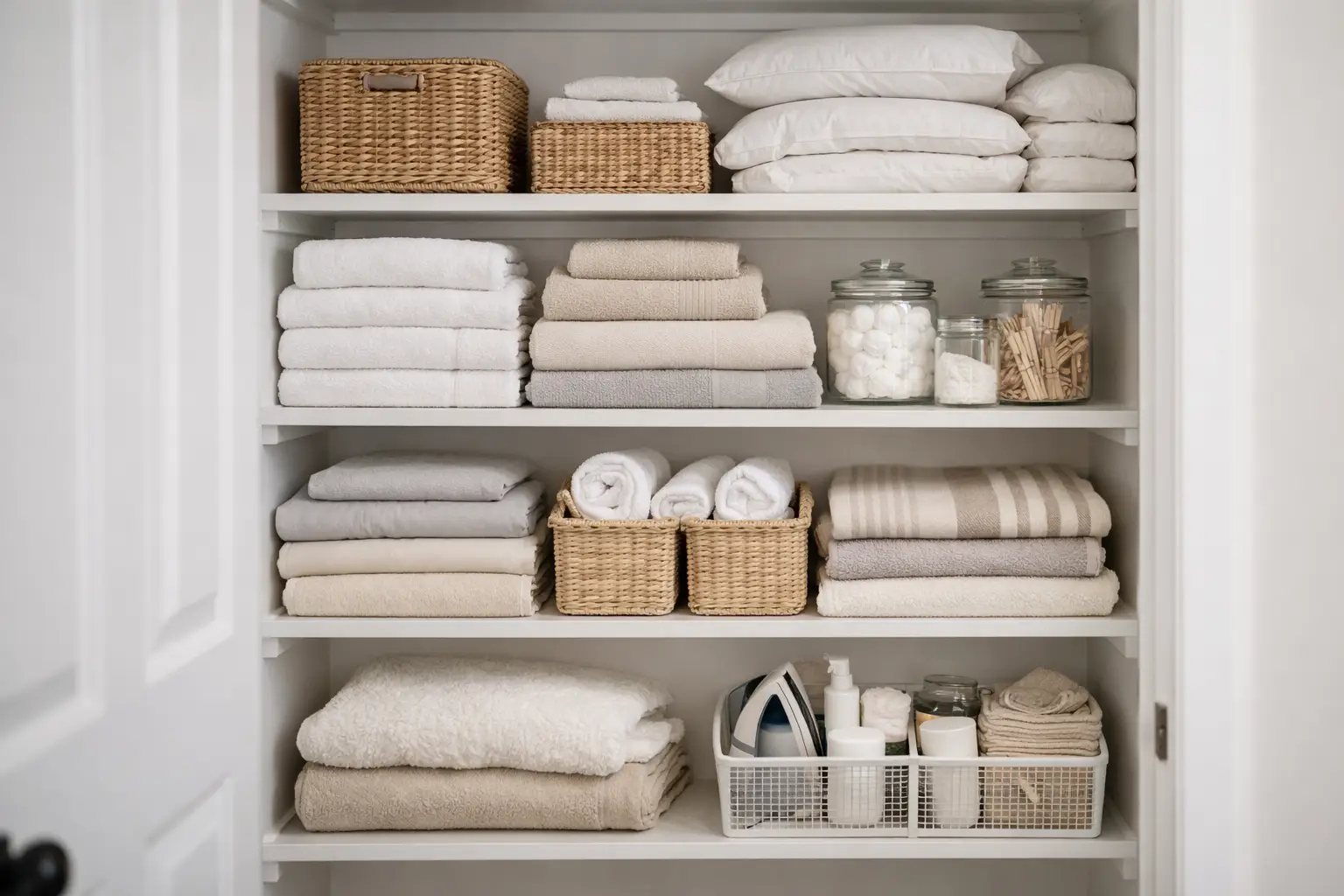
A linen closet usually becomes a problem slowly. One extra set of sheets gets tucked on top, a half-used bottle of cleaner lands near the towels, and suddenly no one can find a matching pillowcase when guests are on the way. If you want to organize a linen closet for real life, the goal is not a picture-perfect display. It is a storage system your household can use, maintain, and trust on a busy morning.
Start by Emptying the Linen Closet
Trying to reorganize around what is already there often leads to the same crowded shelves in a different arrangement. Take everything out first. This gives you a clear look at the available space and makes it easier to clean the shelves, check for dust or moisture, and see what your family actually owns.
As you remove items, sort them into simple categories: bath towels, washcloths, hand towels, sheet sets, blankets, guest linens, paper goods, and household supplies. Keep cleaning products separate from bedding and towels whenever possible. If the closet is the only practical place for those supplies, place them in a contained bin on a lower or hard-to-reach shelf, away from fabrics and children.
This is also the time to let go of what is no longer useful. Towels that are permanently stained, scratchy, or fraying may be better used as cleaning rags. Donate usable extras if they have been sitting untouched for years. A crowded closet is often less about limited square footage and more about holding too many items for the space.
Decide What Deserves Closet Space
Your linen closet should store items that are used in or near the bedrooms and bathrooms. That usually includes everyday towels, bed linens, spare blankets, and a modest supply of toiletries or paper goods. It does not need to carry every bulk purchase, every seasonal item, or every cleaning product in the house.
A practical starting point is two or three complete sheet sets per bed: one in use, one clean set ready to change, and perhaps one spare for children, guests, or unexpected laundry delays. The same approach works for towels. Keep enough for the people who live in the home, plus a reasonable guest supply, rather than trying to store every towel you have ever owned.
Create Zones Before You Put Anything Back
A well-organized closet makes sense at a glance. Assign each shelf or area a purpose before returning your linens. The best layout depends on shelf depth, closet height, and who uses it, but most homes benefit from placing the most-used items at eye level or within easy reach.
Use the middle shelves for daily towels and frequently changed sheets. Put less-used items, such as guest bedding, extra blankets, or seasonal quilts, on the higher shelves. The lowest shelves are usually best for heavier items, including bulk paper products or lidded bins. Keeping heavy items low reduces strain and prevents a full shelf from looking unstable.
If children put away their own towels or need access to bedding, reserve a lower shelf for their items. This small adjustment can make the system more likely to stay organized because everyone can return what they use without climbing or pulling down stacked linens.
Store Sheet Sets as Complete Sets
Loose pillowcases are one of the fastest ways for a linen closet to look disorganized. Keep each sheet set together by folding the fitted sheet, flat sheet, and one pillowcase into the second pillowcase. The result is a neat fabric packet that is easy to pull out without disturbing the rest of the shelf.
You can also label the stack by bed size if your household has several beds. A simple label such as “Queen,” “Twin,” or “Guest Room” eliminates guesswork when someone else is making a bed. Labels do not need to be decorative. Clear, easy-to-read labels are more useful than anything overly complicated.
For families with multiple beds of the same size, consider assigning each room its own bin or shelf section. This prevents sheets from getting mixed together and makes laundry day easier to manage.
Fold Towels for Stability, Not Perfection
There is no single correct way to fold towels. What matters is that the fold creates a stable stack that fits the depth of the shelf. Deep shelves often work better with towels folded into thirds and stored from front to back. Shallow shelves may be better for towels folded in half and stacked side by side.
Avoid building tall stacks. A pile of eight towels may look efficient at first, but it is likely to topple when someone pulls one from the bottom. Shorter stacks are easier to maintain and make it clear when laundry needs to be done. Separate bath towels, hand towels, and washcloths so a family member can grab what they need without searching.
If you prefer a quick visual system, roll washcloths and store them in a small open bin. This works especially well for children’s towels or guest supplies. Open bins are convenient for lightweight items, but they can become cluttered if they are too large or hold several unrelated categories.
Use Containers Carefully When You Organize Linen Closet Shelves
Bins, baskets, and shelf dividers can improve a linen closet, but only when they solve a specific problem. Buying containers before measuring the closet often creates wasted space and bulky storage that is difficult to use.
Measure the width, depth, and height of each shelf first. Leave room to reach behind containers and remove them without dragging other items forward. Clear bins can help with small items such as travel toiletries, extra soap, or first-aid supplies. Opaque baskets create a calmer appearance for mixed items, but they should be labeled so everyone knows what belongs inside.
Shelf dividers are helpful for keeping towel stacks upright or separating sheet sets by size. They are less useful on shallow shelves where the divider itself takes up valuable space. For very deep closets, pull-out bins or handled baskets can bring items from the back within reach. This is often a better option than stacking items two or three rows deep.
Consider the trade-off between visibility and simplicity. Open storage makes it easier to see what you have, but it requires more consistent folding. Covered containers can hide visual clutter, yet they make it easier to forget what is inside. Choose the option that matches how your household actually functions.
Keep Backstock Separate From Everyday Linens
Bulk shopping can save time and money, especially for busy Quad Cities households, but it can overwhelm a small linen closet quickly. Keep only the amount you can comfortably store without crushing towels or blocking access to sheets. If possible, store overflow paper products, extra toiletries, and unopened supplies in a pantry, utility room, basement, or designated storage area.
Within the closet, keep a clear difference between everyday items and backstock. For example, daily towels can stay on an open middle shelf, while extra shampoo, toothpaste, or tissue boxes can go in a labeled lower bin. When the everyday supply runs low, refill it from the backstock rather than opening a new package and leaving several partly used packages in the closet.
This approach also helps with household budgeting. You can see what needs to be replaced before running out, without buying duplicates because items were buried behind a stack of blankets.
Make the System Easy to Maintain
The right organization plan should take seconds to follow. If every item has a home and stacks are not too tall, putting away laundry becomes much less frustrating. Leave a little empty space on each shelf. A closet packed edge to edge might look full and efficient, but it gives no room for daily use.
Set a simple reset routine once a month or after a large laundry day. Straighten the towel stacks, return loose items to their zones, and check whether supplies are getting low. There is no need to empty the entire closet every week. Small maintenance keeps the closet from becoming another major household project.
If your current shelves are too shallow, too deep, unevenly spaced, or simply unable to support the way your family stores linens, organization alone may not fix the problem. Adjustable shelving, drawers, pull-out baskets, and purpose-built storage can make a narrow linen closet far more useful. Comfort Concepts QCA can help homeowners create customized storage that fits the space, the household, and the routines that happen every day.
A linen closet should make ordinary moments easier: changing a bed, finding a clean towel, preparing for overnight guests, or restocking the bathroom without digging through a crowded shelf. Build the system around those moments, and it will keep working long after the first day it looks organized.