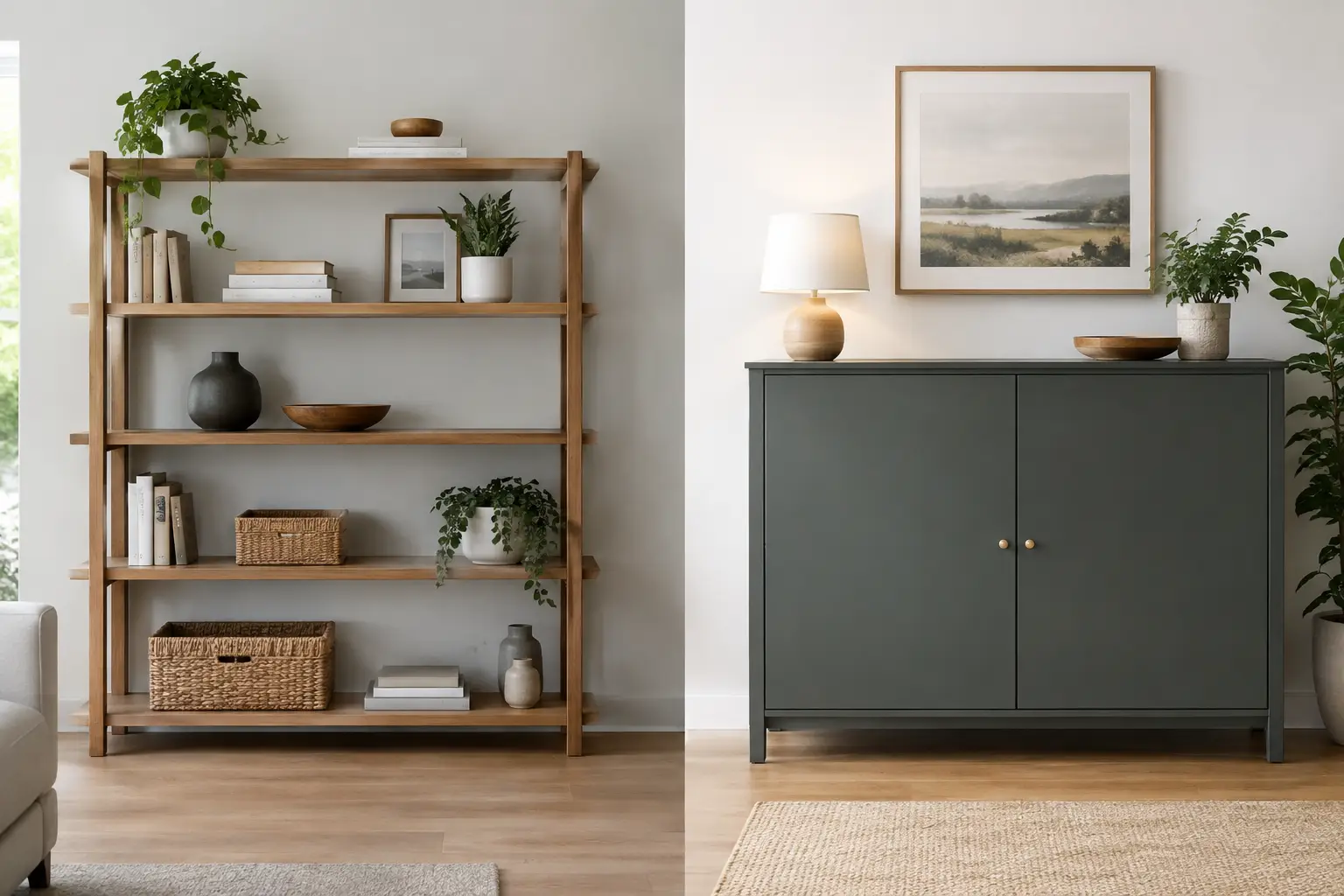
A shelf can either make daily life easier or put more on display than you intended. The decision between open shelving versus closed storage affects more than a room’s appearance. It determines how quickly you can find what you need, how much cleaning the space requires, and whether everyday clutter has a place to go.
For many Quad Cities homeowners, the best answer is not all open or all closed. A well-planned storage system usually combines both, placing frequently used items within reach while giving less attractive or seasonal belongings a clean place to disappear.
Open Shelving Versus Closed Storage: The Main Difference
Open shelving keeps items visible and accessible. It can make a pantry, laundry room, closet, office, or living area feel more open, especially when the items on display are orderly and attractive. Closed storage uses doors, drawers, cabinets, or solid-front units to hide contents and create a calmer visual field.
Neither option is automatically better. Open shelves work best when the items stored there are used often, easy to arrange, and worth seeing. Closed storage is usually the stronger choice for bulky supplies, mixed household items, paperwork, children’s belongings, and anything that tends to create visual clutter.
The practical question is simple: Do you want to see and reach this item every day, or would you rather contain it until it is needed?
When Open Shelving Works Best
Open shelving earns its place in hardworking rooms because it removes a barrier between you and the things you use. In a pantry, shelves can make it easier to see dry goods, serving pieces, and small appliances before buying duplicates. In a laundry room, they keep detergent, baskets, and frequently used supplies close at hand. In a home office, they can hold reference materials, labeled bins, or a printer that needs easy access.
Open storage can also help a smaller room feel less boxed in. Closed cabinetry has visual weight, while open shelves allow walls and finishes to remain visible. This can be especially helpful in a narrow pantry, compact mudroom, or reach-in closet where every inch matters.
There is also a habit-building benefit. When belongings have visible, defined homes, family members may be more likely to return them. A child can see where backpacks belong. A busy parent can quickly spot when pantry staples are running low. A hobby area becomes more usable when tools and materials are not buried behind doors.
Still, open shelves need honest consideration. They collect dust, require regular straightening, and can make an otherwise clean room look busy if too many mismatched items are left out. They are best for households that appreciate visual order or are willing to use attractive baskets, matching containers, and clear labels to keep the space looking intentional.
Good places for open shelving
Open shelves are often a smart fit for everyday dishes, folded towels, frequently used pantry goods, cookbooks, decorative items, laundry supplies, and neatly sorted craft materials. They are less useful for loose paperwork, extra cords, cleaning chemicals, sports gear, and large collections of items in different shapes and colors.
When Closed Storage Is the Better Choice
Closed storage brings visual calm to the rooms that work the hardest. Doors and drawers are valuable when a space needs to serve multiple people, accommodate changing routines, or handle a high volume of belongings. A mudroom, family room, garage, utility room, and children’s closet are common examples.
Cabinets and drawers make it easier to put things away quickly. That matters at the end of a busy day, when no one wants to sort every item into a picture-perfect display. A door can hide a collection of board games, pet supplies, extra paper products, or cleaning tools while still keeping them organized behind the scenes.
Closed storage also protects contents from dust, sunlight, and moisture changes. For seasonal clothing, important documents, electronics, specialty cookware, and items stored near a garage or utility area, that added protection can be worthwhile. In homes with pets or young children, doors may also help keep certain supplies out of reach.
The downside is that closed storage can conceal disorganization rather than solve it. Deep cabinets without adjustable shelves, drawers without dividers, and oversized storage areas can become places where items are lost. Good interior planning matters just as much as the cabinet front. Pull-out shelves, drawer inserts, adjustable shelving, hooks, and dedicated zones make closed storage more useful day after day.
Let the Room Decide
Each room has different demands, so it rarely makes sense to apply one storage style throughout the house. Start by considering what happens there during a normal week.
Kitchen and pantry
A combination usually works best. Open shelves can hold frequently used dishes, pantry canisters, or cookbooks. Closed cabinets are better for small appliances, plastic containers, bulk supplies, and items that do not need to be visible. In a pantry, adjustable open shelving paired with closed drawers or lower cabinets creates room for both quick access and less attractive essentials.
Mudroom and entryway
This is a high-traffic area where closed storage can make a major difference. Shoes, coats, backpacks, sports equipment, and winter accessories add up quickly, especially during Midwest weather changes. Open hooks and cubbies are useful for the items needed that day, while closed cabinets or lockers help contain the overflow.
Closets and dressing areas
Open shelving helps you see folded clothing, handbags, shoes, and accessories. Drawers and cabinets are better for undergarments, workout clothes, seasonal items, and pieces that look untidy when stacked. A custom closet often feels most comfortable when it gives every category a clear home without forcing everything into view.
Laundry room
Keep daily supplies easy to reach, but do not feel obligated to display every bottle and package. Open shelves above a washer and dryer can hold baskets and frequently used products. Closed cabinetry below or beside them can hide extras, cleaning supplies, and household items that do not belong on display.
Home office and living spaces
Open shelves can add warmth when used for books, framed photos, and a few meaningful objects. But paperwork, chargers, remote controls, office supplies, and media equipment usually belong behind doors or in drawers. The goal is a room that feels lived in without looking unfinished.
Design for Real Routines, Not a Showroom
The most attractive storage system is one your household can maintain. Before choosing finishes or door styles, take stock of what you actually own and how you use it. Measure larger items. Notice what ends up on counters or floors. Think about who will need access and whether they can reach the storage easily.
A household that cooks every night may need more open pantry access than a household that orders takeout often. A family with school-age children may benefit from visible cubbies near the door, but still need closed storage for the pileup of extra gear. Someone who enjoys a minimal, calm living room may prefer cabinets with a few open display areas rather than wall-to-wall shelving.
It is also wise to plan for change. Children grow, hobbies shift, and storage needs tend to expand over time. Adjustable shelves, flexible drawer configurations, and a balanced mix of open and closed areas give a space more staying power than a rigid layout built around one moment in life.
Make the Mix Feel Intentional
When open and closed storage are used together, they should look like part of the same plan. Matching finishes, coordinated hardware, consistent shelf thickness, and thoughtful lighting can make the room feel polished rather than pieced together.
Use open shelves to create breathing room and highlight useful or meaningful items. Use closed storage to protect the room from the visual noise of daily life. Baskets can bridge the gap by keeping open shelves organized while preserving easy access, but they should have a purpose instead of becoming catch-all containers.
At Comfort Concepts QCA, storage planning starts with how a household lives, not with a one-size-fits-all shelf layout. The right design should make morning routines smoother, make cleanup easier, and help your home feel more comfortable to live in.
A good place to begin is one room that frustrates you every day. Look at what is always left out, what is hard to find, and what deserves a better home. Those answers will usually tell you exactly where open shelving belongs and where a closed door will bring welcome relief.