
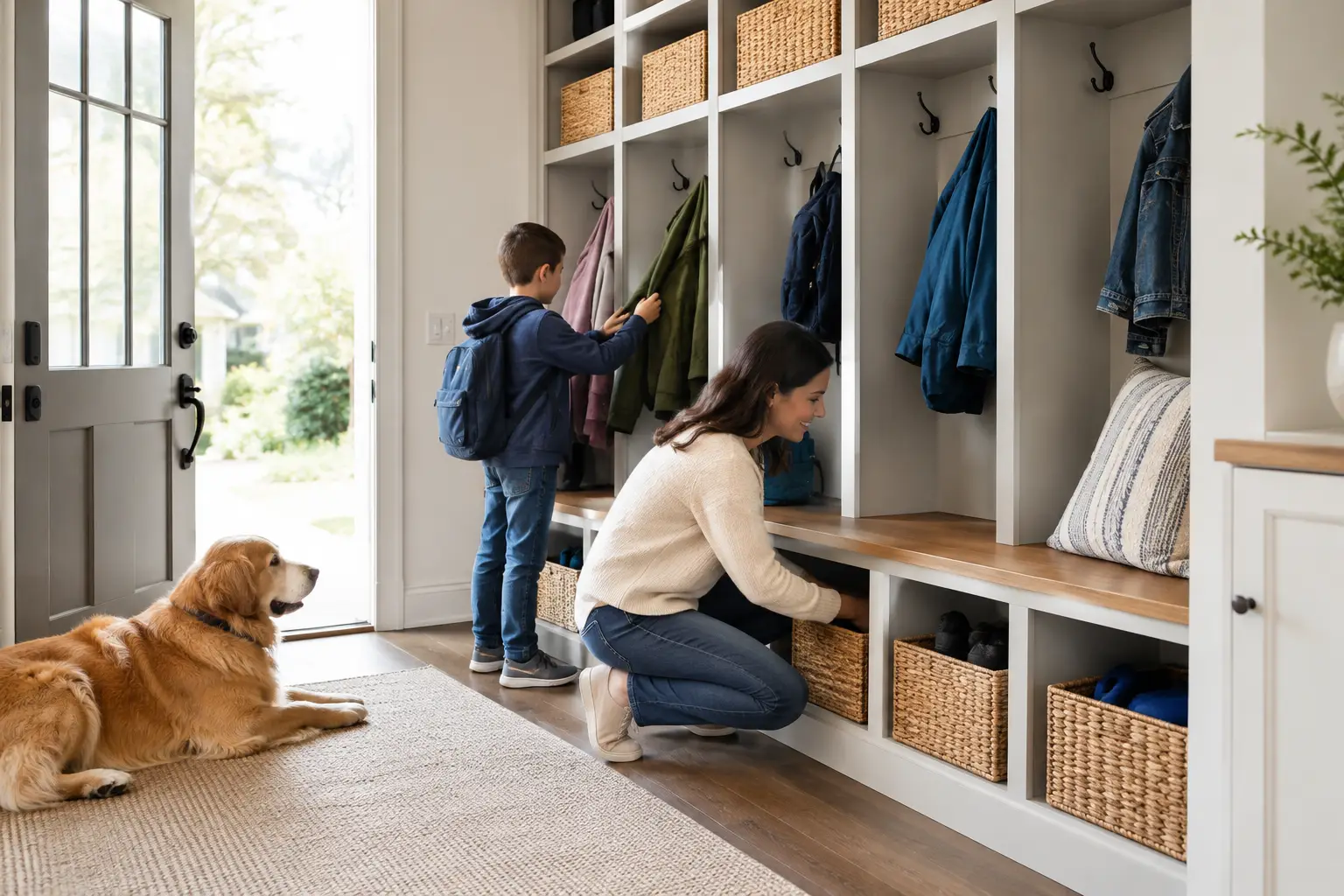
At 7:45 on a wet Quad Cities morning, a mudroom can fill up fast: backpacks on the floor, boots by the door, coats over chairs, and sports gear waiting for the next ride. Effective mudroom storage for families gives every one of those items a reliable place to land. The goal is not a picture-perfect entryway. It is a home that feels easier to manage when everyone is heading out or coming back in.
A well-planned mudroom should work for the people who actually use it, including young children who need reachable hooks, teens with oversized bags, adults carrying work gear, and the seasonal mess that comes with Midwest weather. Custom storage makes it possible to use the room's full footprint without relying on a few overcrowded baskets or a row of hooks that quickly becomes a pile.
Start With Your Family's Daily Traffic Pattern
Before choosing cabinets, benches, or finishes, consider what happens in the room each day. Which door does the family use most often? Does the mudroom connect to the garage, backyard, laundry area, or kitchen? Does everyone enter at once after school and work, or do household members come and go throughout the day?
These details determine where storage belongs. If the door from the garage is the main entry, shoes and bags should be put away within a few steps of it. If the mudroom also serves as a laundry drop zone, hampers and utility storage may deserve a dedicated section. A good layout reduces backtracking and makes the right habit the easy habit.
It also helps to account for the items that create the most clutter. For one family, that may be winter boots and heavy coats. For another, it may be baseball bags, dance shoes, dog leashes, and reusable grocery bags. Designing around real belongings is more useful than copying a display-room layout.
Build a Personal Landing Zone for Each Person
Shared storage can look neat on day one and become confusing by the end of the week. Giving each household member a defined space creates clear ownership and makes cleanup faster. This does not require a large mudroom. Even a narrow wall can be divided into individual zones with a hook, shelf, and lower shoe area for each person.
Use hooks where children can reach them
Hooks are often more practical than hangers for everyday coats, backpacks, and rain gear. Place lower hooks where younger children can use them independently, then add higher hooks or a hanging rod for adult coats. This small choice can reduce the number of times a parent needs to pick up items that were technically put away.
For busy families, it is usually worth providing more hooks than you think you need. One hook per person rarely covers a winter coat, school bag, wet sweatshirt, and after-school activity gear. Multiple hooks within each zone allow items to air out rather than being piled together.
Include a bench that serves a purpose
A bench gives children and adults a place to sit while putting on boots or tying shoes. It also creates a natural boundary between the floor and the rest of the room. A built-in bench with storage below is especially useful because it can hold shoes, seasonal accessories, or pet supplies without taking up additional space.
Open cubbies beneath a bench work well for shoes that are used every day. Drawers or closed cabinets are better for small items and visual clutter. The right option depends on how disciplined your household is about putting things away. Open storage is fast and convenient, while closed storage creates a calmer appearance but asks everyone to take one extra step.
Plan Mudroom Storage for Families by Category
The most useful mudrooms separate daily essentials from occasional items. Coats, shoes, backpacks, keys, and lunch boxes need quick access. Extra gloves, sun hats, spare towels, and off-season footwear can be stored higher up or behind cabinet doors.
A practical custom design often includes several storage types working together:
- Open hooks or cubbies for items that are used every day.
- Adjustable shelves for changing shoe sizes and seasonal gear.
- Drawers or pullout baskets for gloves, hats, sunscreen, and small supplies.
- Tall cabinets for brooms, vacuums, folding chairs, or bulky sports equipment.
- Upper cabinets for items that should be available but not constantly visible.
The category system should be simple enough for everyone to understand. A labeled basket for winter accessories is easier to maintain than several small containers with overly specific labels. If children are involved, use labels they can read or simple visual cues that make the system clear.
Make Room for Midwest Seasons
Families in the Quad Cities need a mudroom that can handle more than a few pairs of sneakers. Snow, slush, rain, salt, spring mud, summer pool towels, and fall sports equipment all pass through the same doorway. Materials and storage choices should reflect that reality.
Choose durable, easy-to-clean flooring near the entry. Provide a designated boot tray or lower cabinet area where wet footwear can dry without damaging walls or spreading water across the floor. A washable rug can add warmth, but it should not be the only protection against wet boots.
Ventilation also matters. Coats and shoes need room to dry, especially during winter. Leaving some open space between hooks and avoiding overly tight shoe storage can help prevent damp, musty areas. If the room has enough space, a small drying rack or a pullout rod can be useful for wet jackets and snow pants.
Seasonal rotation keeps the mudroom from becoming a permanent holding area for everything the family owns. Keep the current season at hand and move the rest to higher cabinets, garage storage, or another designated area. This approach is especially helpful in smaller homes where the mudroom has to work hard without feeling crowded.
Do Not Forget the Drop Zone
A mudroom often becomes the place where mail, keys, phones, sunglasses, permission slips, and packages collect. Without a planned drop zone, these small items migrate to the kitchen counter and dining table.
A shallow drawer, small cabinet, or countertop section near the entry can contain the daily paperwork and personal items that tend to wander. Some families benefit from a charging drawer, while others need a spot for school papers and a calendar. Keep this area limited. The mudroom should support household routines, not become an office supply closet.
If pet care is part of the daily routine, reserve a nearby spot for leashes, waste bags, treats, and towels. A low drawer or open basket makes these items easy to grab before a walk and easy to return afterward.
Choose Storage That Can Change With Your Family
The storage needs of a family are rarely permanent. A preschooler's cubby may eventually hold school binders. A lower shelf once used for tiny boots may need to fit larger shoes, athletic equipment, or a work bag. Adjustable shelves, movable dividers, and a mix of open and enclosed storage help the space stay useful through those changes.
This is where a custom approach can make a lasting difference. Instead of forcing your family's belongings into standard-sized units, the storage can be designed around the available wall space, ceiling height, and the items you use most. Comfort Concepts QCA can help homeowners plan a mudroom that fits the home, the household routine, and the budget without wasting valuable square footage.
Appearance matters, too, but it should support function. Darker finishes may be more forgiving near a high-traffic entry, while lighter finishes can make a small mudroom feel more open. Closed cabinets create a tidy look when guests arrive, but open lockers may be the better choice for a family that needs fast access during a busy school morning. There is no single right answer. The best design is the one your family can maintain.
A mudroom should make the first few minutes at home feel less demanding. When boots have a place to dry, backpacks have a place to wait, and each person knows where their belongings belong, the entryway stops being a daily problem and starts doing its job.