
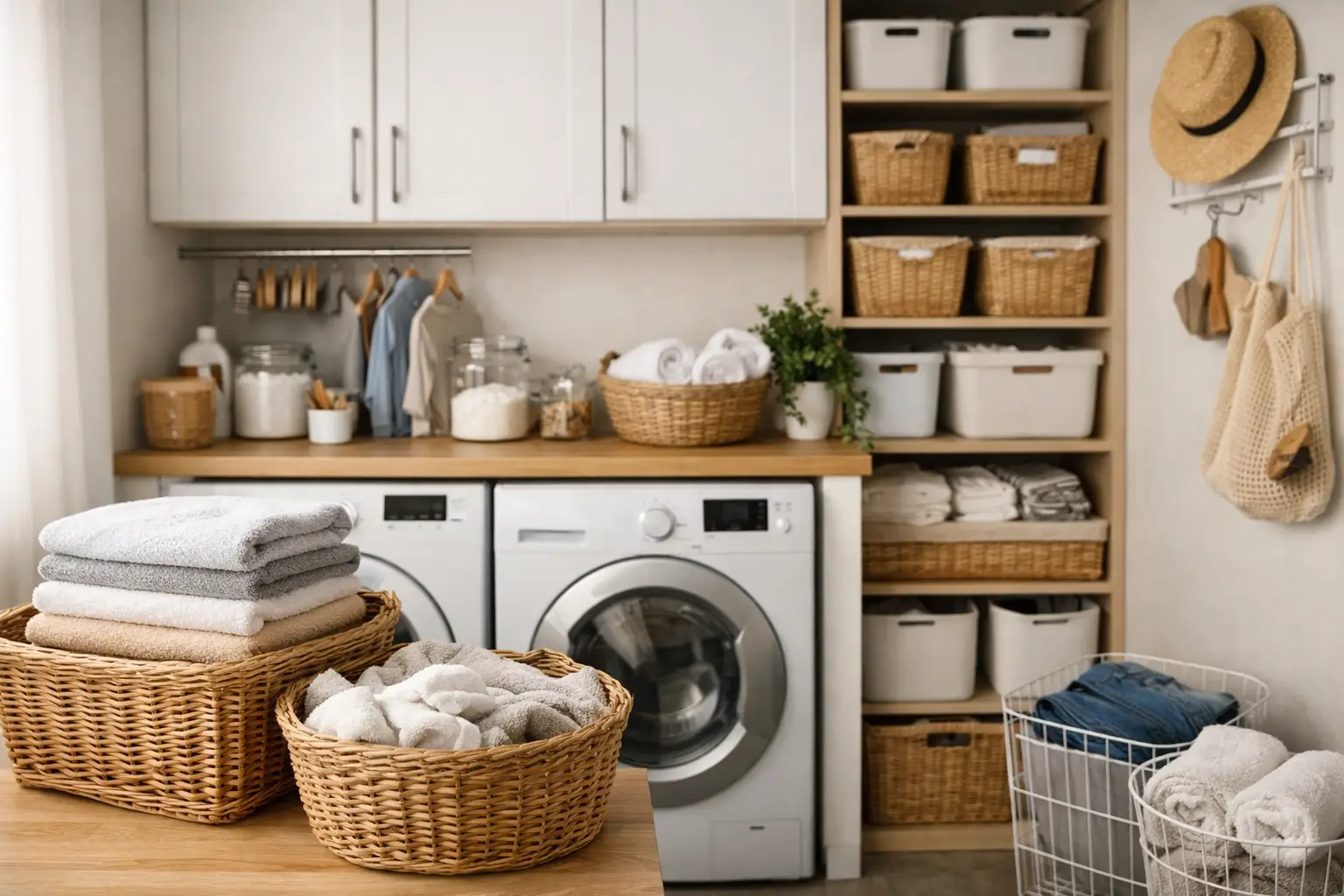
The problem with most laundry rooms is not just size. It is that the space has to do too many jobs at once. It stores detergent, handles dirty clothes, catches clean loads waiting to be folded, and often doubles as a mudroom or utility area. A good laundry room storage guide starts by fixing that daily traffic pattern, not by adding random bins and hoping for the best.
When storage works, laundry feels faster and less frustrating. You spend less time hunting for stain remover, moving baskets out of the way, or piling supplies on top of the washer. The goal is simple - keep the room easy to use, easy to clean, and flexible enough for real family life.
What a laundry room storage guide should solve first
Before choosing shelves or cabinets, look at what is making the room feel crowded. In most homes, the issue is one of three things: not enough closed storage, poor use of wall space, or no clear place for items in transit. That last category matters more than people expect. Hampers, drying racks, baskets, and cleaning supplies often create the mess because they are always moving in and out.
Start with the room's workflow. Dirty items should have a landing spot near the entrance. Detergents and everyday supplies should sit within easy reach of the washer and dryer. Clean items need a nearby surface or basket zone so they do not end up spread across machines or carried into another room half-finished. If your storage plan does not match those steps, even a beautiful setup can become inconvenient.
It also helps to separate everyday needs from bulk storage. Large packs of paper towels, backup detergent, and seasonal items can eat up prime space. If you use something once a week, it deserves easy access. If you use it once a month, it can go higher up or behind a cabinet door.
Build storage around the room you actually have
A small laundry room and a larger utility room need different solutions. In tight spaces, every inch counts, so vertical storage usually gives the biggest payoff. Wall-mounted cabinets above the machines can hold detergents, cleaning products, and extra paper goods while keeping counters clear. Open shelves can work too, but only if the room stays tidy. In many family homes, closed cabinetry looks calmer and hides the visual clutter that builds up fast.
If your machines sit side by side, the area above them is valuable. This is often the best location for cabinets, shelves, or a hanging rod. If your washer and dryer are stacked, you may gain room for a narrow linen cabinet or a pull-out storage tower beside them. That can be ideal for bottles, dryer sheets, and smaller tools that tend to disappear in deeper cabinets.
Wider laundry rooms offer more flexibility, but they can still feel disorganized if everything lines the perimeter without a plan. A folding counter, base cabinets, and tall storage can turn a basic room into a much more functional workspace. The trade-off is that larger built-ins require more intentional design. Too many deep shelves or oversized cabinets can create dead space where items get lost.
The best laundry room storage ideas for daily use
The most useful storage features are usually the least flashy. Homeowners tend to appreciate solutions that make a repeated task easier every single day.
Cabinets are one of the strongest upgrades because they keep supplies protected, out of sight, and away from children or pets. Shelving is helpful for quick access, but it works best when paired with containers or assigned zones. Otherwise, one open shelf turns into six half-used bottles and a pile of unmatched socks.
Drawers are especially effective in laundry rooms because they make small items easier to organize. Stain sticks, clothespins, mesh bags, lint rollers, and sewing kits all fit better in drawers than on shelves. If you have enough room, a bank of drawers below a folding counter can keep the entire space more orderly.
Hampers deserve more planning than they usually get. If the floor is always covered in baskets, built-in hamper storage can make a noticeable difference. Some homeowners do well with a single pull-out hamper. Others need divided hampers for lights, darks, towels, or sports gear. It depends on how your household actually sorts laundry. The right answer is not always the most complicated one.
Hooks and hanging space are another practical upgrade. A wall hook for reusable laundry bags, a rod for air-drying shirts, or a valet bar for hanging clean items can reduce clutter quickly. These small additions often help more than another shelf.
Use vertical and hidden space wisely
One of the easiest ways to improve storage is to stop relying only on floor-level solutions. Walls, corners, and the backs of doors can all help carry the load.
Tall cabinets are useful when you need to store vacuums, mops, ironing boards, or oversized supplies that do not fit neatly on a shelf. Narrow vertical sections can also hold brooms and step stools without wasting width. If your laundry room shares space with household cleaning storage, this type of cabinet becomes even more important.
Floating shelves can work in smaller rooms where full-depth cabinets feel too heavy. The key is placement. Shelves above eye level are fine for backup supplies, but items used every day should not require stretching or climbing. Good storage should make chores easier, not more awkward.
There is also value in hidden space. The gap beside appliances, the area under a counter, and shallow wall sections can often support custom features that standard products do not address very well. This is where thoughtful design matters. A room with unusual dimensions may need more than off-the-shelf pieces to work efficiently.
Keep the room easy to clean and maintain
A laundry room should not become another high-maintenance part of the house. Storage needs to support cleanup, not create more of it.
That is one reason closed cabinets are so popular. They reduce dust, calm the look of the room, and keep product packaging from taking over the space. Smooth surfaces and durable materials also matter, especially in rooms where moisture, heat, and spills are common.
Avoid overfilling every shelf just because the space exists. A crowded storage system is harder to clean and harder to use. Leave breathing room between categories. Give baskets, bottles, and folded items enough space that they can be returned quickly without rearranging everything.
Labeling can help, but it should stay simple. In a family home, clear categories such as detergent, stain treatment, pet items, and cleaning cloths are often enough. If the system feels too complicated, people stop following it.
When custom laundry room storage makes more sense
Some rooms are hard to organize because they were never designed for modern storage needs. Pipes cut through usable wall space. Doors swing into cabinets. Appliances sit under low windows. The room may also need to handle coats, shoes, pet supplies, or household overflow.
In those cases, custom storage can solve problems that standard shelving cannot. Cabinets built to the exact dimensions of the room can recover wasted inches, improve access, and create a cleaner overall layout. Custom designs are especially helpful when you want the space to do several jobs at once without feeling packed.
For homeowners planning a remodel or trying to improve a high-use utility room, a custom approach can also bring better long-term value. Instead of piecing together racks, carts, and bins that never quite fit, you get storage designed around your routines, your appliances, and the way your household functions. Comfort Concepts QCA helps homeowners create that kind of practical, finished space - one that works hard without looking cluttered.
A practical laundry room storage guide for real life
The best laundry room storage guide is not about adding more stuff to the room. It is about giving each task a clear place and removing the friction that turns a simple chore into a daily annoyance. If the room supports sorting, washing, folding, hanging, and storing without constant reshuffling, you have a system that will last.
Start with what frustrates you most. If supplies are always visible, add closed storage. If baskets are underfoot, create hamper zones. If clean clothes have nowhere to go, prioritize a counter or hanging space. Small changes can help, but the biggest improvements usually come from designing the room around how your home really runs.
A laundry room does not need to be large to feel organized. It just needs to be planned with purpose, so the space works for you instead of against you.