
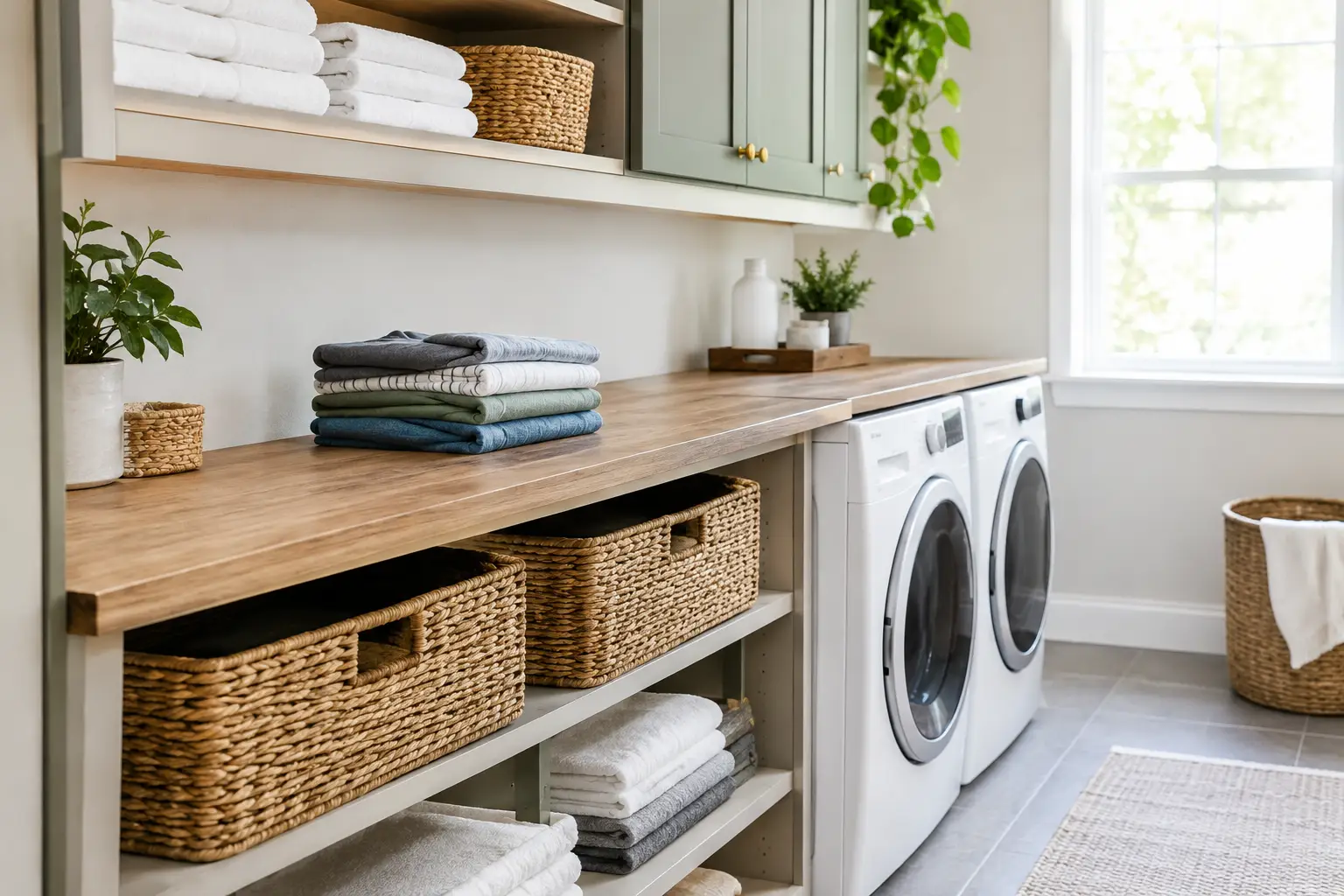
The laundry pile rarely becomes stressful because of the washing machine. It becomes stressful when clean clothes have nowhere to land, get sorted, or get folded before the next load is ready. A well-planned laundry room folding station gives every step a place, helping a busy household keep clean laundry from taking over the kitchen table, bedroom floor, or couch.
For Quad Cities homeowners, the right setup does not have to mean a large, magazine-ready laundry room. It means creating a practical work surface with storage that fits the room, the people using it, and the way laundry actually gets done.
What a Laundry Room Folding Station Should Do
A folding station is more than a countertop. It is the central workspace between the dryer and the final destination for clean clothes. The best designs make it easy to remove clothes from the dryer, sort them by person or room, fold them comfortably, and put supplies away without creating another cluttered surface.
In a compact laundry room, the folding station may be a single countertop above front-loading machines. In a larger room, it could include a long counter, lower cabinets, pullout hampers, drawers, hanging space, and shelves for supplies. The right choice depends on how much laundry your household produces and how much of the room must serve other purposes.
A station should also be comfortable to use. If the counter is too high, too shallow, or constantly covered with detergent bottles, folding becomes another chore you avoid. Thoughtful storage protects the work surface so it stays available when you need it.
Start With the Laundry Room Workflow
Before choosing cabinets or finishes, consider what happens to a load of laundry from start to finish. Most households move through the same basic sequence: sort, wash, dry, fold, hang, and put away. A functional layout reduces unnecessary steps between those tasks.
If you have front-loading machines, placing a continuous counter above them is often the most efficient use of space. It creates a broad, waist-height folding surface without taking up additional floor area. For top-loading washers, a nearby counter or wall-mounted folding table may make more sense, since the washer lid needs room to open.
Think about where clean clothes go after folding. A few open cubbies or labeled baskets can hold each family member's folded items until they are taken upstairs or to another part of the house. If shirts, dresses, or uniforms need to be hung immediately, include a hanging rod near the dryer. This simple addition helps prevent wrinkles and keeps damp items from being draped over doors or furniture.
Measure for movement, not just cabinetry
Laundry rooms can feel crowded quickly, especially when appliance doors are open. Measure the available wall and floor space, then account for appliance clearances, door swings, walkways, plumbing, vents, and electrical outlets. A beautiful cabinet plan is not useful if it blocks access to the washer, dryer, utility sink, or mechanical equipment.
For a comfortable folding area, aim for a counter deep enough to hold a basket and a stack of clothes. Standard countertop depth often works well over front-load machines, but a shallower counter may be better in a narrow room. The goal is to preserve a clear path through the space rather than forcing everyone to squeeze around an oversized surface.
Choose the Right Folding Surface
The countertop is the part of a laundry room folding station that receives the most daily wear. It needs to stand up to laundry baskets, damp clothing, spilled detergent, and regular cleaning. It should also feel like an intentional part of the room rather than an afterthought.
Laminate is a practical option for many households because it is durable, easy to maintain, and available in colors and patterns that coordinate with surrounding cabinetry. Solid-surface and quartz counters offer a more polished appearance and handle moisture well, though they can raise the project budget. Wood brings warmth to a utility-focused room, but it needs a protective finish and prompt cleanup after spills.
Color matters, too. Light counters can make a small room feel more open, while medium tones may be more forgiving of lint, dust, and everyday marks. If the laundry room connects to a mudroom, kitchen, or hallway, choosing a finish that complements nearby spaces can make the home feel more cohesive.
Add Storage That Keeps the Counter Clear
A folding counter only works when it is not serving as permanent storage for every bottle, basket, and lost sock. Cabinetry below or above the work surface keeps supplies within reach while protecting the usable area.
Drawers are especially helpful for smaller items such as stain removers, dryer sheets, sewing supplies, lint rollers, and extra buttons. Unlike deep cabinets, drawers bring items forward so you do not have to dig behind bulky detergent containers. Closed cabinets are a good choice for cleaning products, particularly in homes with young children or pets.
Open shelves can work well for attractive baskets, frequently used supplies, or neatly folded towels. They require more consistency, however. If your family tends to set things down quickly and move on, a mix of open shelving and closed storage usually offers the best balance between convenience and visual calm.
Useful features worth considering
The most effective laundry rooms are often built around a few small details. Pullout hampers allow clothes to be sorted before washing. Vertical dividers can store ironing boards, drying racks, or baking sheets if the room doubles as a utility space. A narrow pullout cabinet can hold brooms, mops, and cleaning tools without leaning them against a wall.
Lighting also deserves attention. Overhead lighting is essential, but task lighting near the folding counter makes it easier to spot stains, match socks, and sort dark clothing. If the room has limited natural light, bright, even lighting can make a surprisingly big difference in how comfortable the space feels.
Make Room for Real Household Needs
A laundry room is rarely used for laundry alone. It may be the entry point from the garage, the place where wet boots dry, or the home base for pet supplies and cleaning equipment. A custom folding station should support those responsibilities instead of competing with them.
For families with children, a lower open shelf can give kids a place to collect their own clean clothes. For households with pets, a dedicated drawer or cabinet keeps towels, grooming tools, and supplies separate from clothing. If you air-dry delicate items, a retractable line or hanging rod can be more useful than additional shelving.
There are trade-offs. A long counter provides more folding room, but it may leave less space for a sink or tall storage cabinet. Open cubbies make sorting easy, but they can look cluttered if laundry sits for several days. The best plan is not the one with the most features. It is the one that removes the friction points your household deals with every week.
When Custom Design Makes Sense
Freestanding tables and basic shelving can improve a laundry room, particularly when the goal is a quick update. But custom storage becomes valuable when the room has an awkward footprint, limited square footage, uneven walls, or multiple jobs to handle. Built-in cabinetry can use vertical space efficiently, fit around appliances and utility connections, and create a finished look that standalone pieces often cannot provide.
A professional design consultation also helps homeowners make informed decisions before materials are ordered. It is easier to plan for hamper space, hanging room, counter height, and storage access at the beginning than to realize later that the new counter blocks a door or leaves no place for detergent.
Comfort Concepts QCA designs laundry room storage around the way local homeowners live, from compact laundry closets to larger utility rooms that need to work harder. The focus is not on adding cabinetry for its own sake. It is on creating a dependable workspace that makes a routine household task easier to manage.
A Better Place for the Clean Laundry to Land
The goal of a laundry room folding station is not perfection. Some weeks, baskets will still wait longer than planned. But when clean clothes have a clear place to be folded, sorted, hung, and stored, the laundry room stops creating extra work for the rest of the house.
A well-designed station gives you a practical surface today and a more organized home every time the dryer buzzer sounds.