
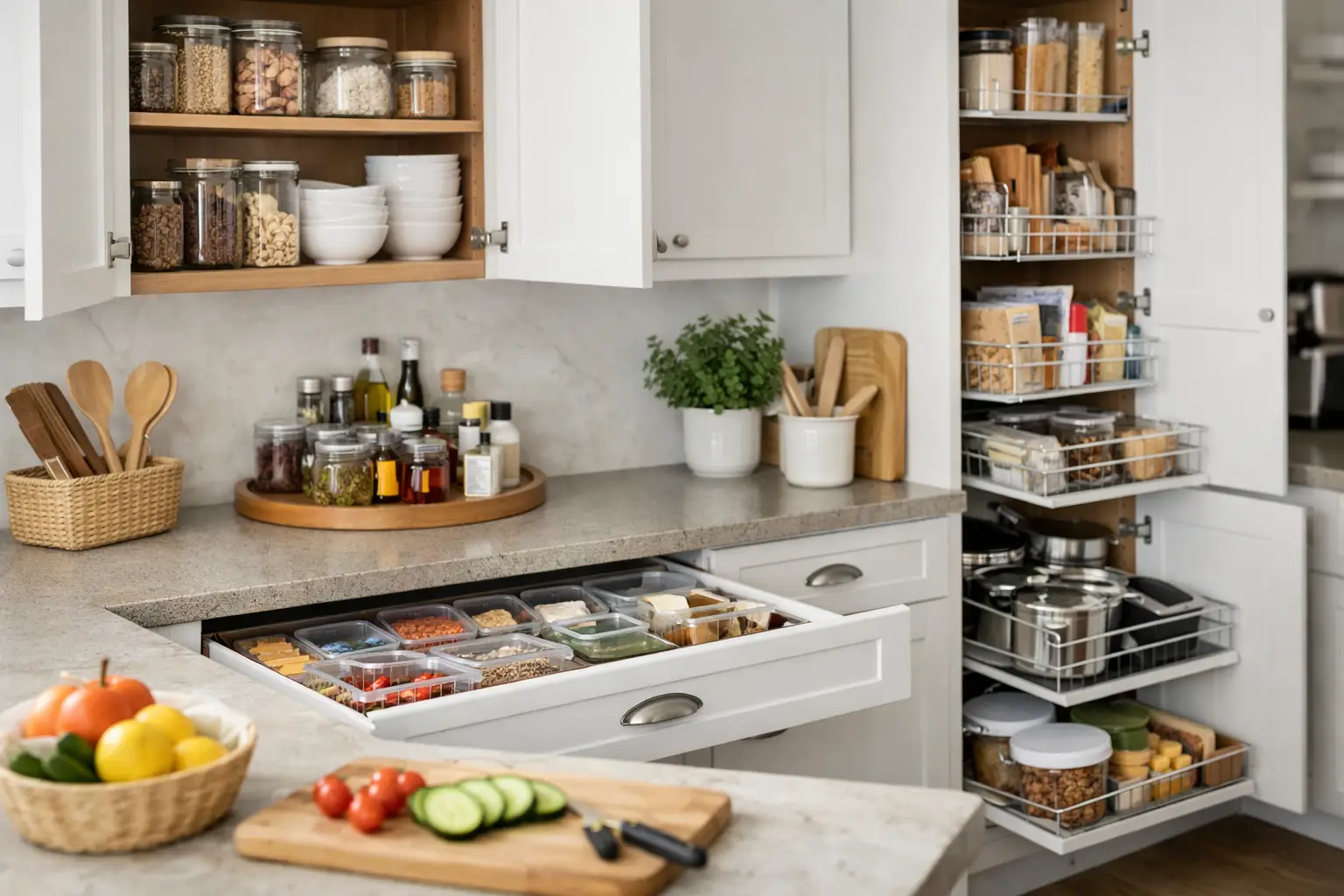
The cabinet that frustrates you most is usually not too small. It is doing too many jobs. A practical kitchen cabinet organization guide starts by giving every shelf, drawer, and door a clear purpose, so making breakfast, packing lunches, and cleaning up after dinner take less effort.
For busy Quad Cities households, the goal is not a picture-perfect kitchen that only works when nobody is using it. The goal is a kitchen that supports the way your family actually cooks, eats, stores groceries, and moves through the day. A few thoughtful changes can make a noticeable difference. If your cabinets are crowded, poorly planned, or difficult to reach, a more customized storage approach may be the better long-term answer.
Start With How Your Kitchen Is Used
Before buying bins, risers, or drawer dividers, take a close look at your routines. Organization works best when it follows the natural path of a task. Coffee mugs and filters belong near the coffee maker. Plates, bowls, and everyday glasses should be close to the dishwasher or dining area. Pots, pans, and cooking utensils should be within easy reach of the range.
Walk through a normal week in your kitchen. Think about who uses it, what meals you prepare most often, and where clutter tends to collect. A household that cooks from scratch will need more accessible space for cookware, spices, oils, and food-prep tools than a household that relies on quick meals. Families with young children may want snacks, cups, and lunch containers in lower cabinets where children can safely reach them.
This step also helps identify items that do not need prime cabinet space. Holiday serving pieces, specialty baking tools, and rarely used small appliances can be stored higher up or in another area. The best locations in your kitchen should go to the things you use every day.
Empty Cabinets Before You Organize Them
It is hard to improve a cabinet one item at a time. Choose one section of the kitchen, empty it fully, and clean the interior before putting anything back. Seeing the entire contents at once makes duplicates, expired food, broken containers, and unused gadgets easier to spot.
Be honest about what earns a place in your kitchen. A chipped mug you never choose, three incomplete food-storage sets, or an appliance that has not been used in two years may be taking up valuable room. Keep what is useful, in good condition, and suited to your current routine.
Avoid trying to finish the whole kitchen in one exhausting afternoon unless it is a small space. Start with the cabinet that causes the most daily aggravation, such as the cookware cabinet or the area under the sink. A completed problem area gives you a working system and makes the next one easier to tackle.
Create Clear Kitchen Work Zones
A well-organized kitchen is easier to maintain when cabinets are arranged by activity rather than by item type alone. Instead of putting all containers in one place because they are containers, place them where they support the task at hand.
Cooking Zone
Store pots, pans, baking sheets, cooking utensils, oils, and frequently used spices close to the stove. Deep drawers are often more useful than fixed lower shelves for heavy cookware because you can see what you have without kneeling and reaching into the back of a dark cabinet.
Vertical dividers make baking sheets, cutting boards, serving trays, and pan lids much easier to retrieve. Stacking these items in a single pile may seem efficient, but it often creates the familiar problem of moving five things to get to one.
Prep Zone
Keep knives, measuring tools, mixing bowls, cutting boards, and food-prep equipment near the counter space where you chop and assemble meals. If your kitchen has an island, it may be the right home for many of these items.
A drawer with adjustable dividers can keep small tools from turning into a tangled collection. The right layout depends on what you use. A serious home baker may need room for measuring cups, pastry tools, and decorating supplies, while another household may need a dependable spot for lunch-packing items.
Cleaning Zone
The cabinet under the sink should hold items related to cleaning, not a random mix of cleaners, bags, old sponges, and household supplies. A pull-out tray or shallow bins can separate dishwashing products from trash bags and cleaning cloths. Leave room around plumbing and check occasionally for moisture or small leaks.
If there are children or pets in the home, store cleaning products securely and according to their labels. Convenience matters, but safety matters more.
Food Storage Zone
Place food containers, wraps, bags, and reusable bottles near the refrigerator or the area where meals are packed. Nest containers by size, store lids upright in a divider, and remove pieces that no longer have matching partners. This one change can reclaim a surprising amount of cabinet space.
Dry goods are often easier to manage in a pantry, but a cabinet can work well when it has adjustable shelves and visibility. Put everyday items at eye level, keep heavier products low, and place backstock higher or farther back. Do not overload shelves just because there is a little unused vertical space. You still need to see and reach what is stored there.
Use Cabinet Storage That Solves a Specific Problem
Organizers are helpful when they remove a real obstacle. They are not helpful when they add another layer of clutter. Measure cabinet width, depth, and door clearance before purchasing any product, especially pull-out inserts, tiered shelves, and door-mounted storage.
A lazy Susan can improve access in a corner cabinet, although it may not be the best use of space for every kitchen. Pull-out shelves provide fuller access to deep lower cabinets, but they require a larger investment than basic bins. Shelf risers can work well for canned goods and mugs, while clear containers can help with visibility. The right choice depends on the cabinet, the contents, and how often the items are used.
For many homeowners, lower cabinets are the biggest source of frustration. Fixed shelves force you to bend, reach, and search in the back. Pull-out drawers, roll-out trays, and carefully planned deep drawers bring the contents toward you. They can be especially helpful for cookware, small appliances, pantry goods, and heavier dishes.
Make Drawers Work Harder
Drawers are among the most efficient storage areas in a kitchen when they are organized around what happens there. Utensil dividers should fit the tools you own instead of forcing everything into narrow, generic sections. Keep only the utensils that are regularly used in the top drawer, then move duplicates and specialty pieces to a secondary location.
A deep drawer can hold stacks of plates, bowls, or cookware if the drawer hardware is designed for the weight. Shallow drawers are well suited for wraps, spices, tea, towels, and flat cooking tools. Labeling is useful for shared kitchens, but it is not necessary everywhere. Often, simple categories and a consistent location are enough.
Do not overlook the inside of cabinet doors and the narrow space beside appliances. These areas can sometimes hold wraps, cutting boards, trays, or cleaning tools. However, door storage should not interfere with shelves, drawers, or hinges. A solution that catches every time you close the cabinet will not stay useful for long.
Plan for Change, Not Perfection
Kitchen organization needs occasional adjustment. Children grow, cooking habits change, and new appliances find their way into the home. Build in a little flexibility instead of filling every inch with a permanent system.
Review the kitchen every few months, particularly after the holidays or a busy season. Put misplaced items back in their zones, remove worn-out containers, and ask whether the layout still makes daily tasks easier. Small resets prevent one crowded drawer from becoming a full-kitchen problem.
When cabinets themselves are limiting the way your kitchen functions, organizing accessories can only go so far. Custom cabinet interiors, pull-out storage, tailored drawers, and pantry features can make difficult spaces work better for the people who use them. Comfort Concepts QCA helps homeowners create storage solutions designed around everyday routines, not a one-size-fits-all layout.
A comfortable kitchen should let you find what you need without searching, stretching, or rearranging half a cabinet. Start with one problem area, give it a clear purpose, and let the improvement make the next decision easier.