
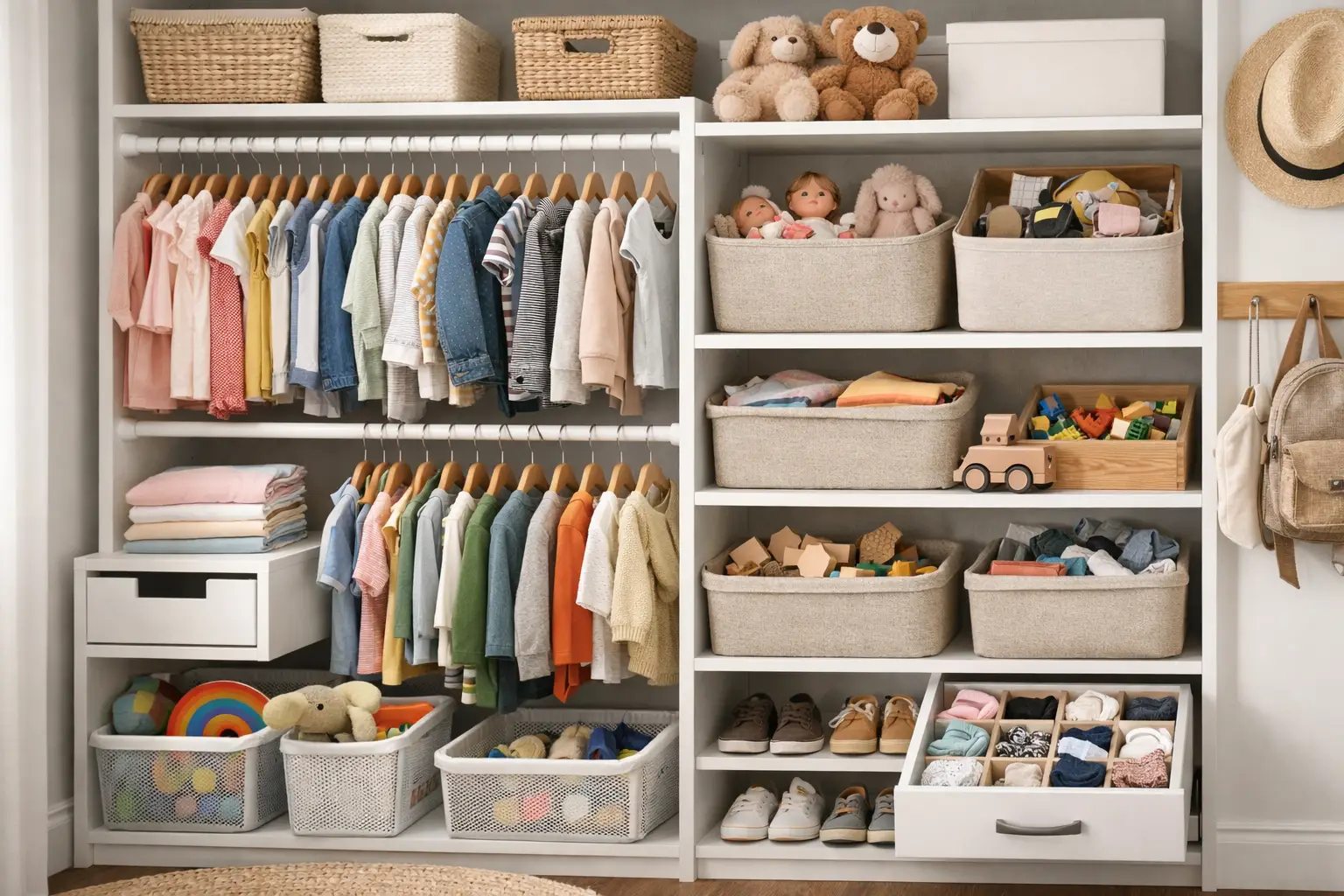
A child’s closet can become crowded faster than almost any other space in the house. Clothes arrive in different sizes, toys migrate from room to room, and seasonal gear needs a home without taking over the bedroom. The best kids closet organization ideas make mornings easier now while leaving room for a child’s needs to change over time.
The goal is not a picture-perfect closet that only works for one week. It is a practical system your child can understand, use, and help maintain. Whether you have a small reach-in closet or a larger walk-in space, a few thoughtful decisions can turn daily clutter into a calmer routine.
Start With What Your Child Uses Every Day
Before adding bins, shelves, or accessories, take everything out and sort it by how often it is used. Everyday school clothes, pajamas, underwear, and favorite shoes should be the easiest items to reach. Dress clothes, out-of-season items, keepsakes, and the next size up can move to higher shelves or another storage area.
This step matters because closets often fail when prime space is given to items that are rarely used. A child should not have to search behind winter boots to find a clean T-shirt on a school morning.
Keep only clothing that fits, is comfortable, and is likely to be worn. Save sentimental pieces intentionally rather than letting them occupy valuable closet space. If several children will use hand-me-downs, label a dedicated bin by size and season so those clothes are ready when needed.
Use Two Hanging Levels for Growing Kids
Most standard closets have one high hanging rod, which works for adult clothing but wastes usable vertical space for young children. Installing a second rod below the first creates two levels for shorter garments such as shirts, jackets, skirts, and pants.
Put the most frequently worn items on the lower rod, where your child can reach them independently. The upper rod can hold special-occasion clothing, clothes for the next season, or larger items that need more length. As your child grows, the layout can be adjusted rather than replaced.
For long dresses or coats, leave one section with a single full-height rod. The right balance depends on the wardrobe. A child with uniforms may need more hanging room, while a child who mostly wears folded play clothes may benefit more from drawers and open shelving.
Add Drawers for Small Items That Get Lost
Socks, underwear, leggings, swimsuits, pajamas, and accessories can quickly turn into an untidy pile on an open shelf. Drawers provide a simple way to contain these smaller items while keeping them easy to access.
Choose shallow drawers for small clothing and deeper drawers for bulky sweatshirts, jeans, or extra bedding. Interior dividers can help separate socks from tights or belts from hair accessories, but the system does not have to be overly detailed. For many families, one drawer for socks and one for underwear is enough to keep the routine manageable.
Built-in drawers are especially useful in a child’s closet because they remove the need for a separate dresser. That can free up bedroom floor space for play, homework, or a more open and comfortable room.
Make Open Shelves Work Harder
Open shelves are useful for folded clothing, backpacks, books, and storage bins, but they need clear boundaries. Without them, stacks tend to topple and loose items drift into one another.
Set shelves at heights that match the child’s age. Lower shelves are a good place for everyday shirts, pajamas, or a bin of favorite toys. Higher shelves can store seasonal clothing, extra blankets, and items an adult manages.
Avoid making shelves too deep if possible. Deep shelves invite items to disappear at the back. When deeper shelving is necessary, use labeled bins to pull groups of items forward as needed. Clear bins can work well for seeing contents quickly, while solid bins create a cleaner appearance. Either option works best when every bin has a specific purpose.
Create a Simple Shoe Zone
Shoes often become the first obstacle inside a closet. They collect at the door, get mixed with sports gear, and make it harder to clean the floor. A dedicated shoe shelf or angled shoe rack gives each pair a consistent place.
For younger children, keep the most commonly worn pairs on a low shelf. Place rain boots, snow boots, and dress shoes higher up or in a separate seasonal bin. In the Quad Cities, rotating footwear with the weather can make a noticeable difference. Winter boots take up far more room than sandals, so there is no reason to keep every pair accessible year-round.
If floor space is limited, a shallow shelf system can keep shoes off the ground without sacrificing much hanging space. Avoid relying only on over-the-door organizers for heavy shoes, as they can become strained and inconvenient for small children to use.
Give Backpacks and Gear a Home
Backpacks, lunch boxes, dance bags, sports uniforms, and library books need a landing place. Otherwise, they end up on a bedroom floor or get left near the front door. A few sturdy hooks inside or just outside the closet can make the school-day routine more predictable.
Assign one hook per child, then add a small shelf or bin nearby for items that travel with them. This is also a useful place for hats, gloves, and lightweight jackets during colder months. Keep the hook height low enough for children to hang up their own belongings. Independence is one of the biggest advantages of a well-planned closet.
Use Labels That Make Sense to Kids
Labels should help, not create another chore. For younger children, use a simple picture and word label for categories such as pajamas, shirts, shoes, or dress-up clothes. Older children may prefer labels by activity, including school, sports, sleepwear, or seasonal items.
Do not over-categorize. A closet with too many tiny categories can be harder to maintain than one with a few broad, clear zones. The test is simple: can your child put something away without asking where it goes? If not, simplify the system.
Reserve High Space for Seasonal Storage
The shelf above the hanging rod is one of the most valuable areas in a closet, but it should not hold everyday necessities. Use it for out-of-season clothing, extra bedding, keepsakes, and clothing stored for the next growth stage.
Choose lidded bins to protect items from dust and label them clearly with the size, season, and child’s name. Instead of opening several containers when the weather changes, you will know exactly where to look. This approach also makes it easier to review what your child already has before buying more for the next season.
Build in Room for Toys and Hobbies
A child’s closet often needs to store more than clothing. Board games, building sets, art supplies, dolls, and hobby equipment may all need a place, particularly in smaller bedrooms. The key is to decide what belongs in the closet and what would be better stored elsewhere.
A small collection of frequently used toys can fit well in low, open bins. Larger hobby supplies may need deeper drawers or dedicated shelves. Keep craft materials and items with many small pieces in containers with lids. This makes cleanup quicker and keeps clothing storage from becoming a mixed-use pile.
Plan for Change Instead of a Short-Term Fix
Children grow, interests shift, and closets need to keep up. Adjustable shelves and movable hanging rods are often more useful than a fixed layout designed for one age. A toddler may need low baskets and room for toys, while a teenager may need more hanging space, drawers, and a place for shoes or sports gear.
A custom closet can be designed around those changing needs from the beginning. Comfort Concepts QCA helps homeowners create storage that uses the available space well, with durable components and flexible features that support a family over the long term.
Keep the System Easy to Reset
Even the best closet needs a quick reset from time to time. Make it part of the seasonal routine to check for clothing that no longer fits, damaged items, and things that have migrated from other rooms. Five or ten minutes of regular upkeep is far easier than a full-day closet cleanout.
The most successful kids closet organization ideas are the ones that fit real family life. Give every daily item an easy home, keep future needs in mind, and leave a little open space on purpose. A closet that is simple to use will help your child build good habits while making the whole room feel more comfortable.