
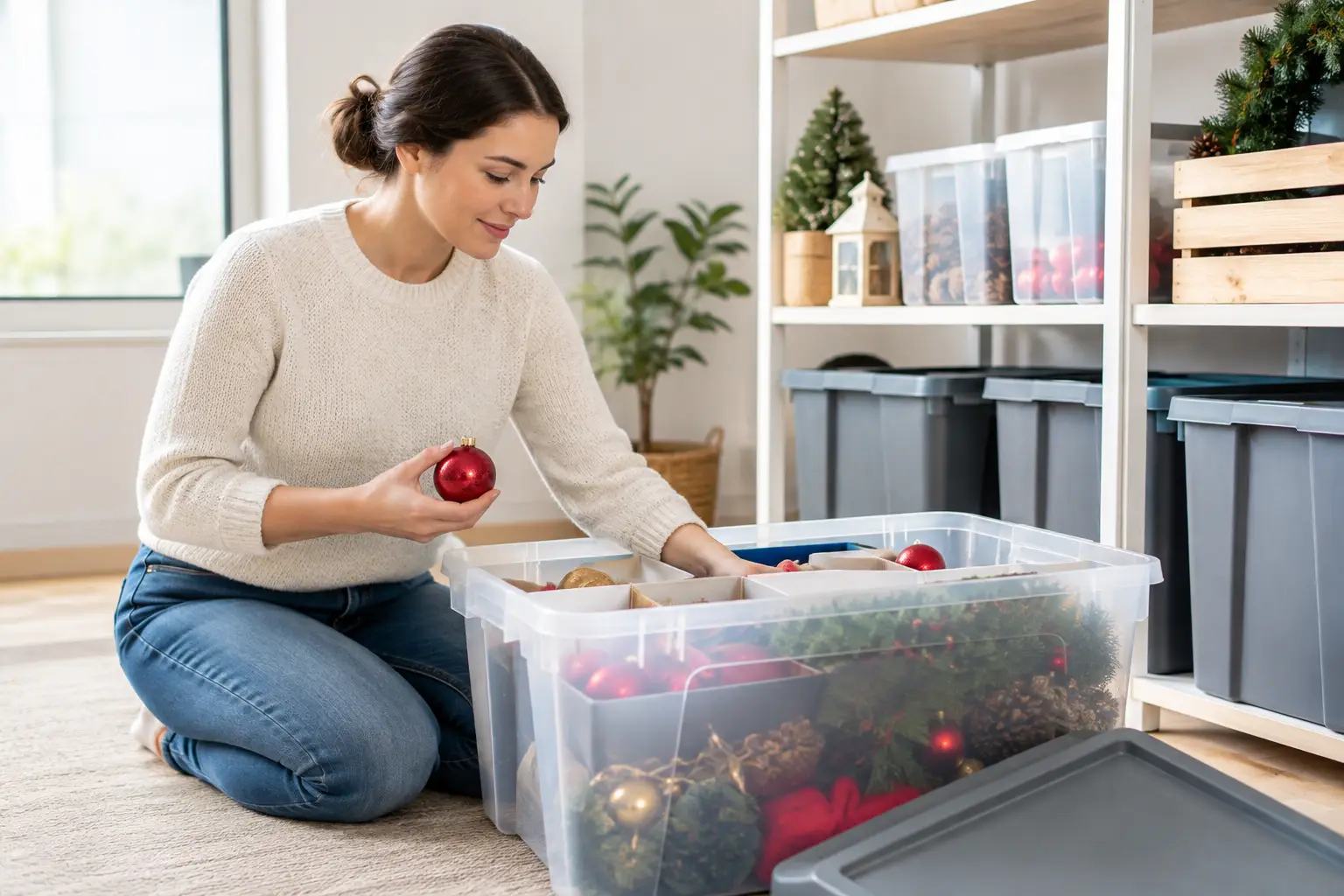
The holiday bins are packed, the porch planters are empty, and the decorations that made your home feel festive now need somewhere to go. Knowing how to store seasonal decor well keeps that transition from turning into a weekend of crowded closets, broken ornaments, and boxes you cannot find next year. A practical storage plan protects the items you enjoy while giving your everyday spaces room to work.
For Quad Cities homeowners, seasonal decor can add up quickly. Winter holidays, spring arrangements, summer patio pieces, fall displays, and family traditions all need a place between seasons. The answer is not necessarily buying more plastic totes. It is choosing the right storage locations, containers, and organization system for the way your household actually lives.
Start With What Is Worth Keeping
Before packing anything away, separate the decor you truly use from the pieces that have become a burden. A crowded storage area often has less to do with a lack of shelves and more to do with years of duplicate garlands, damaged lights, and decorations that no longer suit your home.
Set aside items that are broken, faded, or missing pieces. Repair heirloom pieces that matter to your family, but be realistic about inexpensive items that will continue to take up space without being used. If a decoration has stayed in its box for several seasons, consider donating it while it is still in good condition.
This step is especially useful before a move, remodel, or garage organization project. It is far easier to design storage around the items you use than around every item you have ever owned.
Choose Storage Zones Before You Buy Bins
Seasonal items need a dependable home, not an available corner. Decide where different categories will live before purchasing containers. A garage may work well for sturdy outdoor decor and artificial trees, while delicate ornaments, fabric items, and candles may be better protected in a climate-controlled closet or utility room.
Keep the most frequently used items within easy reach. If your family decorates for Halloween and winter holidays every year, those bins should not be buried behind old paint cans or stored on the highest shelf in the garage. Less-used items, such as specialty party supplies or oversized outdoor displays, can go in higher or deeper storage areas.
A well-planned system often uses more than one zone. For example, everyday storage may include a garage cabinet for outdoor displays, upper closet shelving for fragile holiday items, and a mudroom cabinet for seasonal entryway accents. This approach makes sense when one area cannot provide the right balance of access and protection.
Consider Temperature, Moisture, and Pests
Not every decoration can handle the same conditions. Extreme heat and cold can damage wax candles, adhesives, batteries, painted pieces, and certain plastics. Moisture can lead to mildew on fabric wreaths, paper decorations, and table linens. Cardboard boxes are easy for pests to enter and do little to protect against dampness.
Use enclosed cabinets or sturdy lidded containers for items stored in a garage, basement, or shed. If you have valuable ornaments, family keepsakes, or decor with sentimental value, bring them inside rather than relying on a space with large temperature swings. A storage solution should fit both the item and the environment.
Use Containers That Match the Decor
Clear bins make it easier to see what is inside, but labels still matter. A red ornament may be obvious through a tote wall, while a collection of white lights, extension cords, and table runners is not. Choose durable containers with secure lids, and avoid overfilling them. A bin that is too heavy to lift safely is not an organized solution.
For a household with several holidays and seasons, these container choices usually make the biggest difference:
- Ornament boxes with divided compartments protect fragile pieces from chipping and tangling.
- Wreath containers or structured bags prevent artificial greenery from being crushed.
- Wrapping-paper organizers keep rolls, bows, tape, and gift tags together.
- Long, shallow bins work well for garlands, porch signs, and string lights.
- Soft-sided, labeled bags can be a good choice for artificial tree sections and fabric items.
Keep original packaging for especially fragile or unusually shaped decor when it provides better protection than a standard bin. Otherwise, consistent containers stack more safely and make shelves easier to use.
Label for the Next Person Using the System
A label should answer two questions at a glance: what is in the container, and when will it be used? “Holiday decor” is too broad when you are searching for mantel stockings or outdoor lights. Labels such as “Fall - dining table,” “Winter - front porch,” or “Christmas - tree ornaments” are more useful.
For large collections, add a simple inventory note inside the lid. This can be a handwritten list of the main items in the tote. It prevents unnecessary shopping and helps you remember what you already own before each season arrives.
Make Vertical Space Work Harder
Floors fill up quickly when seasonal bins have no designated shelving. Once containers start stacking in front of one another, access becomes frustrating, and the system usually falls apart. Vertical storage can turn an underused wall into a practical seasonal storage zone.
Adjustable shelves are useful because decor does not come in standard sizes. Tall bins for artificial trees, narrow containers for wrapping paper, and small boxes for ornaments all need different clearances. Garage cabinets can keep visual clutter behind closed doors, while open shelves make frequently used bins quick to identify and retrieve.
Overhead storage can be a good fit for lightweight, less-frequent items, but it is not right for everything. Do not place heavy totes where they are difficult to lower safely, and do not rely on a ladder for items you need several times each season. Convenience matters. If putting decor away requires a complicated process, the garage floor will eventually become the default storage plan.
Build a Seasonal Rotation Into Your Routine
The best time to organize decor is when you are already putting it away. Clean outdoor pieces before storing them, remove batteries from items that will sit unused, and check lights for damage. Taking a few extra minutes now avoids unpleasant surprises when the next season begins.
Create a simple rotation. As one season comes down, return every item to its labeled container before bringing out the next set. This prevents the common pileup of mixed decor in a spare room, basement corner, or garage work area. It also gives you a natural time to notice what needs replacement or repair.
Families with young children may want one easily accessible bin for age-appropriate decorating items. Homeowners who host often may keep table settings and entertaining pieces together instead. The right system depends on your traditions, the amount of storage you have, and how often you change your decor.
When Custom Storage Is the Better Answer
Store-bought shelving can help, but it has limits. If seasonal decor shares a crowded garage with lawn equipment, sports gear, tools, and household supplies, standard shelves may only move the clutter around. Custom cabinets, adjustable shelving, and dedicated storage zones can give each category a defined place without sacrificing usable garage or closet space.
Comfort Concepts QCA designs storage solutions around the dimensions of your home and the way your family uses it. That can mean garage cabinets that protect holiday bins, closet shelving that keeps delicate decor accessible, or a utility-room system that creates room for household supplies and seasonal pieces together.
A good storage plan should make decorating feel enjoyable again, not like a search through unstable stacks of boxes. Give your favorite seasonal items a protected, easy-to-reach home, and your house will feel calmer long after the decorations come down.