
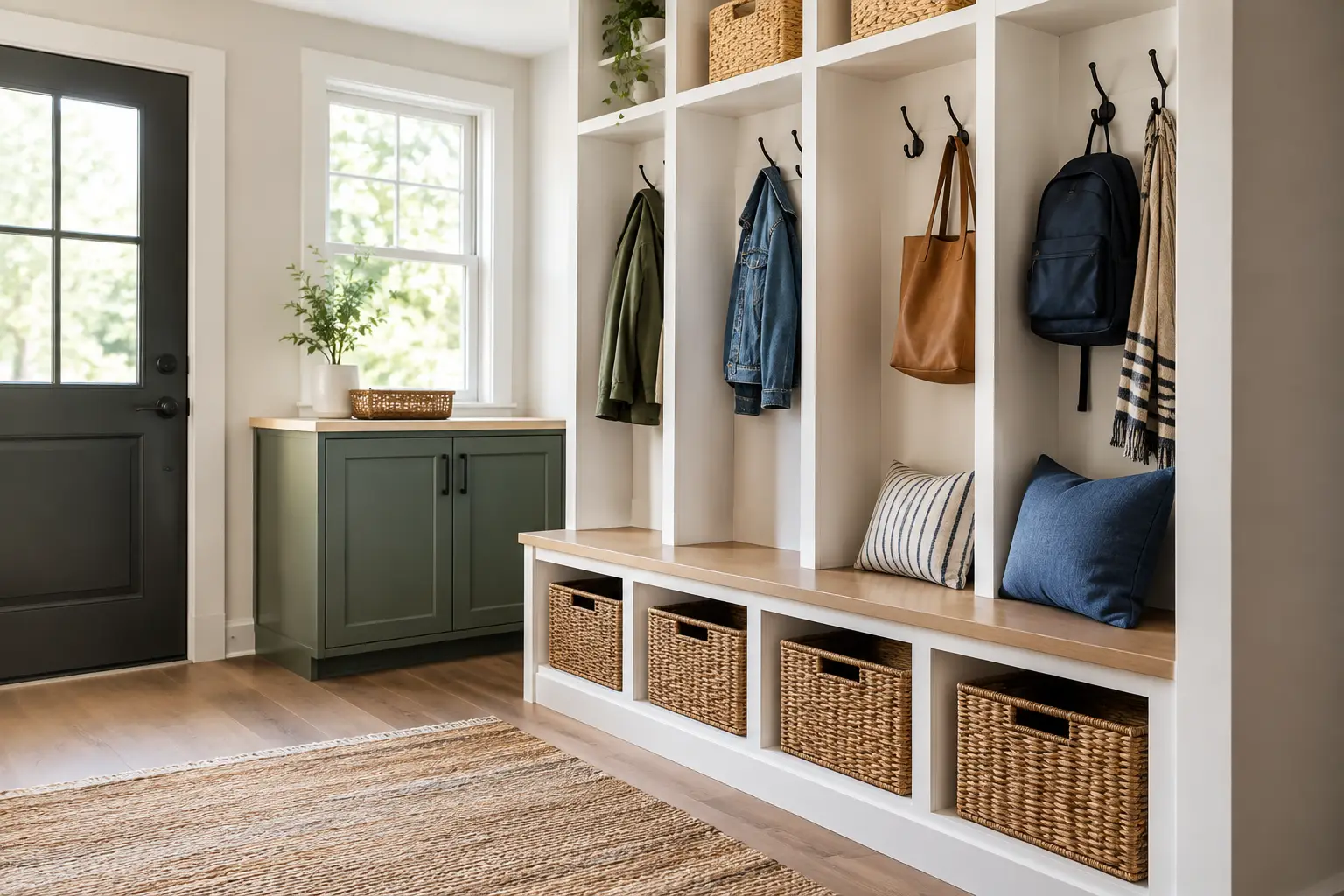
The boots, backpacks, pet leashes, lunch boxes, and coats that collect near the door are not a housekeeping failure. They are evidence that your entry is working hard without enough support. Learning how to plan mudroom storage starts with recognizing what actually comes through that door each day, especially during a Quad Cities winter or a rainy spring afternoon.
A well-planned mudroom does more than make a home look tidier. It gives every family member a reliable place to drop what they carry in, keeps wet and dirty items from traveling farther into the house, and makes the morning rush less frustrating. The best solution is not necessarily the largest one. It is the one designed around your routines, your available space, and the items that create clutter now.
Start With the Doorway Routine
Before choosing cabinets, hooks, or finishes, observe how your household uses the entry. Which door do family members use most often? Is it connected to the garage, backyard, laundry room, kitchen, or front hall? That traffic pattern should determine where storage goes and what it needs to hold.
For a few days, pay attention to what lands on the floor or kitchen counter after school, work, errands, and outdoor activities. Common mudroom items include shoes, coats, seasonal outerwear, sports equipment, bags, keys, pet supplies, umbrellas, and mail. A household with young children may need low hooks and room for oversized backpacks. A home with dogs may need a towel drawer, leash hooks, and easy-to-clean flooring. If you spend weekends at ball fields or on the trail, equipment storage may matter more than decorative display space.
This step prevents a common mistake: planning for an idealized, perfectly organized household instead of the one that actually lives in the home. Your mudroom should make the next right action easy. Hang the coat. Put shoes in the cubby. Set the bag in its assigned spot.
How to Plan Mudroom Storage in Practical Zones
The simplest way to create order is to divide the space into zones. Each zone should answer one question: What needs to happen here when someone walks in or leaves?
The first is the drop zone. This is where daily essentials land, such as keys, wallets, purses, mail, sunglasses, and charging devices. A shallow drawer, small countertop, or dedicated tray can keep these items visible without allowing them to spread across the kitchen.
Next is the hanging zone. Open hooks are often more practical than closets for the coats used every day because children and guests can use them quickly. Plan one or two hooks per person, plus a few extras for visitors or wet gear. Mount lower hooks for younger children so they can participate in the routine rather than leaving coats on the floor.
The shoe zone deserves more space than many homeowners expect. Shoes need room to air out, particularly after snow, rain, or a muddy day. Open cubbies, pullout trays, or a low shelf make shoes easy to reach. A waterproof mat or tray below them helps protect the floor and contains drips.
Finally, create a seasonal or utility zone. This is the right place for items that are necessary but not used every day: snow boots, extra gloves, dog food, reusable shopping bags, cleaning supplies, or sporting equipment. Closed cabinets help these belongings stay out of sight, while taller storage can make good use of vertical space.
Measure for Movement, Not Just Furniture
A storage wall can look good on paper and still make an entry feel cramped. Measure the room carefully, including door swings, windows, vents, trim, outlets, and walkways. Consider how much clearance people need when removing boots, opening a cabinet, carrying groceries, or passing each other at the door.
Benches are especially useful, but they should not become an obstacle. A built-in bench provides a comfortable place to sit while putting on shoes and can include drawers or open cubbies below. In a narrow room, a shallower bench or wall-mounted seat may be a better choice than a deep unit that blocks traffic.
Use the height of the room thoughtfully. Tall cabinets can hold seasonal items, while upper shelves are useful for less frequently used bins. Keep daily necessities within easy reach. If an item is too difficult to put away, it will probably stay out.
For households with aging family members or limited mobility, make accessibility part of the initial plan. A sturdy bench, easy-grip hardware, accessible hooks, and drawers that pull out smoothly can make the space safer and more comfortable for everyone.
Choose Open and Closed Storage With Purpose
Open storage is convenient, but it asks for regular upkeep. Closed storage hides visual clutter, but it can slow down busy routines if every item requires opening a door. Most effective mudrooms use a combination of both.
Open hooks, cubbies, and shelves work well for everyday coats, shoes, and bags. Closed drawers and cabinets are better for hats, gloves, pet supplies, paperwork, cleaning products, and the collection of small items that can make an entry look crowded. A cabinet door can also protect stored items from dust and keep children or pets away from supplies that should not be accessible.
Think about what you want to see when you come home. If the mudroom is visible from the kitchen or main living area, more closed storage may create a calmer appearance. If it is a separate back entry used mainly by family, open storage may offer greater convenience. There is no single right balance. It depends on your household's habits and how much time you want to spend resetting the space.
Plan for Midwestern Weather and Daily Wear
Mudroom materials need to handle moisture, dirt, salt, and frequent use. Choose durable finishes that can be wiped clean and hardware that will stand up to daily pulling, hanging, and opening. A light color can brighten a compact entry, but medium tones and textured finishes may hide scuffs better in a high-traffic family space.
Provide a place for wet items before they reach other rooms. This may include a boot tray, removable rug, hooks for raincoats, or a drying rack that folds away when not needed. If laundry is nearby, a hamper or sorting drawer can keep damp towels and muddy clothing contained.
Lighting matters here as well. A dark mudroom makes it harder to find gloves, spot spills, or get out the door on time. Good overhead lighting paired with lighting inside deeper cabinets or near a countertop can make the space more usable early in the morning and after sunset.
Give Every Person a Defined Space
Shared storage often falls apart when no one knows where their belongings belong. Individual lockers or cubbies give each family member a clear home base. Labels can help younger children, while a small nameplate, basket, or assigned drawer can work for adults.
You do not need a large room to create this structure. In a compact entry, each person may have one hook, one shoe compartment, and one small basket. In a larger mudroom, individual vertical lockers can hold coats, bags, and seasonal gear. The goal is not to give every person unlimited storage. It is to make daily belongings easy to find and easy to return.
Leave a little flexibility in the plan. Children grow, activities change, and a family that needs stroller storage today may need sports storage later. Adjustable shelves, movable bins, and a mix of drawers and open compartments allow the mudroom to change with your household instead of needing a full redesign.
Build a Plan That Fits the Home
A custom mudroom is most successful when it looks intentional and performs well under real family pressure. That means considering the room's measurements, the home's style, available budget, and the storage problems you want solved first. A simple bench-and-hook wall may be enough for one household. Another may need full-height cabinetry, integrated drawers, a charging station, and dedicated pet storage.
Comfort Concepts QCA helps homeowners turn underused entries, laundry areas, and garage transitions into organized spaces designed for everyday life. Professional planning can be especially helpful when the room has tight dimensions, multiple doorways, or a need for storage that must work for many years.
Start with the routines that make your household feel rushed or cluttered, then give those routines a practical place to happen. When the right storage is waiting at the door, coming home can feel a little more settled every day.