
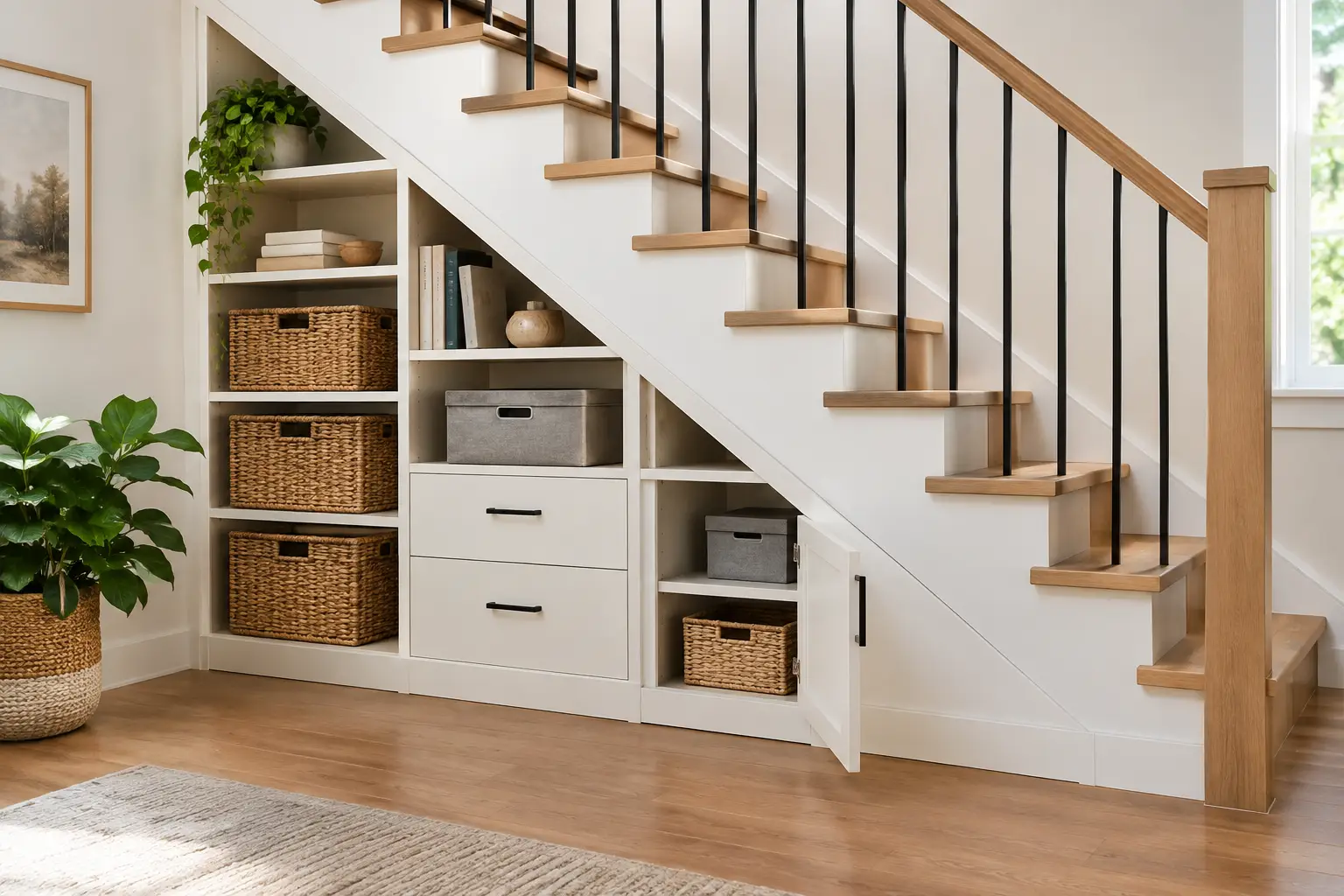
That awkward space beneath a staircase often becomes a catch-all for shoes, bags, seasonal decor, and the things no one knows where to put. When you organize under stairs with a clear plan, it can become one of the most useful storage areas in your home instead of another source of clutter.
The right solution depends on the staircase location, the shape of the available space, and what your household needs to access every day. A front-entry staircase calls for a different approach than one near the kitchen, basement, or family room. The goal is not simply to fill the space with shelves. It is to make the area easier to use, easier to maintain, and more comfortable to live with.
Start With the Space You Actually Have
Before choosing bins, cabinets, or hooks, take accurate measurements. Measure the overall width and depth, then measure the ceiling height at several points along the slope. Under-stair storage rarely has a consistent height, so the lowest portion may be useful for shallow drawers or seasonal items while the tallest section can support cabinets, hanging storage, or open shelving.
Also consider what is behind the wall. Some under-stair areas contain plumbing, electrical wiring, ductwork, or access panels that need to remain reachable. A professional review is especially valuable if you are planning built-in storage, because a good design works around these elements without creating a future maintenance problem.
Think about traffic flow, too. Doors and drawers need room to open without blocking a hallway, entry, or basement path. In a narrow area, pull-out drawers may be more practical than doors that swing outward. A well-designed system should reduce clutter without making a busy part of the home feel tighter.
Choose Storage Based on Location
The best way to organize under stairs is to assign the space one clear purpose. Trying to store every extra household item there usually leads back to disorganization. Start with what happens closest to the staircase every day.
Near the Front Door: Build a Better Drop Zone
An under-stair area near the entry can function like a compact mudroom. Closed cabinets can hold shoes, boots, backpacks, umbrellas, and dog-walking supplies, keeping them out of sight but within reach. Add lower cubbies or drawers for children so they can put away their own belongings without assistance.
For Quad Cities households, this kind of storage is particularly helpful during changing seasons. Winter boots, wet gloves, rain gear, and heavy coats can take over an entry quickly. Durable finishes, easy-to-clean surfaces, and a designated place for each item help the home stay orderly when the weather is not.
Near the Kitchen: Create a Pantry Extension
If the staircase is close to the kitchen or dining area, use it to relieve pressure on crowded cabinets. Deep pull-out shelves are useful for small appliances, paper products, bulk groceries, serving pieces, and lunch supplies. Shallow shelves near the front can hold spices, snacks, or canned goods.
Avoid building a pantry system based only on the largest items. A mix of shelf depths and adjustable heights gives you more flexibility as your needs change. Closed cabinetry can also create a cleaner look in an open-concept home.
Near a Living Area: Make Room for Daily Living
Under stairs near a family room can hold board games, books, blankets, media equipment, and charging stations. Open shelves can work well when the contents are attractive and easy to maintain. If the space tends to collect visual clutter, cabinets with doors provide a calmer appearance.
A small desk area is another option when the stair opening is tall enough. This can be a useful homework station or household command center, but only if there is adequate lighting and enough knee room to sit comfortably. A cramped desk that no one wants to use is not a productive use of square footage.
Smart Ways to Organize Under Stairs
The storage style should fit both the space and the way your household uses it. Built-in solutions are often the most efficient because they can follow the stair slope and use the full depth of the opening.
Use Drawers for Low, Deep Areas
Low areas beneath the stairs are difficult to use with standard shelving. Deep drawers or roll-out storage solve that problem by bringing the contents to you. They are ideal for shoes, pet supplies, wrapping paper, seasonal linens, toys, or rarely used kitchen equipment.
Drawers are usually easier to keep organized than deep cabinets because nothing gets lost at the back. They do require enough clearance in front of the staircase, so they may not be the right choice in a tight hallway.
Use Cabinets When You Want a Finished Look
Cabinet doors create clean lines and hide the everyday items that do not need to be on display. This is a strong choice for entryways, living rooms, and open areas where visual order matters. Inside, shelves, hooks, baskets, and dividers can be customized around the items you own.
Consider whether you prefer hinged doors or a combination of doors and drawers. Hinged doors can provide wide access to tall storage areas, while drawers make better use of the lower slope. The right mix often gives you more function than either option alone.
Use Open Shelving With Intention
Open shelving can make a small under-stair nook feel lighter, especially in a dark hallway. It works best for books, baskets, plants, and a limited number of decorative pieces. The trade-off is that open storage asks for regular upkeep. If your household is busy and items tend to be dropped wherever there is room, closed storage may be the more realistic choice.
Baskets can bring order to open shelves, but choose a consistent size and label them if several family members use the area. A basket without a defined purpose can become another place to hide clutter.
Do Not Forget Lighting and Access
Under-stair storage can feel dark, even in a well-lit home. Interior cabinet lighting, motion-sensor lights, or a nearby wall fixture makes it easier to find what you need and helps the area feel intentional. Good lighting is particularly useful in pantry storage and entryway cabinets where items are used early in the morning or late at night.
Hardware matters as well. Full-extension drawer slides allow you to reach the back of a drawer, and soft-close hardware prevents slamming in a busy home. These details may seem minor, but they affect how the storage performs every day.
If the area includes an electrical panel, plumbing shutoff, or mechanical equipment, plan access from the beginning. Storage should never prevent you from reaching an important home system quickly.
Common Under-Stair Storage Mistakes
One common mistake is buying standalone furniture before measuring the slope, depth, and opening. A freestanding cabinet may leave valuable space unused or look awkward against the staircase. Another is choosing storage that is too deep without a pull-out feature. When you cannot see or reach the back, that space becomes a clutter trap.
It is also easy to overlook the items that need to live there. A shoe cabinet that cannot fit winter boots or a coat area with no room for long jackets will not solve the daily problem. Take inventory first, then design around real belongings rather than an idealized version of your household.
Finally, do not treat every inch as storage. Leaving a little open space can make an entry feel more welcoming, provide room for a bench, or allow doors and drawers to function properly. Practical design is about using space wisely, not packing it full.
When Custom Storage Is Worth It
Custom under-stair storage is often worth considering when the space has an irregular angle, limited access, or a highly specific purpose. Standard shelving may work for a utility closet, but it rarely uses a sloped staircase opening as effectively as cabinetry designed to fit it.
Comfort Concepts QCA can help homeowners turn these overlooked areas into storage that fits their routines, style, and available space. A measured design can combine drawers, cabinets, shelves, hooks, and finishes in a way that feels like part of the home rather than an afterthought.
A staircase does not have to create a dead zone in the middle of your home. Give the space a purpose, design for the items you use most, and you will gain storage that makes everyday routines feel noticeably easier.