
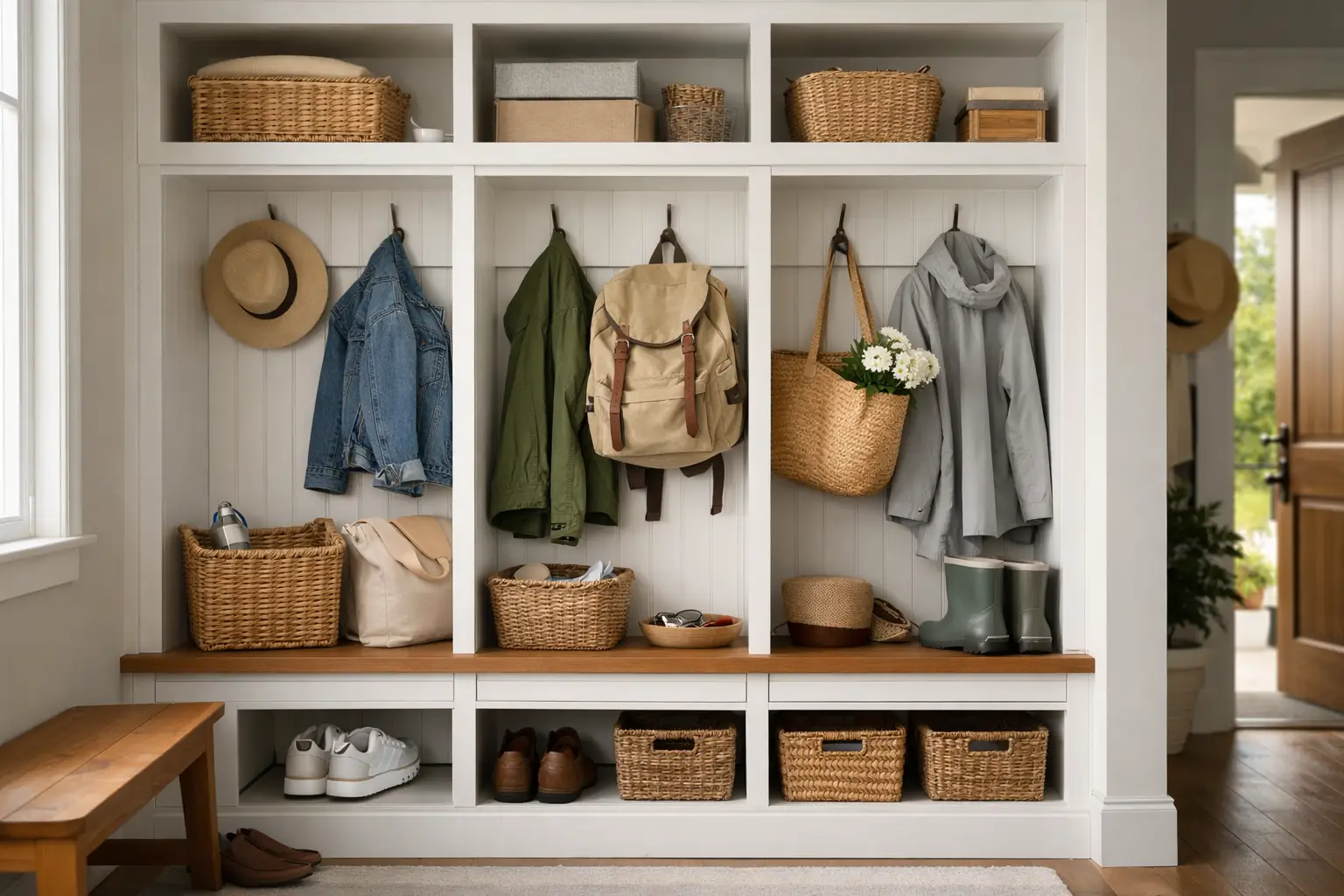
The school bags hit the floor, wet boots collect by the door, and someone cannot find a coat five minutes before leaving. Learning how to organize mudroom lockers starts with solving those real daily problems, not making the space look perfect for a photo. A good locker system gives every person a dependable place to land, especially through changing Quad Cities weather.
Start With How Your Household Actually Comes Home
Before moving bins or buying hooks, pay attention to what enters your house each day. A family with young children may need room for backpacks, lunch boxes, snow pants, and extra shoes. A household with teens may need charging space, sports equipment storage, and a place to keep larger bags off the floor. If you have a dog, towels, leashes, and paw-cleaning supplies may deserve their own zone near the entry.
Think of mudroom lockers as a transition space between outdoors and indoors. The items that travel in and out every day should be easiest to reach. Seasonal gear, backup supplies, and less-used items can go higher up or into closed storage.
It also helps to decide whether each locker belongs to one person or one purpose. Individual lockers work well for busy families because responsibility is clear. Purpose-based lockers can make more sense in a smaller mudroom, with one section for coats, one for shoes, and another for bags and pet supplies. There is no single right answer. The best setup is the one your household will keep using on a rushed Tuesday morning.
How to Organize Mudroom Lockers by Zone
The most functional lockers use vertical space intentionally. Divide each section into a few simple zones so everyday belongings do not compete for the same shelf or bench space.
Keep the daily zone at arm level
Install sturdy hooks where each family member can reach them. This is the place for the coat, backpack, purse, work bag, or jacket that gets used most often. Hooks are generally more practical than hangers in a mudroom because people can put items away quickly without opening a closet door or finding an empty hanger.
Avoid placing every hook at the same height. Lower hooks help children manage their own belongings, while higher hooks can hold adult coats, umbrellas, and items that need to stay out of reach. Leave enough space between hooks for bulky winter coats. Crowding them may save a few inches, but it makes the entire locker harder to use.
Give shoes a clear home near the floor
Shoes are usually where mudroom clutter begins. A dedicated shoe shelf, open cubby, or pull-out tray keeps pairs from spreading across the entryway. Open storage makes it easier for children to put shoes away, but it also means the contents stay visible. If your family tends to collect many shoes, closed drawers or deeper lower cabinets can create a calmer look.
Plan for dirty footwear as well as clean shoes. A removable boot tray catches water, salt, and mud during Midwest winters and rainy seasons. It is much easier to rinse a tray than to clean the entire floor or cabinet base. If possible, reserve one lower space for boots that need to dry before they go back into regular storage.
Use upper shelves for seasonal overflow
The top of each locker is valuable storage, but it should not become a permanent pile of forgotten items. Use labeled bins for hats, gloves, sunscreen, bug spray, swim gear, or cold-weather accessories. Soft-sided baskets work well for lightweight items, while lidded containers are better for supplies that need to stay dust-free.
Keep one season in the prime location and move the rest up high or elsewhere. In January, mittens and scarves should be simple to grab. In July, that same space may be better used for bike helmets or pool towels. This small change keeps lockers from feeling overfilled year-round.
Add a drop zone for the small essentials
Keys, mail, sunglasses, charging cords, and permission slips are easy to lose when they do not have a designated home. A shallow drawer, narrow shelf, or small basket near the entrance can handle these everyday details. If paper tends to build up, create one spot for items that need action and clear it weekly.
This is one area where closed storage can be worth it. A drawer keeps visual clutter down without asking every family member to maintain a perfectly styled shelf. The goal is not to hide a mess. It is to give small items a practical landing place before they disappear into the house.
Build a System That Fits Your Lockers
Not every mudroom has the same dimensions, and not every storage feature works in every home. A deep locker may hold a bench, cubbies, and hooks, while a narrow wall may need slim cabinets or a simple row of open compartments. Start with the room you have instead of forcing a layout that belongs in a larger home.
Benches are especially useful if family members regularly put on boots or need a place to set bags briefly. But a bench without shoe storage below it can become another surface for clutter. Drawers, open cubbies, or pull-out baskets beneath the seat make the space work harder. For households that need more shoe capacity than seating, skip the large bench and prioritize lower storage instead.
Doors are another trade-off. Closed lockers offer a cleaner appearance and can conceal crowded shelves, but open lockers make it easier for children to see and access their own gear. Some homes benefit from a combination: open centers with closed upper cabinets or lower drawers. That approach keeps daily items accessible while giving less attractive supplies a place to disappear.
For a mudroom that serves several people, labels can remove a surprising amount of morning stress. Use names, initials, or simple picture labels for younger children. The labels do not need to be decorative. They only need to make it obvious where items belong. When the system is clear, putting things away takes less thought.
Make Room for Weather, Work, and Weekend Gear
A mudroom has to handle more than the usual coat and pair of shoes. In the Quad Cities, the same entry may need to manage muddy spring boots, summer sports bags, fall jackets, and heavy winter layers. Plan for the items that create the biggest pileups during each season.
Instead of storing every accessory inside each person's locker, consider a shared family zone for bulky or occasional gear. A tall cabinet can hold umbrellas, folding chairs, and outdoor tools. A deep drawer can keep scarves, gloves, and hand warmers together. Wall hooks near the door may be the right place for a dog leash or reusable shopping bags.
Sports equipment deserves special attention because it is often damp, oversized, and needed on a schedule. Ventilated baskets or open cubbies allow gear to air out. A locker with a tall vertical section can hold bats, sticks, or folded camp chairs without turning the garage into the default storage room. If equipment is used only once or twice a week, a nearby utility area may be a better fit than taking up prime mudroom space.
Create a Reset Routine That Is Easy to Keep
Even well-designed mudroom lockers need a little maintenance. The difference is that an organized system makes the reset quick. A five-minute check once a week can return shoes to pairs, remove outgrown items, empty paper clutter, and move wet gear to dry.
At the start of a new season, take a closer look. Remove what no longer fits, relocate items that are not being used, and clean the boot trays and lower shelves. This is also the time to notice what is not working. If bags keep ending up on the floor, the hooks may be too high, too few, or placed in the wrong area. If shoes spill out daily, the storage capacity may simply be too small.
Do not expect children to maintain a complicated system. Give them a reachable hook, a basket or cubby for shoes, and one clear place for small belongings. Adults benefit from simple rules too. The more steps it takes to put something away, the more likely it is to stay on the bench.
When Custom Mudroom Storage Makes Sense
Freestanding furniture and basic hooks can improve a mudroom, particularly in a rental or a small entry. But custom storage is often a better long-term choice when the room has awkward corners, limited square footage, or a long list of household needs. Built-in lockers can be sized around ceiling height, family routines, and the exact items you need to store.
Features such as adjustable shelves, durable bench seating, drawers, tall cabinets, and integrated lighting can make a compact space feel far more useful. Material selection matters as well. A mudroom needs finishes and hardware that stand up to wet coats, grit, frequent use, and seasonal changes.
Comfort Concepts QCA helps homeowners create mudroom storage that feels comfortable, organized, and ready for real life. A thoughtful design does more than contain clutter. It gives your family a calmer place to arrive home, set down the day, and head out prepared for whatever the weather brings.