
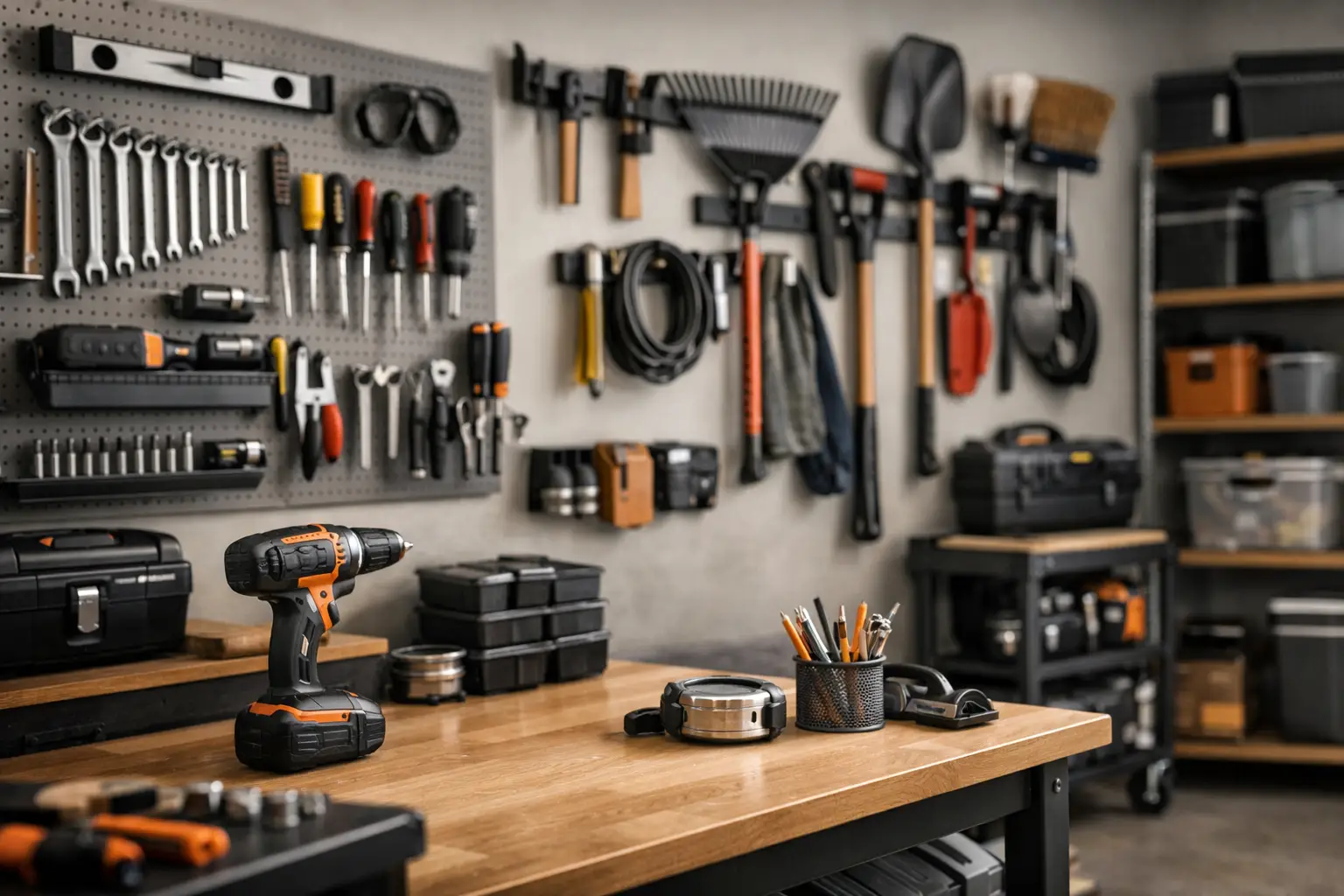
A garage can collect years of useful items without ever becoming useful as a workspace. The drill is somewhere behind the paint cans, the rake is leaning against the lawn mower, and every small repair starts with a search. Learning how to organize garage tools is less about making the room look perfect and more about giving the things you use a dependable place to live.
For Quad Cities homeowners, the garage often has to work hard through every season. It may store yard equipment, snow tools, automotive supplies, home repair gear, sports equipment, and holiday items all at once. A practical organization plan makes those changing needs easier to manage without turning the garage into another demanding project.
Start by Clearing the Work Area
Before buying cabinets, hooks, or bins, take everything out of the areas where tools are currently stored. You do not need to empty the entire garage in one day if the job feels overwhelming. Begin with one wall, one cabinet, or the section around your workbench.
As you sort, separate tools into four simple groups: keep, donate, recycle, and discard. Broken tools that are unlikely to be repaired, dried-up paint, duplicate hand tools, and mystery hardware take up more room than most people realize. Check local disposal guidance for chemicals, batteries, motor oil, and old paint rather than placing them in regular trash.
The goal is not to get rid of every extra item. A second shovel or screwdriver set can be helpful in a busy household. The question is whether each item earns the space it takes up and whether you can find it when you need it.
Create Garage Tool Zones That Match Your Routine
The best garage storage layout follows the way your household actually uses the space. Keep frequently used tools close to the garage entry or workbench. Place occasional-use items higher up or in deeper storage. This keeps everyday projects from being blocked by seasonal equipment.
A typical garage benefits from distinct zones for hand tools and repairs, lawn and garden equipment, automotive supplies, seasonal tools, and household overflow. These zones do not have to be labeled with large signs. Even a clear boundary between categories makes it easier to return things after use.
Put Project Tools Near a Work Surface
A workbench is the natural home base for drills, screwdrivers, wrenches, measuring tapes, levels, fasteners, and other repair essentials. Store the tools you reach for most often within arm's reach of the bench. A dedicated drawer, shallow cabinet, or wall-mounted tool board can all work well.
Open wall storage makes hand tools easy to see, which helps prevent duplicates and saves time during small projects. It also requires a little discipline. If your household is more likely to set tools down quickly than hang each one back up, drawers with labeled compartments may be the better fit.
Keep Long-Handled Tools Off the Floor
Rakes, shovels, brooms, hoes, and pruning tools are some of the biggest sources of garage clutter. Leaning them in a corner may seem efficient until one falls over or blocks access to something else.
Use wall-mounted holders, vertical channels, or a dedicated tall cabinet to secure long-handled tools. Group similar items together, but leave enough space to remove one without pulling out the entire row. In homes with children or pets, keeping sharp garden tools secured and out of reach is a worthwhile safety measure.
Give Lawn and Snow Equipment Room to Move
Mowers, trimmers, blowers, snow shovels, and ice-melt supplies need floor space, but they should not occupy the middle of the garage year-round. Create a parking area along a wall, leaving clear paths to vehicles, doors, and the workbench.
Seasonal rotation helps here. During spring and summer, keep mowing and gardening equipment accessible while snow tools move to higher shelves or a back cabinet. When winter arrives, bring shovels, salt, and ice scrapers forward. This small change keeps the garage aligned with the season instead of forcing you to dig through storage during the first snowfall.
Choose Storage That Can Handle a Garage Environment
Garage storage has different demands than a bedroom closet or pantry. Temperature swings, dust, moisture, and heavy equipment all affect what will hold up over time. Flimsy plastic shelves may be inexpensive, but they can sag under toolboxes, paint cans, or bulk supplies.
Durable cabinets protect valuable tools from dust and visual clutter, while adjustable shelving gives you flexibility as your needs change. Heavy-duty wall systems can free up floor space for vehicles and larger equipment. Drawers are especially useful for small tools and hardware because they keep items from disappearing into deep bins.
There is a trade-off between open and closed storage. Open shelving is quick and convenient for items you use often, but it can look cluttered and collects dust. Closed cabinets create a cleaner appearance and keep supplies contained, though they may add a few seconds to every task. Most garages work best with a combination of both.
At Comfort Concepts QCA, a custom garage storage design can balance those needs with cabinets, work surfaces, shelving, and wall storage sized for the way your family uses the space. The right system should make daily routines easier, not require you to reorganize your habits around it.
Use Containers for Small Items, Not for Everything
Clear bins are useful for extension cords, sanding supplies, cleaning products, spare parts, and seasonal accessories. Label the front of every bin in plain language, such as “Painting Supplies” or “Car Care.” Avoid vague labels like “Miscellaneous,” which usually become a permanent holding place for items nobody knows how to store.
For nails, screws, anchors, and other hardware, use shallow divided drawers or small labeled containers. Sort by type and size only as much as you will maintain. A contractor may need detailed labels for every screw length. For most homeowners, broad groups such as wood screws, picture-hanging hardware, and electrical supplies are enough.
Do not rely on large storage totes for everyday tools. Deep bins encourage piling, and piled tools are hard to find. Save larger containers for items used a few times a year, including holiday decorations, camping equipment, or off-season sports gear.
Make Safety Part of the Organization Plan
A well-organized garage should also be easier and safer to use. Keep chemicals, fuels, pesticides, and automotive fluids in their original labeled containers. Store them away from heat sources and out of reach of children. Never place these products in unmarked bottles or food containers.
Keep a clear walking path from the garage door to the home and around parked vehicles. This is especially helpful when carrying groceries, moving through the garage after dark, or bringing in wet boots during an Iowa or Illinois winter. Secure heavy items on lower shelves, and avoid stacking bulky boxes where they could fall.
Extension cords, power-tool batteries, and chargers deserve a designated location as well. Coil cords neatly on hooks, inspect them for damage, and store batteries in a dry location according to the manufacturer's instructions. A small charging station near the workbench can prevent loose cords from taking over the counter.
Build a Simple Return-to-Home Routine
The garage stays organized only when putting tools away is easier than leaving them out. That means every item needs an obvious home, and that home needs to be close to where the item is used.
After a project, take five minutes to return tools, sweep up debris, and put hardware back in its container. Once a month, check the workbench and floor for items that have drifted out of place. Before each major seasonal change, review the equipment you will need most and shift it forward.
If several family members use the garage, keep the system simple enough for everyone to follow. Labels, accessible hooks, and a clear work surface are more effective than an overly detailed system that only one person understands.
A garage should support the work and recreation that happen around your home, not add frustration to them. Start with one zone, give your most-used tools easy access, and choose storage that will serve your household for years. A little structure now can make the next repair, yard task, or weekend project feel much more manageable.