
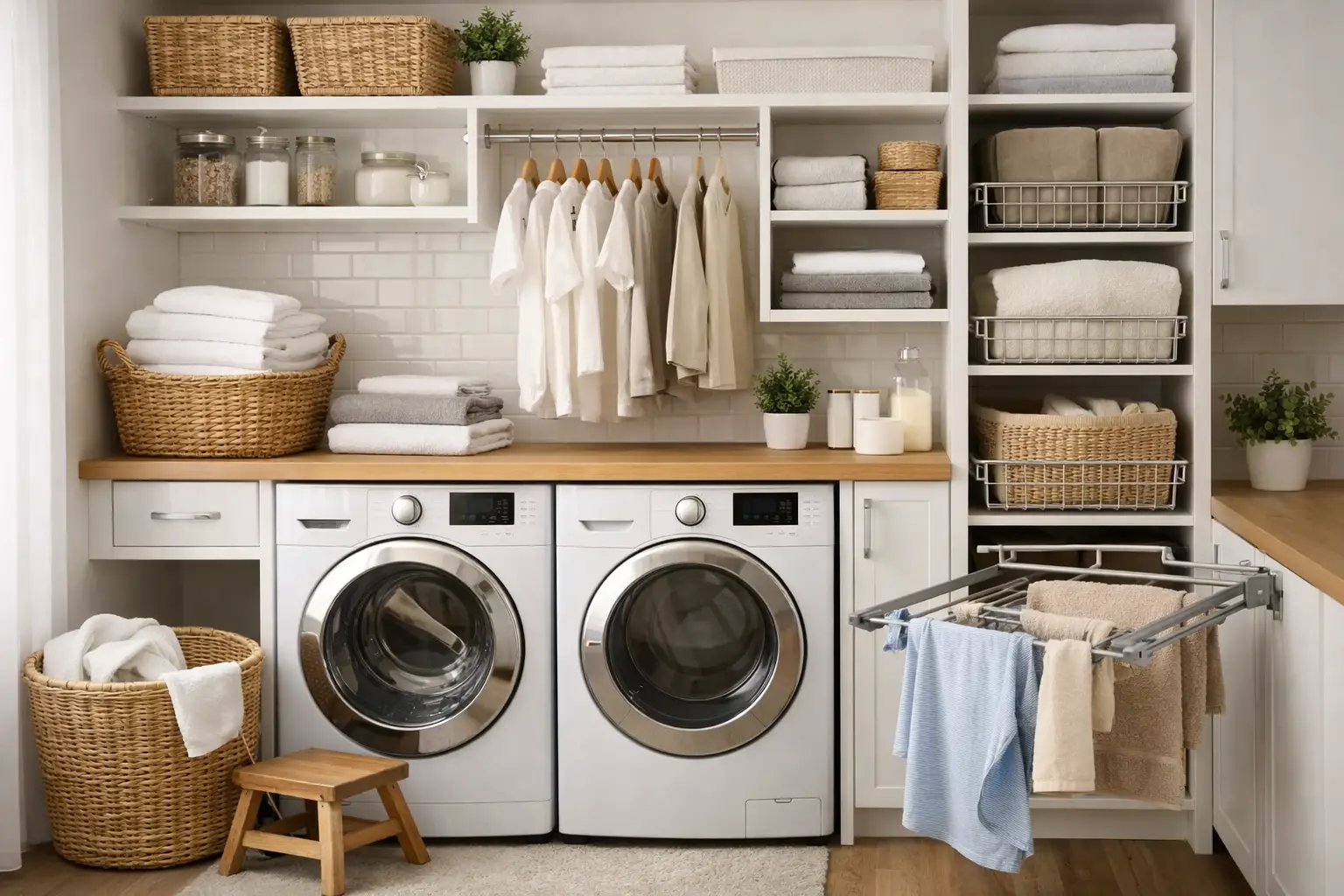
A laundry room can become the household drop zone fast: detergent bottles on top of the washer, clean clothes waiting to be folded, hampers in the walkway, and towels with nowhere to dry. The good news is that you do not need a large room to make laundry easier. Learning how to maximize laundry room space starts with looking at how your family actually uses the room, then giving every supply, basket, and task a dependable place.
For Quad Cities homeowners, a well-organized laundry room is about more than appearances. It can reduce clutter in nearby mudrooms and bedrooms, make busy weeknights more manageable, and help a compact utility area work harder for the whole home.
Start With the Laundry Routine, Not the Shelves
Before choosing cabinets or baskets, pay attention to the bottlenecks in your current setup. Where do dirty clothes collect? Do clean loads sit in baskets because there is no folding surface? Are cleaning supplies stored in another room, requiring extra trips during every load?
Your answers should shape the layout. A family with young children may need several sorting hampers and a low spot for socks or school clothes. A household that washes work uniforms, sports gear, or pet bedding may need dedicated bins and more room for air drying. One person in a smaller home may prefer a simple counter, closed cabinets, and a pull-out hamper.
This is where generic storage solutions often fall short. A shelf may technically fit on a wall but still be too high to reach comfortably or too shallow for the containers you use. The best plan supports the order of the work: sort, wash, dry, fold, hang, and put away.
How to Maximize Laundry Room Storage Vertically
Most laundry rooms have unused space above and around the appliances. Vertical storage is often the most effective way to gain capacity without making the room feel crowded.
Add cabinets above the washer and dryer
Wall cabinets keep detergent, stain treatments, dryer sheets, and backup supplies out of sight while protecting them from dust and moisture. Choose shelves that are deep enough for your preferred containers, but not so deep that items get lost in the back. Adjustable shelving gives you flexibility as your needs change.
Closed cabinets are usually the better choice for households that want a calmer, less cluttered look. Open shelves can work well for frequently used items, especially when they hold matching bins or neatly folded towels. The trade-off is that open storage requires more regular upkeep to stay tidy.
Use the narrow spaces intentionally
Even a few inches beside a washer or dryer can be useful. A slim pull-out organizer can hold bottles and cleaning tools. A wall-mounted rack can keep an ironing board, broom, or mop off the floor. If appliances are set into an alcove, custom side shelving can turn awkward gaps into useful storage.
Do not forget the back of the door. Over-the-door racks are helpful for lightweight supplies, but a sturdy wall-mounted solution nearby is usually better for heavier tools or bulky drying racks.
Build in a true folding surface
A counter over front-loading machines is one of the most useful additions you can make. It creates a clear landing place for baskets and gives you room to fold before clothing spreads into other areas of the house. A durable, moisture-resistant surface is important because laundry rooms see spills, wet hands, and frequent use.
For top-loading machines, a nearby countertop or fold-down surface may make more sense. The right choice depends on clearance around the lid and how much walkway space is available. A professional measurement can prevent a layout that looks good on paper but interferes with daily use.
Make Sorting and Drying Part of the Design
Laundry works better when the room handles more than washing and drying. Built-in organization can keep each stage moving instead of creating piles.
Pull-out hampers make sorting easier, especially when separate bins are labeled for lights, darks, towels, or delicate items. They also keep laundry hidden and contained. For larger families, two or three hampers may be worth the cabinet space. For a small household, one larger pull-out bin may be all you need.
A hanging rod is another high-value feature. Install one above a counter, between cabinets, or in a tall storage section for shirts, dresses, and items that should not go into the dryer. Retractable drying racks are useful when space is tight because they can be tucked away when not in use. If you regularly air-dry sweaters or delicate garments, a wall-mounted drying system may be more practical than a freestanding rack that blocks the floor.
Keep damp items in mind when selecting materials. Laundry rooms benefit from durable cabinetry, easy-to-clean surfaces, and hardware that holds up to repeated use. Good organization should make the room easier to maintain, not add fragile features that need special care.
Keep the Floor Clear and the Walkway Safe
Storage is only helpful if you can move through the room comfortably. Leave enough clearance to open appliance doors, pull out hampers, and carry a full basket without bumping into a cabinet corner. This matters even more in laundry rooms that also serve as a passage to the garage, basement, or backyard.
Avoid turning the floor into permanent storage. Large detergent packages, recycling, pet supplies, and extra paper goods can quickly consume the space needed for laundry. If these items must live in the room, assign them a cabinet, tall pantry-style section, or designated shelf.
Think about safety, too. Store detergents, pods, bleach, and stain removers where children and pets cannot reach them. Keep cords, step stools, and loose baskets out of the main path. A practical room should feel calm and easy to use, not like another obstacle course during a busy morning.
Choose Features That Fit Your Home
There is no single best laundry room layout. A compact first-floor laundry closet needs a different approach than a large utility room with a sink and exterior entry. Custom storage is especially valuable when standard cabinets leave wasted corners, create awkward gaps around appliances, or fail to accommodate your family's daily routines.
Consider the features that would save you time every week. For some homeowners, that is a tall cabinet for cleaning equipment. For others, it is a countertop, a built-in hamper, a hanging rod, or a dedicated place for pet supplies. If your laundry room also serves as a mudroom, combining closed storage, hooks, and a bench may make the area more useful without expanding the footprint.
Color and finish choices matter as well. Lighter finishes can help a small room feel more open, while wood tones and darker colors can bring warmth to a larger utility space. The right look should work with the rest of your home, but function should lead the decision. A beautiful laundry room still needs to hold the items you use every day.
When Custom Storage Is Worth Considering
Ready-made shelving can be a good budget-friendly option for a straightforward space. However, custom cabinetry is often the better long-term choice when your room has unusual dimensions, multiple doors, exposed utilities, or a need for several functions in one small area.
A custom plan can use wall height efficiently, create a counter that fits around your appliances, and provide storage designed for your actual supplies. It also gives you more control over cabinet placement, drawer sizes, finishes, and accessories. Comfort Concepts QCA helps homeowners plan laundry rooms around real routines, so the finished space feels useful from the first load.
Start by clearing out what you no longer use, then note what remains and where it naturally belongs. A thoughtful layout will not make laundry disappear, but it can make each load feel less like a household disruption and more like a routine with a place to go.