
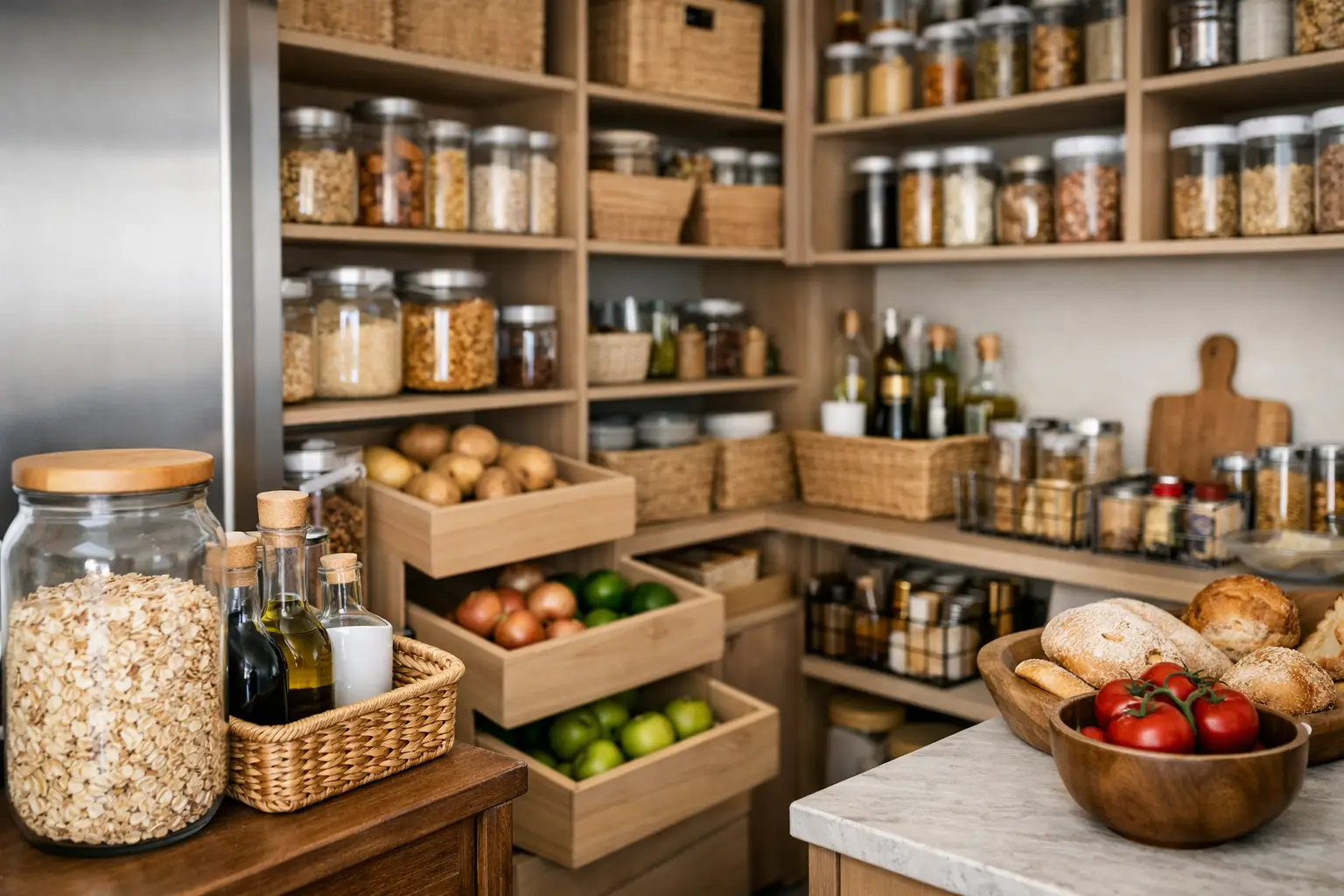
A pantry can look full even when it is not working. Cereal gets buried behind snacks, bulk purchases take over the floor, and the ingredients for a simple weeknight meal are spread across three shelves. Knowing how to design pantry storage starts with solving those everyday frustrations, not choosing containers first.
A well-designed pantry makes the items your household uses most easy to see, reach, and put away. It also gives less frequently used supplies a sensible home, so your kitchen stays calmer during busy mornings, grocery trips, and family dinners.
Start with how your household uses food
Before measuring shelves or choosing finishes, take a realistic look at what belongs in the pantry. A family that cooks most meals at home needs more room for dry goods, oils, spices, and baking supplies than a household that relies on prepared meals. If you buy in bulk, storage for large packages and backup supplies needs to be part of the plan from the beginning.
Pull everything out if possible, then group it by how it is used. Everyday breakfast foods, lunchbox snacks, dinner staples, baking ingredients, beverages, entertaining supplies, and small appliances often need different types of storage. This step reveals what is truly taking up space and what has been forgotten in the back.
It also helps to identify items that do not belong there. Paper goods, pet food, cleaning products, and seasonal serving pieces may fit in a pantry, but they should be assigned their own zone. Food should not compete with household supplies for the same shelf.
How to design pantry storage around reach and routine
The most valuable pantry space is between waist and eye level. Reserve that area for the foods your family reaches for several times a week. Dinner ingredients, snacks, breakfast items, and school-lunch supplies should be visible without moving other products out of the way.
Higher shelves are better for serving dishes, holiday items, extra paper towels, or backup groceries. Lower shelves can hold heavier items such as canned goods, bottled drinks, small appliances, and bulk packages. If young children help themselves to snacks, a lower, clearly defined snack area can make daily routines easier while keeping glass containers and sharp tools out of reach.
Shelf depth matters just as much as shelf location. Very deep shelves can create hidden rows of food that expire before anyone sees them. In many pantries, a mix of shallow shelves for cans and jars, standard-depth shelves for boxed goods, and deeper areas for appliances or bulk storage works better than one uniform shelf size.
Adjustable shelving gives a pantry room to change. A shelf sized for cereal boxes may be too tall for canned goods, while baking sheets and platters need vertical clearance that most food shelves do not. Building flexibility into the layout helps the pantry stay useful as your household changes.
Create zones instead of one long wall of shelves
A pantry feels organized when every category has a clear home. Zoning does not require dozens of labeled bins. It means placing related items together and giving each group a storage style that fits what it holds.
For example, a baking zone may include pull-out drawers for flour and sugar, a shelf for mixing bowls, and a narrow vertical space for cookie sheets. A beverage zone may need sturdy lower shelving for sparkling water and a separate place for coffee, tea, and reusable bottles. A meal-prep zone can keep pasta, rice, sauces, and canned vegetables close together.
Consider these common pantry zones when planning your layout:
- Everyday food for breakfast, lunches, and weeknight dinners
- Snacks that children and guests can find without searching
- Baking ingredients, tools, and serving supplies
- Bulk groceries and reserve stock
- Small appliances, including the toaster, blender, or slow cooker
- Nonfood household items, kept separate from edible products
The right mix depends on your habits. A narrow pantry may need fewer, broader zones, while a walk-in pantry can accommodate a dedicated appliance station or a separate area for entertaining supplies.
Choose storage features that make food easier to see
Open shelving is useful, but it should not carry the entire load. The best pantry designs use different storage features for different items.
Pull-out shelves or drawers are especially helpful for lower cabinets and deep pantry sections. They bring cans, packets, and bags forward instead of leaving them hidden behind the first row. They can cost more than fixed shelving, so it often makes sense to use them where access is most difficult rather than throughout the entire pantry.
Angled or stepped shelving can make labels easier to read on canned goods and spices. Narrow shelves on the back of a pantry door can hold wraps, seasonings, and small packets, provided the door has enough clearance to close properly. Vertical dividers keep baking sheets, cutting boards, and trays from becoming a leaning stack.
Clear containers can help with flour, cereal, pasta, and snacks, particularly when packaging is bulky or torn. However, containers are not automatically better for every product. They require refilling, cleaning, and labeling. Use them for foods you buy regularly, and keep specialty ingredients in their original packages when that is more practical.
A few solid-front drawers can be useful for visual calm, but do not hide everything. A pantry works best when you can take in the major categories at a glance. Combining open shelves, pull-outs, and drawers creates both order and visibility.
Plan for heavy items, lighting, and cleanup
A pantry is a working space, so durability matters. Shelves holding cases of drinks, large appliances, or bulk groceries need appropriate support. Avoid loading a long shelf with heavy items unless it is designed for that weight. Keeping the heaviest supplies close to the floor is safer and easier on your back.
Good lighting changes how usable a pantry feels. Shadows make it harder to spot ingredients and can make a well-organized space look cluttered. Overhead lighting may be enough for a small reach-in pantry, while a larger walk-in pantry may benefit from additional lighting near deep shelves or corners. Choose lighting that shows true color and does not create excessive heat near food.
Include surfaces that are easy to wipe clean. Crumbs, cooking oil, and pantry pests are easier to manage when shelving has smooth, durable finishes and the floor remains accessible. Leave some open floor space rather than filling every inch with containers. That makes cleaning simpler and gives you room to set down groceries while unloading.
Measure carefully before finalizing the layout
Accurate measurements prevent a pantry plan from looking good on paper but feeling cramped in person. Measure wall widths, ceiling height, door swings, baseboards, outlets, vents, and any existing trim. In a walk-in pantry, account for aisle space. Shelves that are too deep on both sides can leave little room to turn, carry groceries, or open drawers comfortably.
Door style affects the design as well. A swinging door may limit interior shelving near the opening. Pocket doors and barn-style doors can free up access, but each comes with installation and budget considerations. If the pantry is part of a remodel, think about how the door, kitchen traffic flow, and nearby appliances work together.
A custom storage design is particularly valuable in pantries with sloped ceilings, tight corners, limited depth, or an unusual footprint. Instead of trying to force standard shelving into the room, the storage can be built around the space and the way your family uses it.
Keep the finished pantry easy to maintain
The goal is not a pantry that looks perfect for one afternoon. It is a pantry that stays useful after a busy week. Give every category enough room to grow a little, but not so much room that products become difficult to find. A simple label on a drawer or bin can help everyone in the household put items back in the right place.
When groceries come home, place newer items behind older ones where possible. Check dates occasionally, especially on baking supplies, canned goods, and snacks that get pushed aside. A quick reset before shopping can prevent duplicate purchases and make better use of the food already in your home.
For Quad Cities homeowners, Comfort Concepts QCA can help turn an underused pantry into a storage space designed for real routines, real grocery lists, and a more comfortable kitchen. The best pantry plan is the one that makes putting away groceries and preparing the next meal feel noticeably easier.