
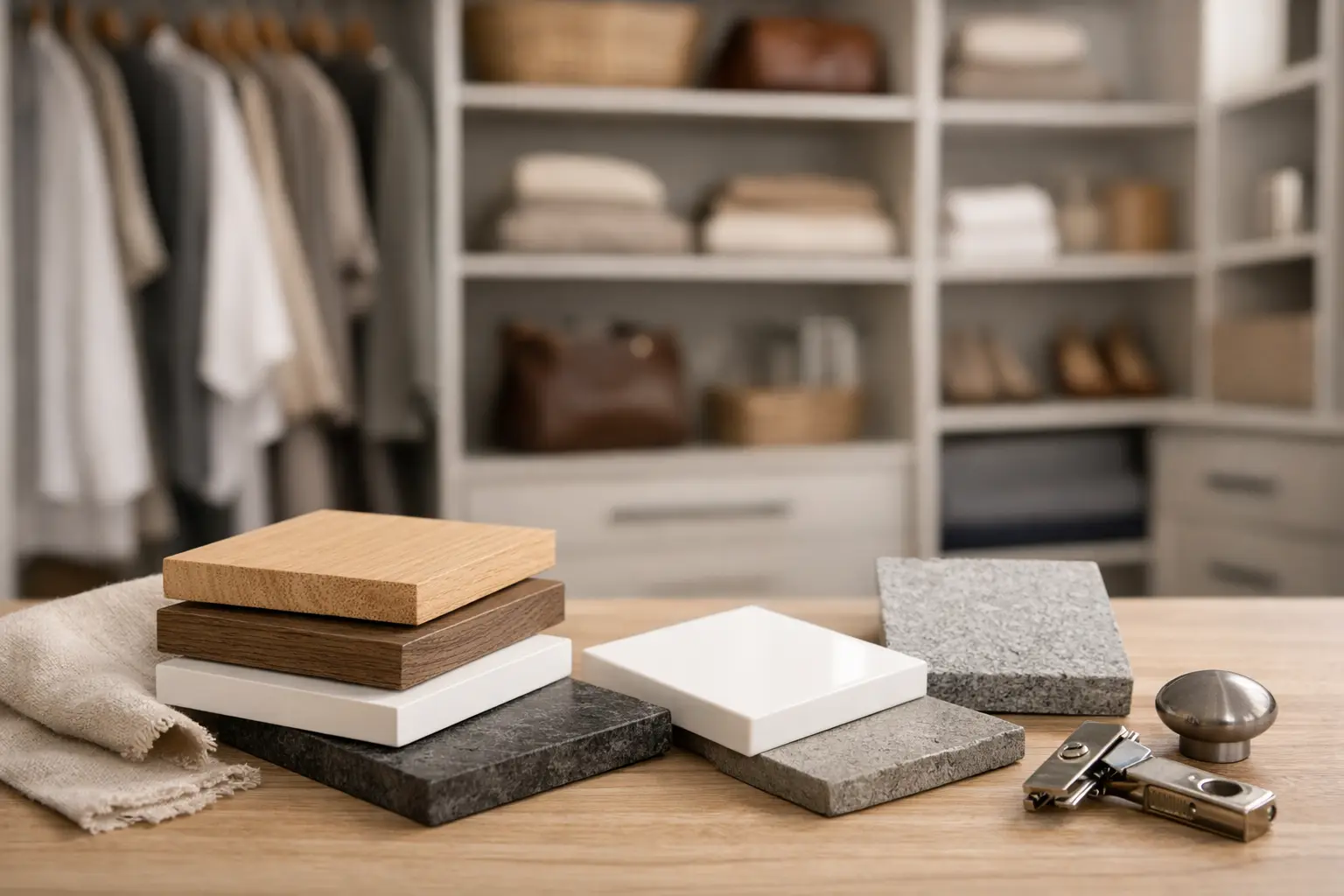
A closet can look great on installation day and still disappoint a few years later if its shelves sag, edges chip, or drawers do not hold up to daily use. Knowing how to choose closet materials helps you invest in storage that works for your family, fits your home, and continues to look cared for through the years.
The right material is not always the most expensive option. It is the option that matches the closet's purpose, the conditions in the room, and the way your household actually uses it. A primary walk-in closet, a child's reach-in closet, and a mudroom storage wall all have different demands.
Start With How the Closet Will Be Used
Before comparing finishes or colors, think about what the closet needs to carry. Long shelves filled with folded jeans, bins, shoes, and linens need more support than a narrow shelf holding a few handbags. Drawers used every morning need durable construction and dependable hardware. A closet for seasonal items may place more value on capacity than on premium finishes.
Consider who uses the space, too. A child's closet may need adjustable shelves and easy-to-clean surfaces. A primary bedroom closet may call for drawers, jewelry storage, lighting, and a finish that complements the room. In a busy family home, materials that resist scratches and are simple to wipe down can be a practical priority.
It also helps to look beyond the closet itself. Is it near a bathroom, exterior wall, laundry room, or garage? Changes in temperature and humidity can affect some materials more than others. In the Quad Cities, homes experience both humid summers and dry winter heating seasons, so a well-built system with properly finished surfaces is worth considering.
How to Choose Closet Materials for Your Home
Most custom closet systems use engineered wood products, solid wood components, metal hardware, or a combination of these materials. Each has a place. The best choice depends on performance, appearance, budget, and maintenance expectations.
Melamine offers everyday durability and design flexibility
Melamine is one of the most common materials used in custom closets. It consists of a resin-coated decorative surface bonded to an engineered wood core, often particleboard or MDF. It is available in a wide range of colors and textures, including clean whites, warm wood looks, and modern neutral finishes.
For many homeowners, melamine provides the right balance of value and performance. The surface is easy to clean, resists many everyday scuffs, and delivers a finished look without the cost of fully painted or solid wood cabinetry. It works especially well for closet towers, adjustable shelving, drawer fronts, and built-in storage throughout the home.
Quality matters. Thicker panels generally provide better support for wider shelves, and properly finished edges help protect the core from wear and moisture. Ask about shelf thickness, edge banding, and how long unsupported shelves can be before additional vertical support is needed. These construction details often matter more than the color sample alone.
Plywood provides strength where loads are heavier
Plywood is made from layers of wood veneer bonded together. It is generally stronger and more stable than standard particleboard, especially for heavy loads or longer spans. It can be a strong choice for shelves expected to hold large collections of books, heavy bins, dense clothing, or bulky household items.
Plywood can add cost, so it may not be necessary for every part of every closet. It is often most useful in areas where additional strength is needed, rather than as a default upgrade throughout the entire system. A thoughtful design can also prevent shelf sag by using appropriate spans, center supports, and hanging sections instead of relying on material alone.
The visible finish is another consideration. Plywood can be painted, stained, or covered with a decorative surface, but its edge appearance differs from melamine. If you prefer a highly uniform, furniture-like finish, discuss how the exposed edges and panels will be finished.
Solid wood adds character, but is not always the practical choice
Solid wood offers natural grain, warmth, and a traditional cabinetry feel. It can be an attractive option for decorative drawer fronts, trim, islands, or luxury dressing room details. It also allows for refinishing in some cases, which can appeal to homeowners planning for a long-term investment.
However, solid wood costs more and responds to changes in humidity. Wood can expand and contract as conditions change, which is normal but requires careful construction. It is not automatically better for every shelf, cabinet box, or closet component. In many well-designed custom closets, engineered materials provide a more consistent finish and very reliable everyday performance.
If a wood look is the goal, a quality textured melamine or wood veneer may provide the appearance you want with a more predictable price and lower maintenance needs.
MDF creates a smooth painted finish
Medium-density fiberboard, commonly called MDF, is an engineered wood product with a dense, smooth surface. It is often used for painted doors, drawer fronts, trim, and decorative components because it does not show wood grain through paint.
MDF can be a good fit when the design calls for a crisp, painted built-in look. It is heavy, though, and it does not handle water exposure as well as some alternatives. It should be well sealed and is usually better suited for dry, climate-controlled areas than spaces with recurring moisture concerns.
For a bedroom closet, MDF may be a sensible choice for selected finished pieces. For a garage, utility space, or area with a history of dampness, ask whether another material would be better suited to the conditions.
Wire shelving has a role in simple, low-cost storage
Wire shelving is familiar, affordable, and allows air to circulate. It can work in utility closets, pantries, linen storage, and rental properties where basic organization is the goal. It is also less likely to trap dust than a solid shelf surface.
The trade-off is comfort and flexibility. Smaller items can tip through the gaps, folded clothes may leave marks, and wire systems do not create the tailored, built-in appearance many homeowners want in a bedroom closet. Wire shelves also offer fewer options for integrated drawers, shoe storage, and concealed storage.
If you are updating a primary closet or creating a more functional family storage space, solid shelving and cabinetry-style components usually provide a more polished and adaptable result.
Look Closely at Edges, Hardware, and Shelf Support
Closet materials are only part of the decision. The components that hold everything together have a direct effect on how the system feels and performs every day.
Edge banding protects exposed panel edges from chips and moisture. Well-applied, durable edge treatment gives shelves and vertical panels a cleaner appearance and helps them stand up to regular use. Thin or poorly bonded edges can become a weak point, particularly near drawers, shoe shelves, and lower areas where people are more likely to bump the surface.
Drawer construction and slides deserve the same attention. Full-extension drawer slides make it easier to reach items at the back, while soft-close hardware reduces slamming and adds a more finished feel. For closets used daily, quality slides and secure drawer boxes are a worthwhile part of the investment.
Shelf support should match the load. Wide shelves need adequate thickness, proper anchoring, and sometimes center dividers or brackets. A closet designer can help prevent common problems, such as a long shelf bowing under stacks of sweaters or storage bins.
Balance Appearance With Maintenance
Your closet should feel like part of your home, not a storage afterthought. White and light neutral finishes brighten smaller closets and make it easier to see clothing. Wood-toned finishes can bring warmth to a primary suite, office, or dressing room. Darker finishes can look striking, but they may show dust more easily in some lighting.
Choose a finish you will be comfortable maintaining. Textured surfaces can hide minor fingerprints and wear, while smooth finishes often provide a cleaner, more contemporary look. If the closet has doors, consider whether the finish should coordinate with nearby cabinetry, flooring, or bedroom furniture.
There is no need to make every component premium. You may decide to use a durable, budget-conscious material for most of the system while reserving upgraded finishes or solid wood accents for a closet island, visible drawer fronts, or a feature wall. That approach can keep the design personal without stretching the budget in places that will not add meaningful daily value.
Work With a Design That Uses Materials Wisely
A material performs best when it is part of a design built around the space. The right hanging heights, shelf widths, drawer locations, and accessory choices can reduce stress on the system and make the closet easier to maintain. Good design also avoids wasted corners and creates room for the items you use most.
At Comfort Concepts QCA, the process begins by understanding how you use the room, what needs to be stored, and what level of finish fits your plans. That makes it easier to select materials based on real needs instead of choosing from samples without context.
Bring a realistic picture of your wardrobe, linens, shoes, and seasonal storage to the planning conversation. A closet that is designed for your actual belongings, built with appropriate materials, and installed with care will make mornings simpler and give your home one less place for clutter to take over.