
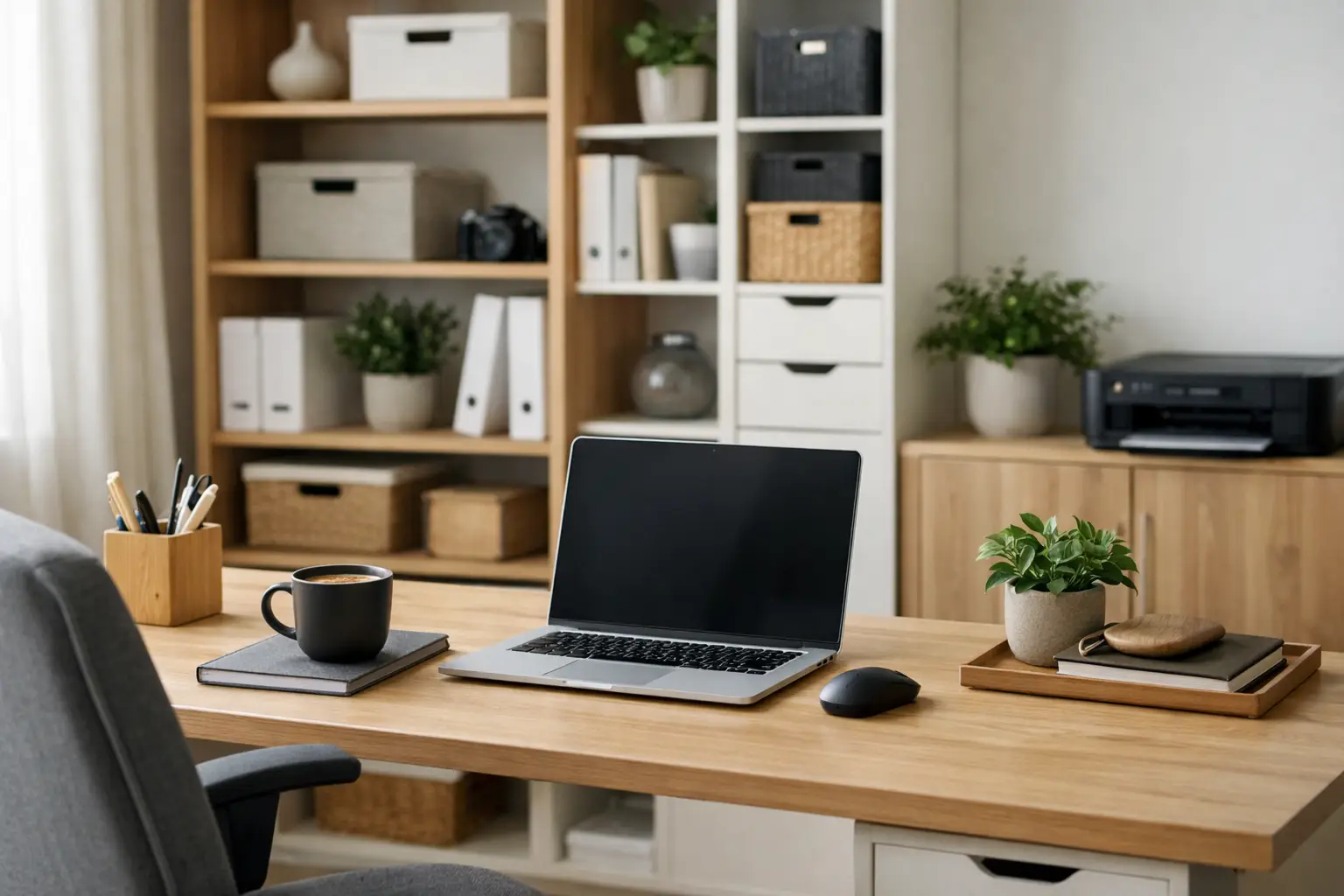
A home office can become the household drop zone faster than almost any other room. Mail lands on the desk, charging cords collect in a drawer, work papers mix with school forms, and the printer ends up wherever there is an open outlet. A thoughtful home office storage guide starts by giving every item a place, so your workday can begin without clearing a path first.
For Quad Cities homeowners, the goal is not to make an office look like a corporate cubicle. It is to create a comfortable, useful room that supports work, household tasks, hobbies, and changing family needs. The right storage should reduce visual clutter while keeping the things you use within easy reach.
Start With How You Actually Use the Room
Before choosing cabinets, shelves, or desk accessories, take an honest look at what happens in your office during a normal week. A remote employee may need room for two monitors, files, a printer, and video-call lighting. A small-business owner may need space for product samples, shipping supplies, and paperwork. A family office may also need a landing place for calendars, bills, and school materials.
Separate your belongings into three groups: items used every day, items used weekly, and items you need to keep but rarely touch. Daily items deserve the easiest access. Weekly items can go in a nearby drawer or cabinet. Archived files, extra paper, and seasonal materials can move to higher shelves or closed storage away from the main work surface.
This step prevents a common mistake: building storage around what looks good instead of what needs to be stored. Open shelves may suit books and a few personal items, but they are rarely the best answer for loose office supplies, cords, or stacks of paper.
Build Storage Around the Work Zone
The desk is the center of most home offices, but it should not be the only storage solution. A desk with shallow drawers is useful for pens, notebooks, chargers, and small electronics. It usually cannot handle all the materials that accumulate in a working household.
Place frequently used supplies within arm's reach. A drawer pedestal, short cabinet, or pull-out organizer near the desk can keep these essentials contained without forcing you to stand up every few minutes. Keep the desktop reserved for current work, your computer equipment, and perhaps one or two items that make the room feel personal.
If you use a printer often, plan a dedicated location rather than placing it on the desk. A printer cabinet can keep the machine at a usable height while storing paper, ink, labels, and manuals below. Ventilation and cord access matter here, especially if the printer is enclosed when not in use.
Choose Drawers for Small, Loose Items
Drawers are the workhorses of office organization. They hide visual clutter and make it easier to sort supplies by purpose. Shallow drawers work well for writing tools, sticky notes, batteries, receipts, and technology accessories. Deeper drawers are better for hanging files, binders, larger notebooks, and spare equipment.
Drawer dividers are worth considering when a drawer holds several types of supplies. Without them, even a new office can become disorganized within a few weeks. The goal is not to create a complicated system. It is to make putting an item away faster than leaving it on the desk.
Use Cabinets for Files and Equipment
Closed cabinets create a calmer office, particularly in a room that is visible from the kitchen, living area, or front entry. They are a practical choice for files, reams of paper, networking equipment, craft materials, and less attractive necessities.
Cabinet doors also give you flexibility. A lower cabinet can hold heavier items and keep them out of sight, while upper cabinets can store supplies you do not need every day. If your office is small, floor-to-ceiling storage can use vertical space efficiently without spreading clutter across the room.
Add Shelving With a Purpose
Shelves can make a home office feel open and finished, but they need limits. Too many exposed items can make the room feel busy, even when everything is technically organized. Use open shelving for books, framed photos, a plant, and a small number of attractive storage boxes.
For working files and miscellaneous supplies, closed cabinetry is often the more comfortable choice. If you prefer a mix, use open shelves above the desk and cabinets below. This creates display space without sacrificing the storage capacity needed for everyday life.
Consider shelf depth carefully. Deep shelves can hold binders and storage boxes, but they can also create a place where items get pushed to the back and forgotten. Shallower shelves are often better for books and display pieces. A custom plan can combine both depths where they make the most sense.
Plan for Paper Before It Takes Over
Most homeowners want a paperless office, but few homes are completely paper-free. Tax records, medical documents, warranties, school information, and business paperwork still need a secure home. A simple filing system is more useful than a large cabinet full of unlabeled folders.
Keep active files close to the desk and archive older records separately. Label folders in plain language so anyone in the household can find what they need. Consider a locked drawer or cabinet for sensitive financial and personal documents.
Paper storage is also a good reason to avoid choosing furniture based only on appearance. A decorative desk may fit the room visually but offer no place for hanging files. If paperwork is part of your routine, build that need into the plan from the beginning.
Do Not Forget Cords, Outlets, and Technology
Technology can undermine an otherwise organized office. Power cords, routers, charging stations, and backup drives need a place to live. Plan cable management early, particularly if the office will include a built-in desk or wall system.
A charging drawer or designated charging station can keep phones, tablets, headphones, and spare cables from taking over the desktop. Keep outlets accessible for equipment that needs frequent charging or occasional resets. It is frustrating to create beautiful storage only to discover the printer cord cannot reach an outlet or a cabinet blocks access to a router.
For video calls, think about what will appear behind you. A tidy cabinet wall, a few well-styled shelves, or a simple display area can provide a more professional background than an open storage unit filled with household supplies.
Make a Small Office Work Harder
A small spare bedroom, loft, or corner office can still offer strong storage when each wall has a job. One wall may hold a desk and upper shelving. Another can hold tall cabinets for files and supplies. Even a narrow space beside a desk can accommodate vertical storage or a slim pull-out cabinet.
Built-in storage is especially helpful when room dimensions are unusual or when you need the office to serve more than one purpose. A wall unit can combine a desk, drawers, file storage, shelves, and closed cabinets in one coordinated layout. It uses wall space that standalone furniture may leave unused.
There are trade-offs. A large built-in system provides the cleanest look and the most tailored storage, but it requires a more deliberate investment than adding a few ready-made pieces. Freestanding furniture can be easier to move if you expect to rearrange or relocate. The best choice depends on how permanent the office needs to be and how much storage the room must carry.
Design for Comfort, Not Just Capacity
An organized office should feel good to use. Choose finishes and colors that work with the rest of your home, especially if the room is open to another living area. Add lighting where you read, write, or review files. Leave enough clear floor space for a comfortable chair and easy access to drawers and cabinets.
Avoid filling every available inch with storage. A room needs some open space to feel calm. The most successful designs balance accessible work tools with closed storage for the items that create visual noise.
For homeowners who want a tailored solution, Comfort Concepts QCA can help turn an underused room or cluttered workspace into a home office built around the way your household works. Start by clearing out what no longer belongs in the room, then let your daily routines determine where everything else should go. A well-planned office makes it easier to focus, finish the day, and close the door on work when it is time to be home.