
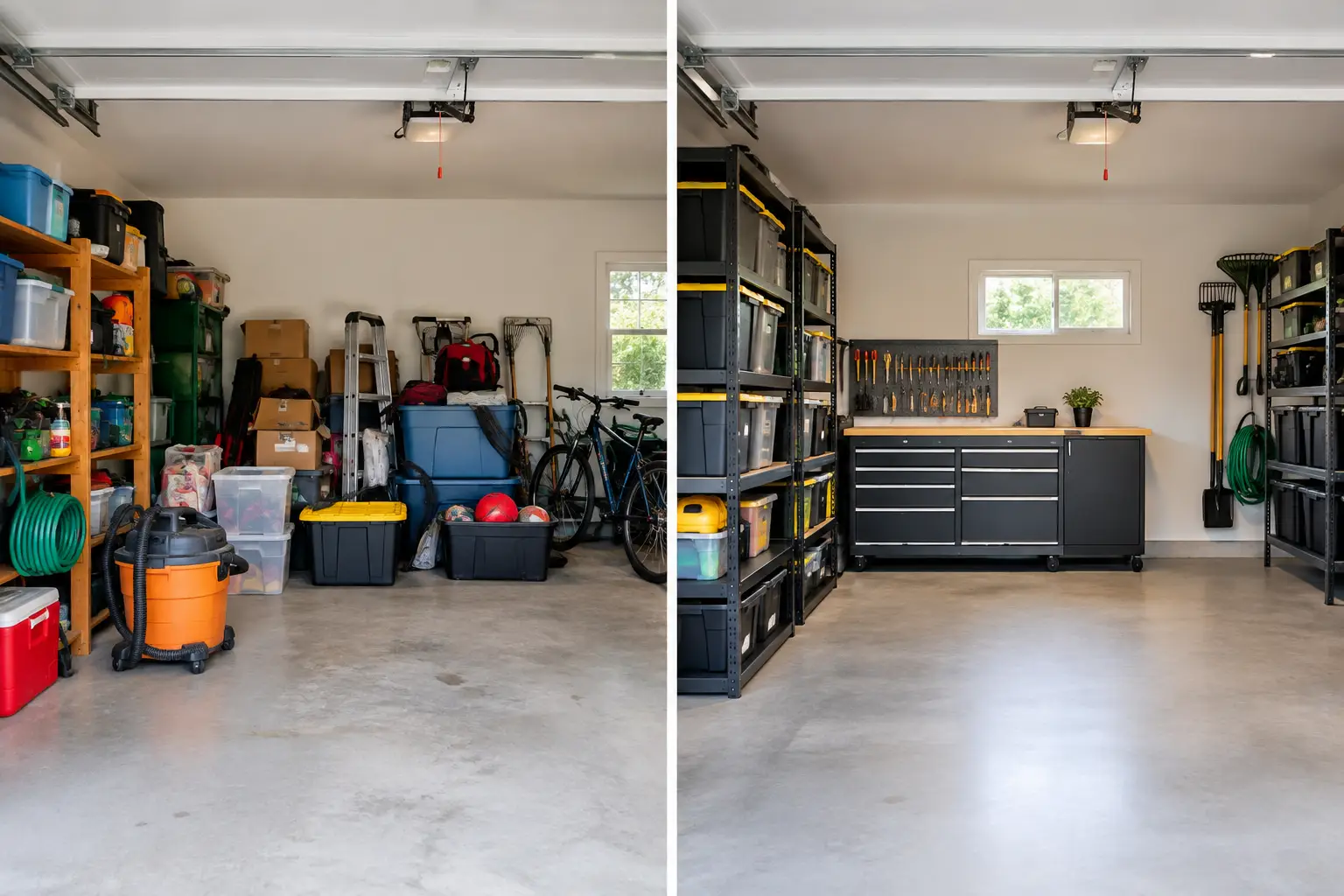
A garage can become the most useful room in the house or the place where everything that does not have a home gets dropped. This garage storage transformation example shows how a practical plan can turn an overcrowded space into dependable storage for vehicles, tools, seasonal items, and everyday family gear.
For many Quad Cities homeowners, the problem is not a lack of square footage. It is that the available space is working too hard in the wrong ways. Loose bins take over parking areas, garden tools lean in corners, and sports equipment becomes difficult to find when the family needs it. A custom storage plan gives each category a place without making the garage feel like a warehouse.
The Starting Point: A Garage That Could Not Keep Up
Consider a typical two-car garage used by a busy family. One side holds a vehicle, while the other side is filled with cardboard boxes, lawn equipment, bicycles, paint cans, hand tools, and holiday decorations. The center of the floor has gradually become the default drop zone for anything that needs to be dealt with later.
The family has shelves, but they are mismatched and too shallow for many of the bins they use. A workbench is buried under supplies. Rakes, shovels, and extension cords are tangled together near the service door. During winter, getting in and out of the car means stepping around salt bags and wet boots. In summer, finding the right yard tool takes longer than the actual task.
This situation is common because garages are asked to serve several purposes at once. They protect vehicles, hold household overflow, support hobbies, and store equipment that cannot live indoors. The answer is not simply adding more shelves. It is designing storage around what the household actually uses and how often they use it.
A Garage Storage Transformation Example, Step by Step
The first step in this project is sorting what belongs in the garage. Items used weekly, such as tools, pet supplies, sports gear, and lawn equipment, need to stay easy to reach. Seasonal items can be stored higher or farther back. Damaged, duplicate, or unused belongings should be removed before the new system is planned.
That sorting process matters because custom storage should solve a real problem, not organize items the homeowner no longer wants. It also reveals how much storage is genuinely needed. A family that camps every month needs a different setup than a homeowner who mainly wants room for a car and a few garden tools.
After measuring the garage and identifying priorities, the design can be built around three zones: daily-use storage, project and tool storage, and seasonal storage. These zones make the room easier to maintain because everyone knows where items belong.
Wall Cabinets Protect Supplies and Reduce Visual Clutter
In this example, durable wall-mounted cabinets are installed along the main garage wall. Closed cabinets hold chemicals, paint, automotive supplies, and smaller tools that would otherwise create visual clutter on open shelves. They also keep materials away from children and pets when appropriate safety practices are followed.
Cabinets do cost more than basic freestanding shelving, so they are not necessary for every garage. However, they make sense when homeowners want a cleaner appearance, need protected storage, or have supplies that should not be left exposed to dust and temperature changes.
A mix of cabinet sizes is more useful than one long row of identical boxes. Tall cabinets can hold brooms, rakes, and folding chairs. Base cabinets provide storage below a work surface. Smaller upper cabinets keep frequently used supplies within reach without taking up valuable floor space.
A Real Work Area Makes Projects Easier
The cleared workbench becomes a dedicated project zone. A durable countertop sits over base cabinets, providing room for simple repairs, potting plants, or assembling school projects. Drawers organize hand tools, hardware, tape, and measuring equipment so they are not lost in a large bin.
The work area does not need to be oversized to be useful. For homeowners who rarely complete projects in the garage, a compact counter with a few drawers may be enough. For someone who does regular woodworking, bike maintenance, or home repairs, a longer work surface and more specialized storage may be worth the added investment.
The key is leaving the countertop open. If every flat surface becomes storage, the garage returns to its old habits. Designating cabinets and drawers for supplies gives the work area a purpose and makes it easier to put things away after a project.
Slatwall Keeps Frequently Used Gear Off the Floor
A slatwall panel system is installed near the service door, where the family naturally enters and exits the house. Hooks, baskets, and holders keep rakes, shovels, helmets, folding chairs, and extension cords visible and easy to grab. Bicycles can be stored on appropriate wall-mounted hooks when wall structure, bike weight, and family access are considered.
This is one of the biggest changes in the garage storage transformation example because it frees up the floor. When tools are hung at a usable height, the garage is easier to sweep, safer to walk through, and more likely to stay organized.
Open wall storage does involve a trade-off. It is convenient, but it can look busy if too many items are left on display. A thoughtful combination of slatwall for active gear and closed cabinets for smaller supplies gives the garage a more finished appearance.
Overhead Storage Handles the Seasonal Load
Holiday decorations, coolers, extra household paper goods, and seasonal sports equipment move into overhead storage. This area is reserved for items that are used only a few times a year, not the things a homeowner needs every Saturday.
Overhead racks are especially valuable in garages with adequate ceiling height, but they must be professionally planned and securely installed. Weight limits, garage door clearance, ceiling framing, and safe access all need attention. Overloading a high shelf or storing heavy items where they are difficult to lower is not a practical solution.
Clearly labeled bins make overhead storage work better. Instead of opening several containers to find string lights or winter gloves, the family can identify what they need before pulling anything down.
The Result: More Than a Cleaner Garage
Once the storage system is in place, the family gains usable floor space for both vehicles. Lawn equipment has a home. Sports gear can be returned by children without a complicated system. Tools are easier to find, and the work area is available when a repair comes up.
There is also a comfort benefit that homeowners often notice right away. Coming home through an organized garage feels less stressful than navigating piles of belongings. The space becomes easier to clean, easier to use, and more welcoming for the people who rely on it every day.
A well-planned garage can also support long-term home upkeep. Paint and repair supplies are easier to locate. Outdoor equipment is less likely to be damaged by being left in the wrong place. When storage is designed around the household, it is simpler to keep the garage from slowly becoming cluttered again.
What Makes a Garage Storage Plan Last
The best garage system is not necessarily the one with the most cabinets or accessories. It is the one that fits the household's routines. Before choosing finishes, colors, or hardware, think about what comes into the garage, what leaves it, and what tends to collect there.
Allow room for change, too. A family with young children may need space for strollers and bikes now, then sports equipment and school projects later. Homeowners nearing retirement may prefer storage that keeps frequently used items lower and easier to access. Custom design provides flexibility that one-size-fits-all shelving often cannot.
Comfort Concepts QCA helps homeowners create garage storage systems that are measured, designed, and installed for the way they live. A garage does not need to be perfect to be useful. It simply needs a clear plan, durable storage, and enough room for the everyday life happening around it.