
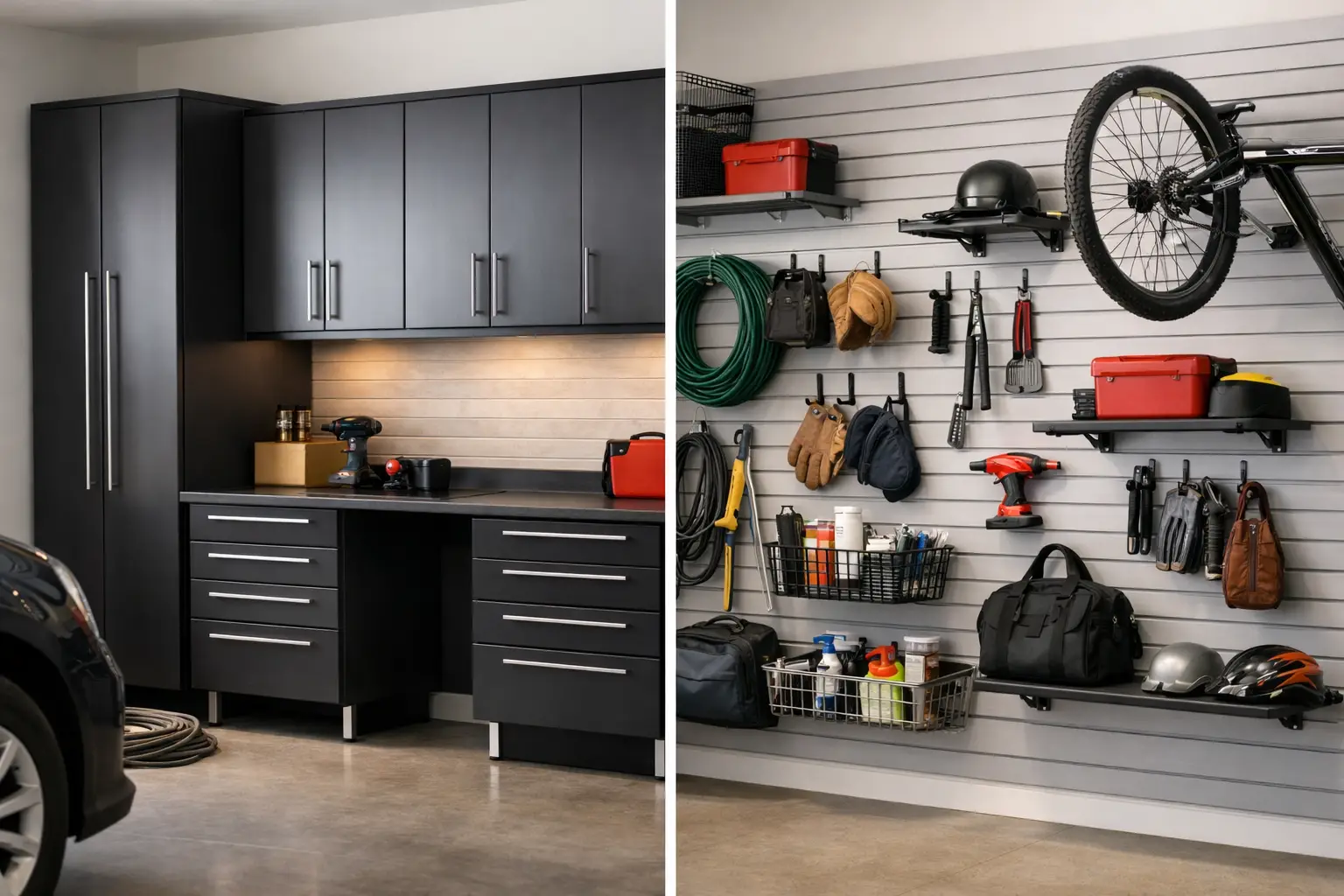
A garage can fill up fast: lawn equipment, sports gear, seasonal bins, tools, cleaning supplies, and the items that never seem to have another home. When homeowners compare garage cabinets vs slatwall, the real question is not which product looks better. It is which system will make daily life easier, protect what matters, and keep the garage from turning back into a catch-all space.
Both cabinets and slatwall can create a more organized garage. They serve different purposes, though. Cabinets hide clutter and protect stored belongings, while slatwall keeps frequently used items visible, accessible, and off the floor. The best choice often depends on what you store, how you use the space, and whether your garage needs to work as a workshop, an entry point, a storage room, or all three.
Garage Cabinets vs Slatwall: The Main Difference
Garage cabinets are enclosed storage units with doors, shelves, drawers, and, in some designs, countertop space. They are built to hold items you would rather not see, such as paint cans, automotive fluids, paper goods, household chemicals, and bulk supplies. A cabinet system gives the garage a finished, furniture-like appearance and helps create clear limits for where things belong.
Slatwall is a wall-mounted panel system with horizontal grooves that hold hooks, baskets, shelves, racks, and specialty accessories. It turns unused wall space into flexible storage. Bikes, rakes, cords, folding chairs, gardening tools, and sports equipment can be hung where they are easy to reach.
The difference comes down to visibility and flexibility. Cabinets provide concealed, protected storage. Slatwall provides open, adjustable storage. Many well-planned garages benefit from both.
When Garage Cabinets Make More Sense
Cabinets are often the right choice for homeowners who want their garage to feel calmer and more finished. If visual clutter bothers you, doors make a major difference. Instead of seeing dozens of containers, tools, and supplies every time you pull in, you see a clean wall of coordinated cabinetry.
They are also useful for protecting items from dust, dirt, and the general mess that comes with a garage. This matters in the Quad Cities, where changing seasons can bring road salt, wet boots, grass clippings, and windblown debris into the space. Enclosed cabinets help keep stored items cleaner than open shelving or exposed hooks.
Cabinets work well for heavy and sensitive items
A quality cabinet system can hold a wide range of household and garage supplies, especially when it is professionally designed around the intended load. Drawers are convenient for hand tools, hardware, and smaller equipment that would otherwise get lost in bins. Deep shelves can accommodate larger containers, while tall utility cabinets create a home for brooms, mops, vacuums, and long-handled tools.
Cabinets are also a better option for items that should be stored out of sight and out of easy reach of children. Cleaning products, chemicals, sharp tools, and automotive supplies can be placed in higher or lockable cabinets when appropriate.
The trade-offs with cabinets
Cabinets take up more wall and floor space than a slatwall system. They also tend to cost more because they use more material and require a more detailed design and installation process. Once the cabinet layout is installed, it is less flexible than moving a hook or basket on a wall panel.
That does not make cabinets a poor value. It simply means they are best for homeowners who want long-term structure, concealed storage, and a polished look. If your goal is to park in the garage again without staring at stacks of totes, cabinets can be a practical investment.
When Slatwall Is the Better Fit
Slatwall shines when you need quick access and want to get bulky items off the floor. It is especially helpful for active households with bikes, helmets, baseball bags, fishing gear, coolers, garden tools, and other items that are constantly moving in and out.
Instead of leaning a shovel against a corner or piling sports equipment near the door, each item has a visible place. That makes it easier for family members to put things away without opening cabinets, searching through bins, or creating another floor pile.
Slatwall adapts as your needs change
One of slatwall's greatest benefits is adjustability. A few years from now, your child may no longer need a scooter rack, or your household may add more gardening equipment. With the right accessories, hooks and shelves can be repositioned without rebuilding the whole storage system.
This makes slatwall a strong choice for garages that serve several roles. A homeowner who uses the space for weekend projects, yard care, vehicle maintenance, and recreation can change the layout as routines change. It also works well in smaller garages because it uses vertical wall space rather than consuming valuable floor area.
The trade-offs with slatwall
Open storage requires more discipline. Slatwall can look neat and organized, but only when items are returned to their assigned hooks and baskets. It does not hide mismatched supplies, loose tools, or overflowing bags. If the goal is a clean visual appearance with minimal effort, cabinets may be more satisfying.
Slatwall also is not ideal for everything. Small loose items, chemicals, seasonal decorations, and supplies that need dust protection usually belong in cabinets, bins, or another enclosed storage solution. The panel and accessories should be selected for the weight and size of the items being stored rather than treated as a catch-all wall.
Consider How You Use the Garage Every Week
The best storage plan starts with habits, not products. Think about what comes through the garage door most often and what tends to get left on the floor. A family that enters through the garage after school, work, and practices may need a drop zone for shoes, backpacks, and sports gear. A homeowner who spends weekends working on vehicles may need durable cabinets, a work surface, and drawers for tools.
Ask a few practical questions before choosing:
- Do you want to hide most of what is stored in the garage?
- Which items need to be grabbed quickly and returned often?
- Are bikes, lawn tools, or sports equipment taking up parking space?
- Do you need secure storage for chemicals, tools, or supplies?
- Will the garage's purpose likely change over the next several years?
Your answers usually make the direction clear. Frequent-use, awkwardly shaped items belong on slatwall. Supplies, tools, and household items that benefit from containment belong in cabinets.
Why a Combined System Often Works Best
For many Quad Cities homeowners, choosing between cabinets and slatwall does not have to be an either-or decision. A combined system provides the benefits of both: cabinets along one wall for enclosed storage and a slatwall section near the garage entry or work area for everyday equipment.
For example, tall cabinets can hold cleaning supplies, seasonal bins, and yard-care products. Base cabinets with a durable countertop can create a place for projects or potting plants. Above that work area, slatwall can hold frequently used hand tools, extension cords, and small accessories. On another wall, bike hooks and sports racks can keep larger items off the ground.
This approach creates zones. Each category has a home, and the floor stays clearer for vehicles, safer walkways, and easier cleaning. It also avoids using expensive cabinet space for items that are better hung, while keeping visual clutter from taking over the room.
Material and Installation Matter
A garage storage system needs to stand up to real use. Garage conditions can be harder on materials than interior closets because of temperature swings, humidity, moisture, dirt, and heavier loads. The right system should be designed for the environment, securely installed, and matched to the wall construction and items being stored.
It is also worth planning for clearance. Cabinet doors need room to open, slatwall accessories should not interfere with vehicle doors, and stored equipment should not block pathways or access to utilities. A layout that looks good on paper can become frustrating if it ignores how vehicles, people, and equipment move through the garage.
Comfort Concepts QCA designs garage storage around the way each household actually uses the space. A measured, custom plan can help avoid wasted corners, inaccessible shelves, and the common mistake of adding storage without solving the clutter problem.
Start With the Items That Cause the Most Frustration
You do not need to organize every box in the garage before making a decision. Start with the items that repeatedly create trouble: the bikes blocking the car, the tools scattered across a bench, the sports gear by the entry door, or the bins that are difficult to reach. Those pain points will show whether cabinets, slatwall, or a combination will bring the most relief.
A well-organized garage should support your routine, not add another chore to it. When the right storage is built around the way your family lives, putting things away becomes simpler and coming home feels a little more comfortable.