
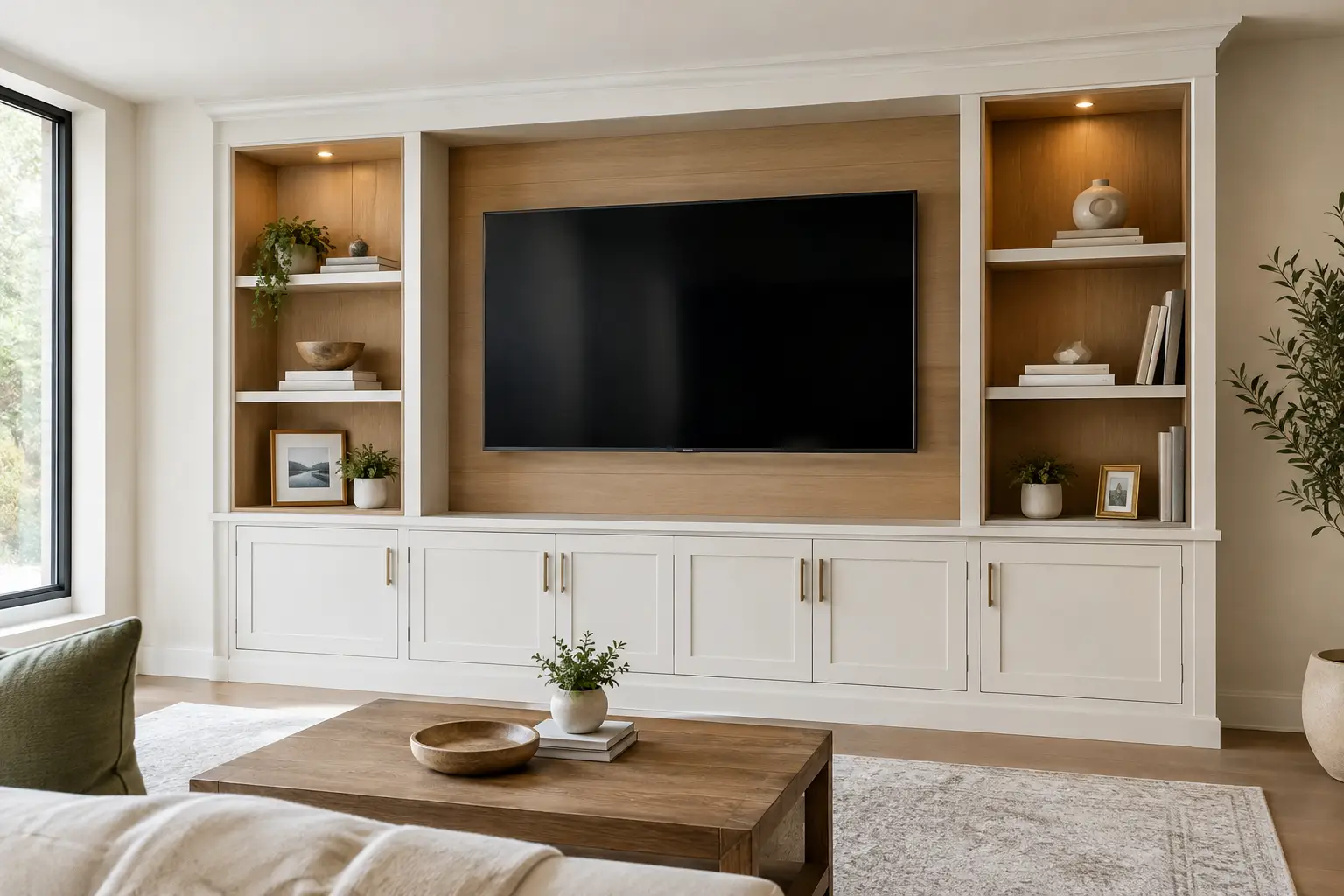
A television is often the center of family downtime, but the space around it can quickly become a catchall for cords, game consoles, remotes, books, and items with no clear home. Well-planned entertainment center built ins turn that wall into useful storage while giving the room a calm, finished appearance. For Quad Cities homeowners, they can also make a family room, basement, or living room work better through every season.
Unlike a freestanding media console, a custom built-in is designed around your room, your equipment, and the way your household actually spends time there. The result is not simply a place to mount a TV. It is a storage solution that helps the room feel more comfortable and easier to maintain.
What Entertainment Center Built Ins Can Solve
Most homeowners start thinking about a built-in when the current setup feels crowded or unfinished. A small stand may leave empty wall space on both sides, while an oversized unit can make the room feel closed in. Cords may hang below the television, and media equipment often competes with family photos, toys, blankets, and books for the same limited surface.
A custom entertainment center gives each of those items a defined place. Closed base cabinets can hold games, controllers, movies, blankets, and everyday clutter. Open shelves can display books and meaningful decor without taking over the room. A dedicated compartment can keep a soundbar, cable box, router, or gaming system accessible while reducing visual noise.
The goal is not to fill every inch of wall space. It is to create a layout that makes the room easier to use. In a busy household, that may mean sturdy drawers for kids' items and doors that conceal what does not need to stay on display. In a quieter living room, it may mean balanced shelving, attractive lighting, and cabinetry that complements the rest of the home.
Start With the Room, Not the Television
The TV is important, but it should not be the only factor driving the design. Before choosing cabinet sizes or shelf styles, consider how the room functions on an ordinary weeknight. Is it where the family watches movies? Is it a formal living room used when guests visit? Does the wall also need to store office supplies, board games, or books?
Room size matters as well. In a smaller room, a light finish, shallower cabinetry, and a more open design can prevent the built-in from feeling heavy. In a large basement or great room, a wider system with substantial lower cabinets may give the wall the visual weight it needs. Ceiling height, nearby windows, fireplaces, vents, and doorways all affect what will look balanced and what can be installed correctly.
A built-in should also respect viewing comfort. The center of the television should generally sit at a comfortable eye level from the main seating area. Mounting a TV too high can lead to neck strain, especially during long movie nights or game days. A fireplace may create design challenges here. It can be a handsome focal point, but placing a television above it is not always the most comfortable choice. The right approach depends on the fireplace height, the room layout, and how often the TV is used.
Choose Storage That Matches Daily Life
The most useful entertainment center is one that reflects what your family needs to put away. This is where custom design makes a real difference. Rather than accepting standard cubbies or shelves, you can choose storage based on the items that tend to collect in the room.
Lower cabinets are especially practical because they hide the things that make a space look cluttered. Doors work well for larger, less attractive items, while drawers make smaller items easier to sort and find. Adjustable shelves give you flexibility if your storage needs change over time.
Open shelving has a place, too, but it requires some restraint. It is best for items you enjoy seeing: a few framed photos, books, artwork, or a simple collection. If every shelf becomes packed with miscellaneous items, the built-in can create more visual clutter instead of less. Many homeowners prefer a combination of open shelves above and closed storage below for that reason.
Consider these everyday needs during the design process:
- Media components and gaming systems that need ventilation
- Board games, controllers, remotes, and charging cords
- Books, albums, and family keepsakes
- Blankets and pillows for movie nights
- Children's toys or pet supplies that need quick cleanup
It is also wise to think ahead. A household with young children may need more concealed storage now, while an empty-nester may prioritize display shelving or a more furniture-like cabinet style later. A thoughtful plan can adapt without requiring a complete redesign.
Plan for Cords, Power, and Ventilation
A polished entertainment center can lose its appeal quickly if wires are visible everywhere. Planning for cable management from the beginning helps prevent that problem. Equipment compartments need access to power, and cords should have an organized path behind or through the cabinetry.
Devices such as gaming consoles, receivers, and cable boxes also produce heat. Enclosed cabinets may need ventilation openings or a design that allows air to circulate properly. This is a practical detail that is easy to overlook when shopping for a ready-made unit, but it matters for the performance and lifespan of your electronics.
Think about how you use technology, not just what you own today. You may want space for a soundbar, speaker wiring, a streaming device, or charging stations. If internet equipment must remain in the room, a dedicated cabinet can keep it less visible while still allowing access for resets and service calls. Good planning keeps the technology functional without letting it dominate the room.
Select a Style That Belongs in Your Home
Entertainment center built ins should feel like part of the home rather than an added piece of furniture. Finish, hardware, door style, and shelf arrangement all contribute to that result. A clean white or warm neutral finish can brighten a darker family room. Rich wood tones may bring warmth to a traditional space. Modern homes may favor simple slab-front doors and minimal hardware, while a more classic home may call for framed doors and detailed trim.
The choice between painted and wood-grain finishes depends on the room and the look you want. Painted cabinetry can create a fresh, tailored appearance, while wood textures bring natural character and may coordinate with existing flooring or furniture. There is no single best choice. A finish that looks beautiful in a sun-filled living room may feel too dark in a lower-level rec room.
Lighting can add another layer of usefulness. Integrated shelf lighting highlights display items and provides soft evening light without relying on an overhead fixture. It works particularly well in rooms where the built-in serves as the main visual focal point. However, lighting should support the space, not make it feel like a showroom.
Why Professional Measurement and Installation Matter
Built-ins need to look intentional from every angle. That requires careful measuring, sound mounting, and attention to details such as baseboards, outlets, wall conditions, and uneven floors. A wall that appears straight may have small variations that become obvious once cabinets are installed from floor to ceiling.
Professional design and installation also help homeowners avoid costly compromises. A custom plan can account for a nearby return vent, a window that limits cabinet depth, or an outlet that needs to remain accessible. It can balance storage with open space so the unit does not overwhelm the room.
Comfort Concepts QCA designs custom entertainment centers around the home, the household, and the storage challenges that matter most. From the first measurements through installation, the focus is on creating a dependable solution that looks right and works hard every day.
Make the Investment Work for Years
The best built-in is not the one with the most features. It is the one that continues to fit your home after the excitement of the project has passed. Choose durable materials, easy-to-use hardware, and storage that supports your routine rather than a trend. Leave room for a few changes in technology and family life, but avoid adding features you are unlikely to use.
A well-designed entertainment center gives a busy room a sense of order without making it feel formal or fragile. When everything from the remotes to the movie-night blankets has a place, the room becomes easier to enjoy - and easier to come home to.