A pantry can look tidy on move-in day and still create daily frustration. Cereal boxes disappear behind bulk paper goods, small appliances take over the counter, and the shelves never seem to fit what your household actually buys. When deciding on a custom pantry versus prefab solution, the best choice comes down to more than appearance. It should support the way your family shops, cooks, and puts things away.
For Quad Cities homeowners, a pantry is often asked to handle a lot: busy school mornings, holiday baking, warehouse-store purchases, and the extra supplies that make home life run smoothly. Both custom and prefab pantry systems can improve storage. The difference is how closely they fit your space, routines, and long-term plans.
Custom Pantry Versus Prefab: The Main Difference
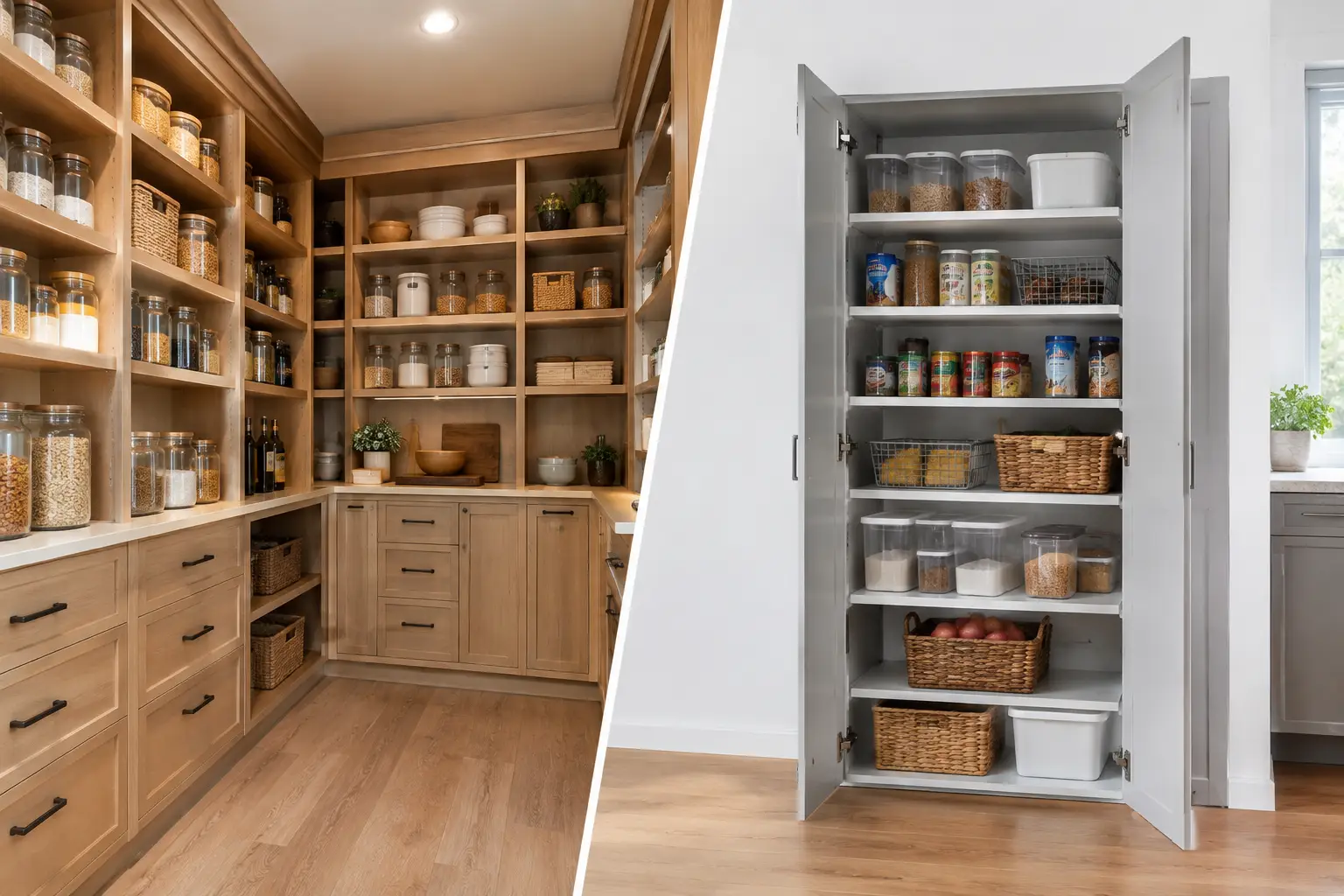
Prefab pantry storage uses standard-size shelving, cabinets, racks, or modular units. These products are typically selected from set dimensions and configurations, then installed within the available space. They can be a practical option for a simple pantry with straightforward needs.
A custom pantry is designed around the room itself and the people using it. Measurements account for wall length, ceiling height, doors, trim, corners, outlets, and awkward areas that standard products may leave unused. Shelving, drawers, pull-outs, and accessories are chosen based on what needs to be stored.
That distinction matters most in homes where the pantry is narrow, deep, shallow, angled, or shared with laundry or mudroom storage. A standard unit may fit inside the room. A custom design is intended to make the entire room work.
When Prefab Pantry Storage Makes Sense
Prefab storage can be a reasonable starting point when the pantry is a clean, rectangular closet and the goal is basic improvement. Adjustable wire shelving, freestanding racks, or ready-made cabinets can add quick organization without a larger design process.
It may also suit a homeowner who needs a temporary solution before a future remodel. If the space will soon be reconfigured, it can be hard to justify a permanent built-in system right away. A prefab option can reduce clutter while you plan the larger project.
Budget is another valid consideration. The initial cost of off-the-shelf storage is often lower, especially when installation is handled by the homeowner. However, it is worth looking beyond the price tag. If the system leaves dead corners, sags under heavier items, or needs to be replaced after a few years, the lower upfront cost may not deliver the value you expected.
Prefab systems also come with design limits. Shelf depths, finish choices, and cabinet sizes are predetermined. You may need to adjust how you store food to match the product instead of choosing a setup that matches your household.
What a Custom Pantry Can Solve
A custom pantry is built to remove the everyday problems that make a kitchen feel less organized. Rather than filling the room with shelves alone, the design can create distinct places for dry goods, snacks, canned food, baking supplies, serving pieces, small appliances, and larger bulk items.
Deep pantry shelves are a common challenge. They hold plenty, but items at the back are easily forgotten. Pull-out shelves or drawers can make those items visible and reachable. Shallow shelves may be better for spices, jars, and cans, while deeper lower storage can handle countertop appliances or cases of beverages.
A custom system can also make use of vertical space without making it difficult to access. Frequently used items can stay at eye level. Less-used serving ware or seasonal supplies can be placed higher. Lower drawers can give children a defined snack area and reduce the need to move everything around to find one item.
For many homeowners, the biggest benefit is not having more storage. It is knowing where things belong. When each category has a practical home, unloading groceries is faster, meal prep feels easier, and food is less likely to expire unseen.
Features Worth Considering
The right features depend on your household, but a thoughtful pantry often combines open shelving with enclosed or pull-out storage. Adjustable shelves provide flexibility as needs change. Drawers keep loose packages contained. Vertical dividers can organize trays, cutting boards, and baking sheets.
Other useful choices include a dedicated appliance shelf, integrated lighting, wine storage, baskets, and durable surfaces that are easy to keep clean. The goal is not to add every available accessory. It is to choose features that solve a real storage problem in your home.
Comparing Cost, Durability, and Value
A custom pantry generally requires a higher initial investment than a basic prefab system. That investment covers professional design, made-to-fit materials, hardware, and installation. It can be especially worthwhile when the room has difficult dimensions or when the pantry is a major part of the kitchen’s daily function.
Prefab products vary widely in quality. Some are dependable for light use, while others may not hold up well under the weight of canned goods, appliances, and bulk purchases. Wire shelving can be affordable, but small items may tip over and heavier loads can create pressure points. Ready-made cabinets may be a stronger option, though they still may not fully use the available space.
Custom storage is designed for long-term use, with materials and hardware selected for the job. It can also improve the overall impression of the home. A pantry that feels intentional, clean, and functional is a practical feature for your family now and a positive detail for future buyers.
That does not mean custom is automatically the right answer for every project. A small pantry with simple needs may work well with carefully chosen prefab storage. The right decision is the one that balances your budget with the level of performance you need every day.
Start With How Your Household Uses the Pantry
Before choosing a system, take a realistic look at what is currently in the pantry. Include more than boxed food. Count small appliances, pet supplies, reusable containers, bottled water, lunch-making items, paper products, and baking tools. These are often the items that overwhelm standard shelves.
Think about who uses the space and when. A family with young children may need accessible snack storage and easy-clean drawers. A household that enjoys cooking may benefit from dedicated baking storage and pull-outs for heavier ingredients. Someone who shops in bulk needs strong, deep lower storage, not just more narrow shelves.
It also helps to consider what is not working now. Are you constantly moving items to reach the back? Do bags and boxes pile up on the floor? Is the pantry too dark to see what you have? Clear answers to those questions make the design direction much easier.
Why Professional Design Changes the Result
Professional pantry design begins with accurate measurements, but it should not end there. The strongest plan accounts for circulation, visibility, reach, storage habits, and the room’s connection to the kitchen. It considers whether a swinging door blocks access, whether a corner can be used effectively, and whether shelves should be fixed or adjustable.
Comfort Concepts QCA approaches pantry storage as part of how a home functions, not as a one-size-fits-all shelving purchase. A personalized design can bring order to a compact pantry or create a more capable storage center for a busy family kitchen.
Professional installation also helps the finished system look intentional and perform reliably. Properly fitted components, secure mounting, and clean finish details matter when storage is used several times a day. The result should feel like a natural part of your home, not an add-on that almost fits.
Choose the Pantry That Reduces Daily Friction
If you need a straightforward, temporary, or low-cost improvement in a simple space, prefab storage may be enough. Choose quality components, avoid overloading shelves, and select dimensions that leave room to access everything comfortably.
If your pantry has wasted space, changing household needs, or recurring clutter, custom storage can provide a more lasting answer. The best pantry is not the one with the most features. It is the one that makes it easier to find what you need, put groceries away, and enjoy a kitchen that feels calmer at the end of a busy day.