
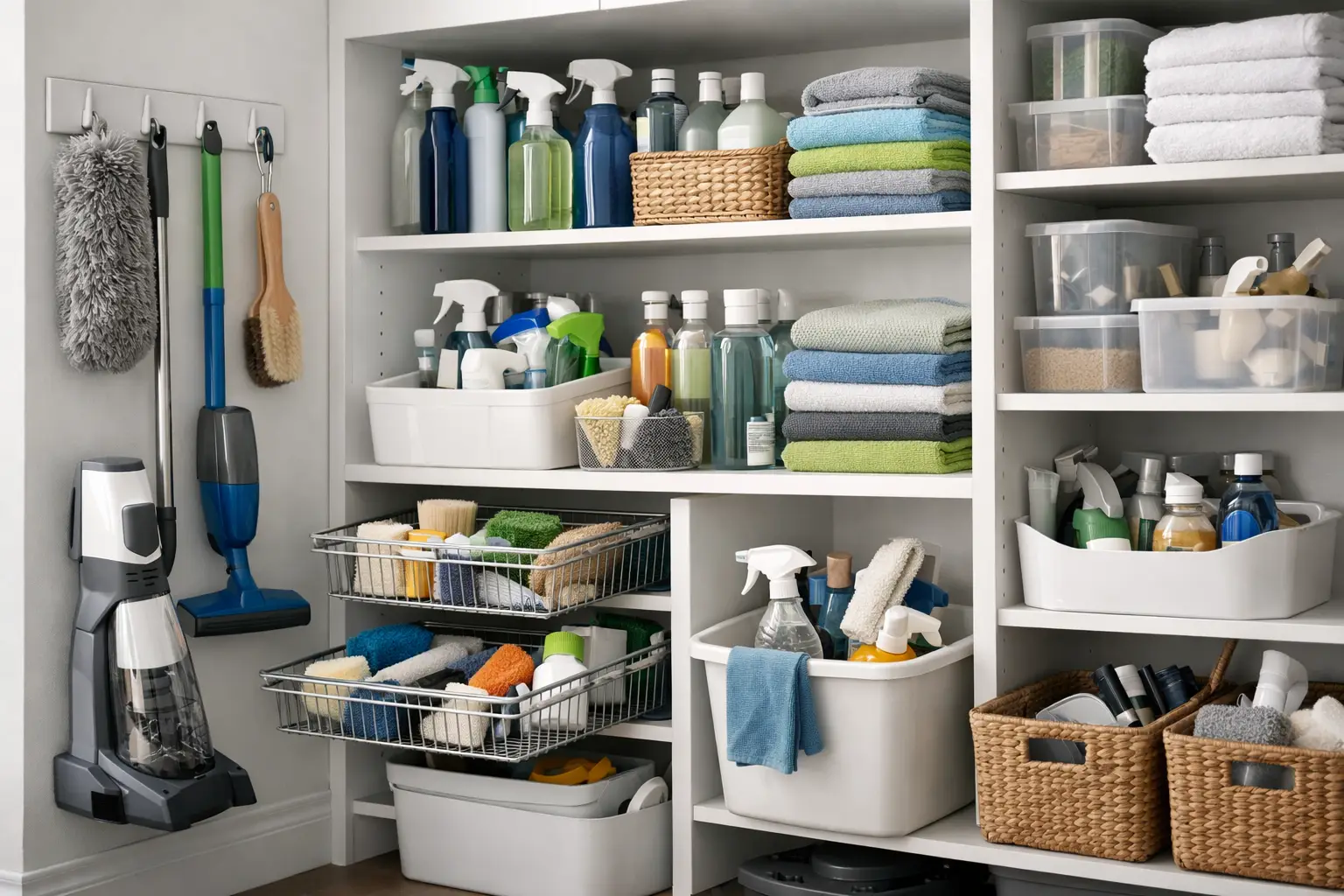
A bottle of cleaner under every sink may feel convenient until you need the right product quickly, discover a leaking container, or find supplies within a child's reach. Thoughtful cleaning supply storage gives routine home care a dependable place to happen. It keeps products contained, protects the rooms where your family spends time, and makes it easier to stay ahead of everyday messes.
For many Quad Cities homeowners, the challenge is not owning too few supplies. It is having them scattered between bathrooms, kitchen cabinets, laundry areas, the garage, and a crowded utility closet. The right storage approach brings order to those small daily tasks without taking away space needed for groceries, linens, coats, or household equipment.
Start With a Safer, Simpler Cleaning Supply Storage Plan
Before choosing bins, shelves, or cabinets, gather your cleaning products in one place and take an honest look at what you use. Most homes have duplicates, nearly empty bottles, expired specialty products, and tools that no longer work well. Clearing those out first gives you a more accurate picture of the storage you actually need.
Separate products by where and how often they are used. Everyday kitchen and bathroom cleaners should be easy for adults to reach, while seasonal items, refills, and less frequently used products can live on higher shelves or in a utility area. This arrangement reduces cabinet clutter without forcing you to walk across the house for a basic spray cleaner.
Safety should shape every decision. Cleaning products should remain in their original labeled containers whenever possible. Avoid placing them near food, pet supplies, or medicines, and do not store products where extreme heat, freezing temperatures, or damp conditions can affect them. A garage can be useful for some supplies, but it may not be the best choice for products that are sensitive to Iowa and Illinois temperature swings.
If young children or pets live in the home, choose a cabinet with a secure latch or place supplies well out of reach. A lockable utility cabinet can be a practical option, especially when a laundry room also serves as a family entry point. The goal is not to make supplies difficult to access. It is to make access intentional and safe.
Choose the Right Location for Each Type of Supply
There is no single best place for cleaning supplies. The right layout depends on your home's floor plan, who uses the products, and whether you want a central supply station or smaller cleaning zones.
A laundry room is often the most effective central location. It already supports household maintenance, and a well-designed cabinet wall can hold cleaners, paper goods, laundry products, mop heads, and a vacuum without making the room feel crowded. Tall cabinets work well for brooms and upright vacuums, while adjustable shelves let you change the layout as your needs change.
Under-sink storage is useful for a limited set of frequently used products. The space is close to the messes you are likely to handle, but plumbing lines can make it awkward. A pull-out tray or shallow bin prevents bottles from disappearing behind pipes and makes it easier to spot leaks before they damage the cabinet base. Keep this area simple rather than trying to fit your entire supply collection underneath one sink.
A hall closet can become an excellent cleaning center when it is planned carefully. Deep shelves alone tend to create piles and lost products. Instead, combine shelves for bulk items with vertical space for tools. A dedicated charging outlet can also be worthwhile if you use a cordless vacuum or rechargeable cleaning equipment.
Mudrooms and garages can handle durable tools, extra paper towels, and outdoor cleanup supplies. However, avoid treating either space as a catch-all. When shelves are filled with sports gear, boots, paint, and cleaning products, it becomes difficult to find anything safely. Clear zones make the space work harder for the household.
Build Around the Tools That Create Clutter
Long-handled tools are usually the first reason a closet stops functioning. Mops, brooms, dusters, squeegees, and vacuum attachments need vertical storage that keeps them from falling into a corner. A tall cabinet with hooks, clips, or narrow pull-out storage can contain these items neatly while keeping the floor open.
Bulky equipment needs its own plan as well. A vacuum may fit best in a tall cabinet, while a compact steam cleaner or carpet cleaner may need a lower shelf with enough clearance to slide in and out. Measure equipment before committing to a cabinet depth or shelf height. This small step prevents a frustrating situation where the storage looks good but cannot hold the equipment you rely on.
For microfiber cloths, sponges, gloves, and small attachments, drawers are often more useful than open shelving. They keep small items clean and visible, especially when divided into simple categories such as kitchen, bathrooms, floors, and dusting. Wire baskets can work too, but they are best for items that do not need protection from dust or moisture.
Use Storage Features That Save Time Every Week
Good storage does more than hide supplies. It cuts down on the small delays that make household chores feel longer than they need to be. You should be able to see what you have, remove one item without moving five others, and put everything back without rearranging the cabinet.
Consider these features when planning a utility room, laundry room, closet, or pantry-adjacent cabinet:
- Adjustable shelves for containers of different heights and future changes to your supply list.
- Pull-out shelves or trays that bring bottles at the back of a cabinet within easy reach.
- Deep drawers for cloths, gloves, refill packs, and smaller tools that get lost on open shelves.
- Vertical compartments for brooms, mops, ironing boards, and vacuum attachments.
- A durable, easy-to-clean cabinet finish that stands up to drips, damp cloths, and regular use.
Labels can help, but they do not need to turn your home into a warehouse. A few clear categories are enough. For example, one drawer for bathroom products and one shelf for refill bottles will make more difference than labeling every individual container. The easier a system is to maintain, the more likely your whole household will use it.
It also helps to think about the cleaning process itself. If you clean bathrooms on one day and floors on another, group the products and tools you need together. If a teenager is responsible for taking out trash or wiping down counters, keep the appropriate supplies in a predictable, accessible location. Storage works best when it supports real routines rather than an idealized version of them.
When Custom Storage Is Worth Considering
Off-the-shelf shelving can be a good solution for a small budget or a temporary need. It is often enough for a simple linen closet or a limited collection of supplies. The trade-off is that standard shelves rarely account for pipes, awkward corners, tall equipment, or the mix of cleaning supplies and household items that many families need to store together.
Custom storage is especially useful when a laundry room, mudroom, pantry, or utility closet has wasted vertical space. Built-in cabinets can create room for cleaning tools while still accommodating coats, pet supplies, laundry baskets, or seasonal items. A design tailored to the room can also include closed storage, open shelves, drawers, and tall compartments in proportions that make sense for your household.
For homeowners planning a remodel or looking to make an existing room more functional, Comfort Concepts QCA can help turn overlooked storage areas into organized, hardworking spaces. The best design begins with how your family uses the room now and what regularly ends up on the floor, counter, or dining table when storage falls short.
Keep the System Working After It Is Installed
Even the best cabinet layout needs occasional attention. Once or twice a year, check for leaking bottles, worn-out sponges, old products, and supplies you no longer use. Wipe shelves clean, confirm labels are readable, and replace anything that has been stored improperly.
Try to buy refills with the available space in mind. Bulk purchases can save money, but only when you have a dry, safe place to keep them without crowding everyday supplies. If a refill does not fit comfortably, it may create more inconvenience than value.
A well-organized cleaning area should make home care feel less like a scavenger hunt. Give each product and tool a practical home, leave a little room for change, and your next cleanup can start with everything already where it belongs.