
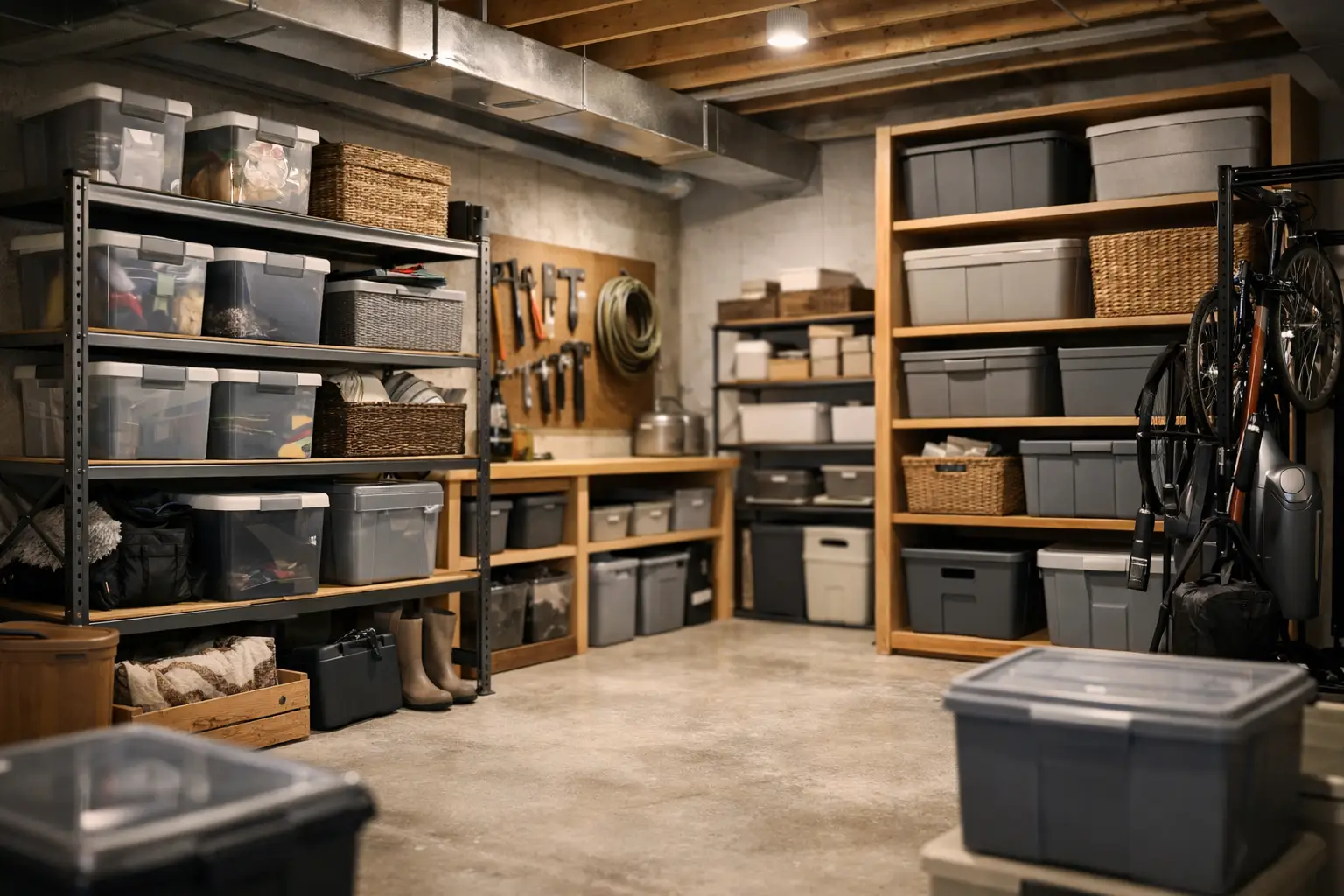
A basement can become the household catch-all in a hurry. Holiday bins, hand-me-downs, tools, sports gear, old paperwork, and items waiting for a “someday” project all land downstairs. The best storage solutions for basements do more than hide that clutter. They protect what you own, keep walkways clear, and make the space easier to use year-round.
For Quad Cities homeowners, basement storage also needs to account for Midwestern conditions. Humidity, occasional water concerns, concrete floors, and changing temperatures can all affect what belongs downstairs and how it should be stored. A good system starts with the room itself, then creates a place for the things your household actually needs to keep.
Start With a Dry, Usable Basement
Storage should not be the first project if moisture is still an active concern. Before adding cabinetry, shelving, or bins, look for signs of water intrusion: damp walls, musty odors, visible mold, floor stains, or boxes that feel soft along the bottom. Address foundation drainage, sump pump, plumbing, or dehumidification needs first.
Even a generally dry basement benefits from keeping stored items off the concrete. Moisture can transfer through floors and walls, especially during wet seasons. Raised shelving, wall-mounted systems, and storage cabinets with a finished base help protect belongings while making the room easier to clean.
This does not mean every basement needs an expensive full remodel. It means the storage plan should match the condition of the space. A finished basement used as a family room needs a different approach than an unfinished utility basement that holds seasonal items and household supplies.
Best Storage Solutions for Basements by Need
The right storage setup depends on what is creating the problem. Most basements need a combination of open access, concealed storage, and a dedicated area for larger items.
Wall-Mounted Shelving for Everyday Access
Wall-mounted shelving is one of the most practical choices for unfinished basements and utility areas. It gets boxes, cleaning supplies, paint, small tools, and backup household goods off the floor. It also keeps the center of the room open for laundry, mechanical equipment, or safe walking paths.
Choose durable shelves with enough depth for labeled bins, but avoid making every shelf too deep. Deep shelves can turn into dark, hard-to-reach piles. A mix of shallow shelves for smaller items and deeper shelving for larger totes is usually more useful.
Open shelving works best for items you use regularly. Think paper products, pantry overflow, gardening supplies, or children’s activity bins. Clear containers or consistent labels make it much easier to find something without pulling down half the shelf.
Closed Cabinets for a Finished Look
If your basement includes a rec room, home office, craft area, or finished living space, closed cabinets can make the room feel calm instead of crowded. They are a smart place for board games, electronics, hobby supplies, extra linens, media equipment, and paperwork.
Cabinets offer visual order, but their value is more than appearance. Custom cabinet interiors can include adjustable shelves, drawers, pull-out storage, and sections sized around the items you need to store. That avoids the common problem of buying a freestanding cabinet that looks good but wastes usable space inside.
For families, closed storage is especially helpful in shared basement spaces. It gives each activity a home, so the room can shift from movie night to homework to hosting guests without clutter taking over.
Heavy-Duty Shelving for Seasonal and Bulk Items
Basements often hold the items that only come out a few times a year. Holiday decorations, camping equipment, coolers, large serving pieces, and winter gear need sturdy storage that can handle weight and volume.
Heavy-duty shelving is a good fit, provided it is anchored correctly and organized with safety in mind. Put heavier items on lower shelves and lighter bins higher up. Keep the things you use most often between knee and shoulder height. This reduces lifting strain and prevents an annual decoration search from becoming a balancing act.
Use matching, lidded bins where possible. Cardboard boxes are inexpensive, but they are less reliable in basements because they absorb moisture, sag, and invite disorganization. Durable plastic containers protect contents better and stack more predictably.
Under-Stair Storage for Awkward Space
The area beneath basement stairs is often overlooked because it is narrow, low, or oddly shaped. It can also be one of the best places for storage when designed intentionally.
Simple shelving may be enough for a utility basement. In a finished basement, custom drawers, cabinets, or a compact closet can turn under-stair space into useful storage for games, pet supplies, cleaning tools, or coats. The best choice depends on headroom and access. A deep cabinet is not very helpful if you have to crawl to reach the back.
Dedicated Zones for Sports Gear and Family Equipment
Loose sports equipment has a way of spreading across a basement floor. Balls roll, bags pile up, and equipment gets forgotten until the next practice. A dedicated zone with hooks, baskets, vertical racks, or labeled cubbies keeps active households more organized.
This approach works for more than sports. Create a defined spot for tools, home repair supplies, school projects, or donation items. When every category has a clear boundary, it is easier for everyone in the home to put things away.
Plan Around Your Mechanical Systems
Basement storage must leave safe, practical access to your furnace, water heater, electrical panel, sump pump, and shutoff valves. Do not build storage so tightly around these areas that routine maintenance becomes difficult. Local codes and equipment manufacturers may require specific clearances, so it is wise to confirm those needs before finalizing a built-in design.
This is one place where flexibility matters. Adjustable shelving can be a better choice than permanent cabinetry near mechanical equipment. You still gain storage, but you retain access if a technician needs to inspect or repair something.
Keep flammable products, chemicals, and paint stored according to their labels and away from ignition sources. Basements are useful utility spaces, but they should remain safe utility spaces.
Make Organization Easy to Maintain
A storage system only works if it is simple enough to use on a busy weeknight. Avoid creating a plan that requires perfect folding, complicated categories, or moving several bins to reach one item. The goal is not showroom perfection. The goal is a basement that supports daily life.
Group belongings by how often they are used. Weekly or monthly items should be easy to reach. Seasonal items can go higher or farther back. Long-term keepsakes should be in well-labeled containers, ideally away from areas with moisture risk.
Labels matter most when other people use the space. Use broad, clear labels such as “winter coats,” “camping,” “tax records,” or “party supplies.” A vague label like “miscellaneous” only postpones the sorting decision.
It also helps to leave some empty space. Filling every shelf edge to edge makes future organization harder. A little room for incoming school papers, a new hobby, or next season’s gear keeps the basement from returning to clutter within a few months.
When Custom Basement Storage Is Worth It
Freestanding shelves and bins can solve straightforward storage needs at a modest cost. Custom storage becomes more valuable when your basement has unusual dimensions, multiple uses, finished living areas, or a family that has outgrown one-size-fits-all solutions.
A professional design can make use of corners, under-stair areas, wall height, and narrow sections that standard products often waste. It can also create a coordinated look between utility storage and finished spaces, without sacrificing the durable construction a basement requires.
Comfort Concepts QCA helps homeowners create storage plans that fit the room, the household, and the way the space is used. The strongest designs are not based on adding more shelves alone. They are based on giving every important item a sensible, accessible home.
A well-organized basement should feel like dependable extra square footage, not a place to avoid. Start with the items that cause the most daily frustration, protect what matters from moisture and damage, and build a system your household can keep using with confidence.