
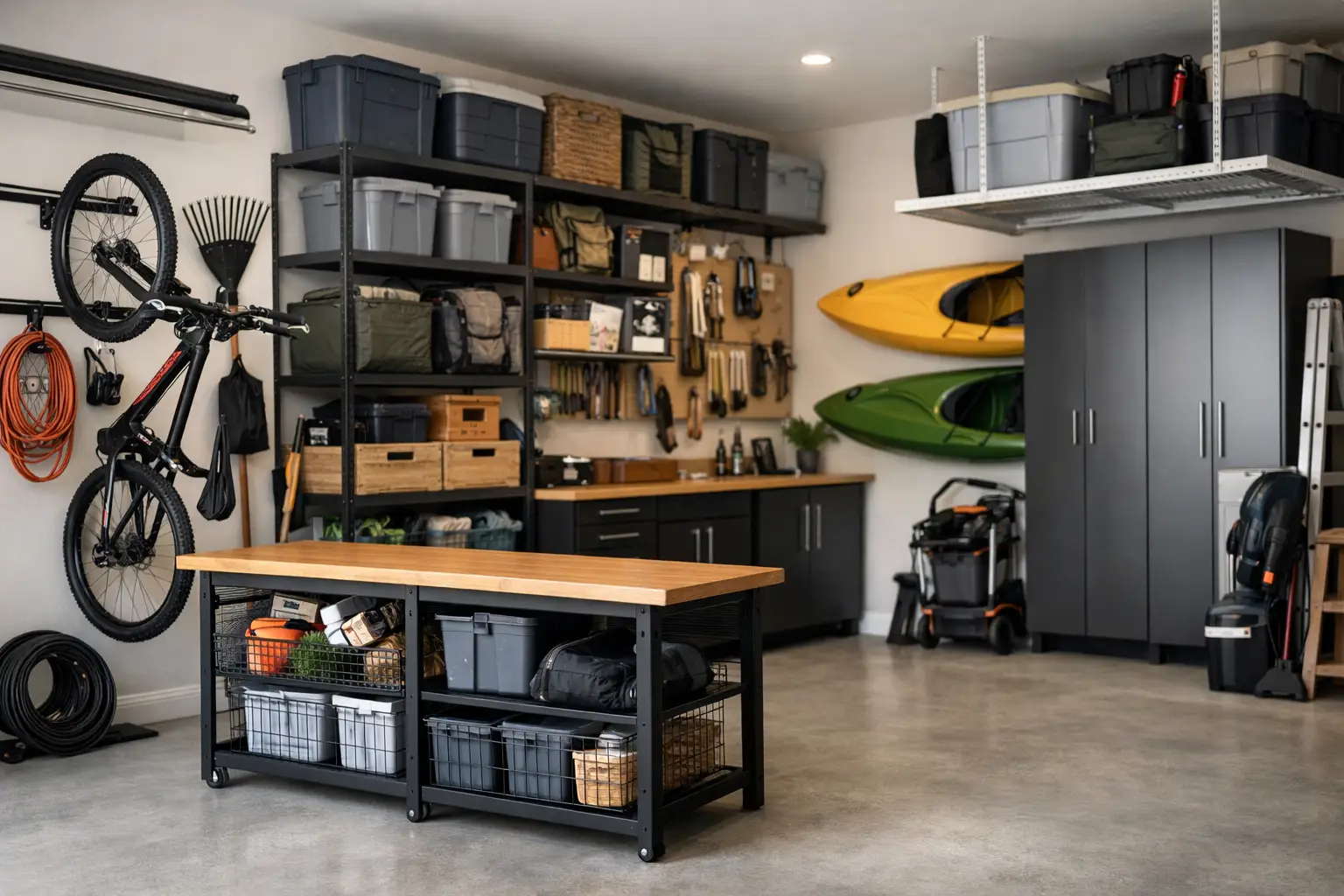
A garage can fill up faster than any room in the house. One weekend project, one season of kids' activities, and a few boxes you plan to sort later can leave no room for the car. The best garage storage ideas do more than hide clutter. They make everyday items easy to find, protect valuable equipment, and help your garage work for the way your household actually lives.
Before buying bins or hanging another shelf, take stock of what belongs in the garage. Tools, lawn equipment, automotive supplies, sports gear, holiday decorations, and bulk household items all need different kinds of storage. A well-planned system gives each category a reliable home without turning the garage into a wall-to-wall warehouse.
Start With a Clear Garage Plan
The most successful garage organization projects begin with an honest look at available space. Measure the walls, ceiling height, door clearance, and the footprint of any vehicles you want to park inside. In Quad Cities homes, it is also wise to consider seasonal changes. Snow shovels, salt, boots, summer lawn tools, bikes, and coolers may all need to rotate through the same space during the year.
Sort items into three groups: things used weekly, things used seasonally, and things rarely needed but worth keeping. Weekly-use items should stay within easy reach. Seasonal items can move higher or farther back. If an item has not been used in years, consider whether it deserves valuable garage space at all.
1. Use Wall-Mounted Cabinets for a Finished Look
Cabinets are one of the best ways to make a garage feel orderly instead of temporary. Closed cabinetry keeps visual clutter out of sight and protects supplies from dust, moisture, and curious children. It works especially well for paint, cleaners, automotive products, small tools, and household overflow.
Cabinets are not the right answer for every item. Large lawn equipment or long-handled tools may need open storage, while frequently used equipment should not be buried behind a crowded cabinet door. A custom cabinet layout can combine tall storage for larger items with drawers and adjustable shelves for smaller supplies.
2. Add a Slatwall or Pegboard for Everyday Tools
Tools are easier to use when they are visible and easy to return. A wall-mounted slatwall or heavy-duty pegboard creates flexible vertical storage for hand tools, extension cords, hoses, rakes, and garden accessories. It also keeps tools off the floor, where they become tripping hazards or get lost under boxes.
Pegboard can be a practical budget choice for a small work area. Slatwall systems generally offer more strength, larger accessories, and a cleaner finished appearance. The best option depends on the weight of what you are hanging and how often your needs change.
3. Create a Dedicated Workbench Zone
A workbench gives home repairs, hobby projects, and quick fixes a place to happen without spreading across the kitchen table. Choose a durable surface with enough depth for the projects you actually do. Include drawers or cabinets below the bench for screws, batteries, fasteners, and power-tool accessories.
Keep the area simple. A bench that is constantly covered in unrelated items stops being useful. Good task lighting and a nearby outlet make the space safer and more convenient, especially during darker winter months.
4. Store Long-Handled Tools Vertically
Brooms, shovels, rakes, leaf blowers, and trimmers are awkward to stack in a corner. Vertical hooks or tool racks keep them separated, visible, and out of the way. Place these items near the garage door if you use them outdoors often.
Make sure hooks are rated for the weight they will hold, particularly for heavier electric or gas-powered lawn tools. Leaving a little space between items prevents handles and cords from tangling every time someone reaches for one tool.
Best Garage Storage Ideas for Overhead Space
The ceiling is often the most underused area in a garage. Overhead storage can be extremely helpful for bulky items that are needed only a few times a year, but it needs to be planned carefully. Never block garage door operation, lights, attic access, or the path of a vehicle.
5. Install Overhead Racks for Seasonal Bins
Overhead racks are a smart home for labeled bins of holiday decorations, camping equipment, seasonal clothing, and keepsakes. Use sturdy, matching bins with secure lids rather than cardboard boxes, which can absorb moisture and weaken over time.
Keep the heaviest items lower whenever possible. Overhead storage is best for lightweight to moderately heavy items that can be safely lifted and retrieved. It is not a good place for frequently used supplies, liquids, or anything that would be dangerous if it fell.
6. Hang Bikes to Free Up Floor Space
Bikes consume a surprising amount of room, particularly in a family garage. Wall hooks, vertical bike racks, and ceiling-mounted lifts can clear the floor while keeping bikes protected. A vertical wall rack is usually easiest for children and frequent riders, while a ceiling lift may work for bikes used less often.
Consider who needs to access the bikes. A storage method that requires an adult to lift every bike may keep the garage tidy, but it can make daily routines harder for the family.
7. Use Ceiling Hooks for Lightweight Gear
Ceiling hooks can store ladders, fishing rods, folding chairs, and other long items that do not fit neatly in cabinets. Install them into properly supported framing and follow the manufacturer's weight limits. For ladders, use a mounting system designed to hold them securely, rather than relying on a single basic hook.
Build Zones Around How Your Family Uses the Garage
A garage works better when it is divided into simple zones. The goal is not to create a showroom. It is to prevent unrelated items from piling together because no one knows where they belong.
8. Set Up a Sports Equipment Station
Sports gear is easier to manage when it stays in one place. Open bins or wire baskets work well for balls, while hooks can hold helmets, bags, and protective gear. A narrow cabinet or vertical rack can keep bats, sticks, and rackets from sliding across the floor.
Place this zone near the door most often used by the family. When kids can put gear away quickly after practice, it is more likely to stay organized.
9. Make a Mudroom-Style Drop Zone
For many households, the garage entry is the real daily entrance. A small drop zone with hooks, a bench, shoe storage, and a shelf for bags can reduce clutter before it reaches the rest of the house. It is especially useful during wet, snowy, or muddy weather.
This area does not need to be large. Even a compact wall system can give coats, boots, pet leashes, and backpacks a consistent place to land.
10. Keep Recycling and Household Supplies Contained
Recycling bins, paper towels, beverages, and bulk purchases can take over a garage if they do not have boundaries. A designated cabinet, shelving unit, or pull-out bin area keeps these supplies accessible without mixing them with tools and outdoor equipment.
Avoid storing items that are sensitive to extreme temperatures, including some foods, medications, candles, and certain cleaning products. Garages can become very hot in summer and very cold in winter.
11. Choose Adjustable Shelving for Changing Needs
Fixed shelves are useful when your storage needs are predictable. Adjustable shelving is better when the mix of bins, equipment, and household items changes from year to year. Look for shelves with a solid weight rating and enough depth to hold containers without allowing them to overhang.
Open shelving makes it easy to see what you own, but it requires a little discipline. Use clear or consistently labeled bins, and avoid stacking so high that accessing one item creates a bigger mess.
12. Leave Room for the Car and the Future
A common mistake is designing storage around every item currently in the garage, leaving no clear parking space or room for future needs. Mark the vehicle footprint before finalizing cabinets, racks, or work areas. Account for door swing, walking paths, and room to carry groceries or move a mower.
Built-in storage should make the garage more useful, not make it feel smaller. A balanced design uses wall height and smart cabinetry while preserving the open floor area that makes daily life easier.
Choose Storage That Holds Up Over Time
The right garage system should handle real household use. Flimsy plastic shelves may be fine for a few lightweight bins, but they can sag under tools, paint, and heavy equipment. Durable cabinets, secure wall hardware, and professionally installed overhead storage provide more confidence, particularly when children are moving through the space.
A custom design is often worth considering when your garage has limited wall space, unusual dimensions, or several competing needs. Comfort Concepts QCA can help homeowners create storage that fits their belongings, their routines, and the space they want to protect for parking.
The best garage is not the one with the most storage. It is the one where every important item has a place, the floor stays usable, and coming home feels a little less crowded.