
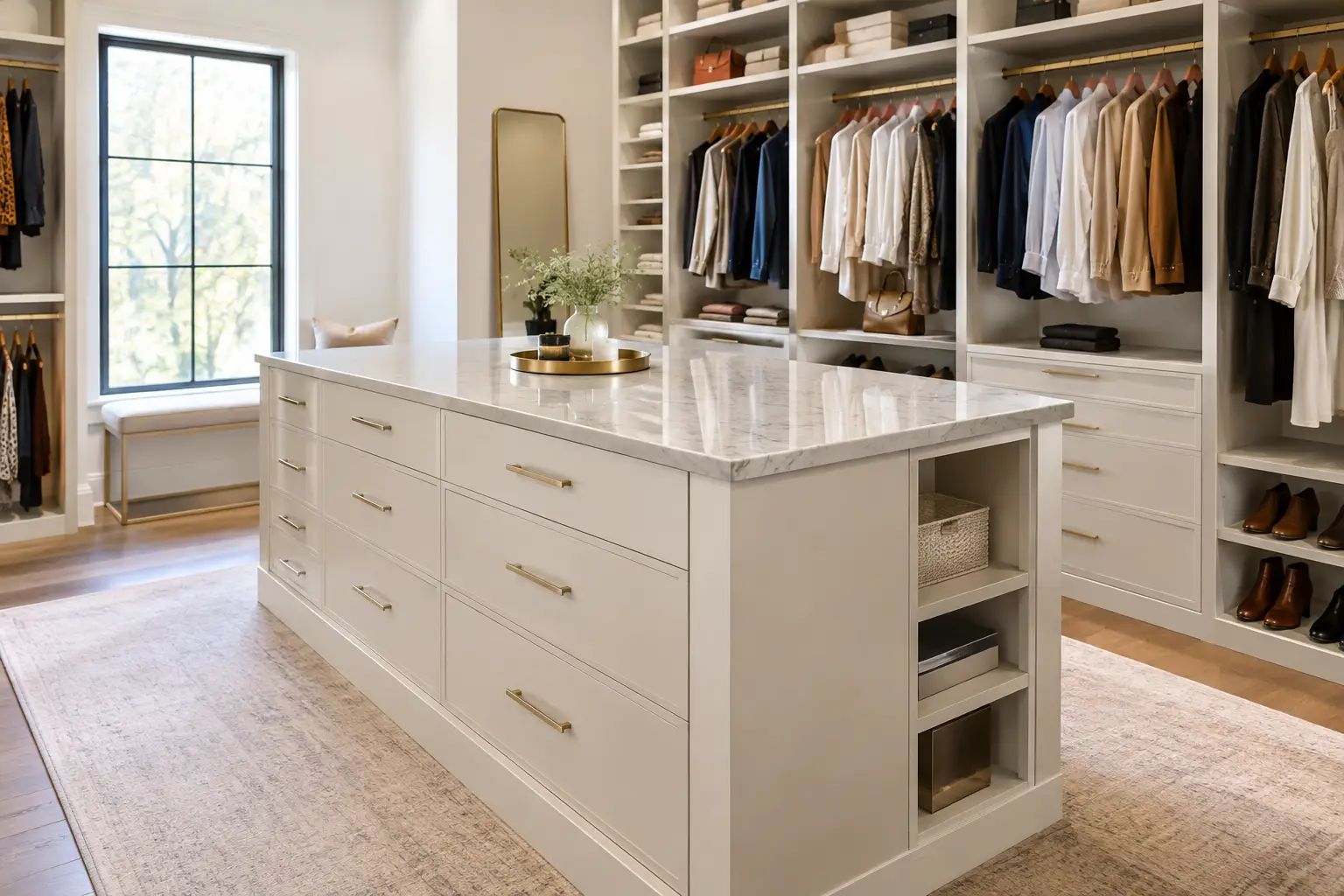
A closet island can turn a large walk-in closet from a room with more shelving into a space that works better every morning. The best closet island features are not always the flashiest ones. They are the details that make clothing easier to find, accessories easier to protect, and daily routines less frustrating.
For Quad Cities homeowners planning a custom closet, the right island should fit the room, support how the household gets ready, and leave comfortable walkways around every side. A well-planned island adds useful storage without making the closet feel crowded.
Start With the Right Island Size
An island only works when there is enough room to move around it comfortably. This is the first decision to make, before choosing drawer pulls, finishes, or accessories. In most walk-in closets, plan for about 36 inches of open space between the island and surrounding cabinetry. More room is even better when two people use the closet at the same time or when doors and drawers open into the aisle.
A large island may look impressive on a plan, but it can be a poor choice if it blocks hanging areas, makes drawers hard to open, or turns the center of the closet into an obstacle course. In a narrower closet, a slimmer island with drawers on one side may provide the storage you need while preserving clear traffic flow.
The island height matters, too. Counter-height cabinetry is a comfortable choice for folding clothes and setting out items for the next day. A slightly lower height can work well if the top will be used as a seated vanity. Your designer should consider the room dimensions, the height of nearby cabinetry, and how you expect to use the surface every day.
Best Closet Island Features for Organized Storage
Deep drawers for folded clothing
Drawers are often the most valuable feature in a closet island. They keep folded T-shirts, sweaters, workout clothes, pajamas, and seasonal items out of sight but within easy reach. Deep drawers are useful for bulkier pieces, while shallower drawers prevent smaller items from getting buried.
The best approach is usually a mix of drawer depths. One oversized drawer may seem convenient, but it can quickly become a catch-all. Several well-sized drawers make it easier to assign a home to each category of clothing and keep it that way.
Velvet-lined jewelry drawers
Jewelry deserves more protection than a standard drawer can provide. A shallow, velvet-lined drawer with divided compartments helps keep rings, watches, earrings, bracelets, and necklaces visible and separated. Instead of searching through a box or untangling chains, you can see your options as you get dressed.
For homeowners who own more jewelry, a locking drawer may be worth considering. It is a practical option for valuables, especially in a shared household or a home with frequent guests or service providers.
Divided drawers for accessories
A simple drawer divider can make a major difference in a busy closet. Sunglasses, belts, ties, scarves, wallets, and small handbags tend to collect in random places without designated storage. Divided drawers keep these everyday items contained and make morning decisions faster.
The most useful inserts are based on what you actually wear. A person with a large watch collection needs different compartments than someone who prefers scarves or carries several pairs of sunglasses. Custom storage should follow your routine, not force you into a generic layout.
Pull-out hampers
A built-in hamper is one of the most practical closet island features for keeping laundry off the floor. Pull-out hampers can be concealed behind matching cabinet fronts, helping the room stay clean and calm even during a busy week.
Two smaller hampers are often better than one large one. They allow you to separate lights and darks, or everyday laundry from delicate items. If your laundry room is on another floor, this feature can reduce clutter and make laundry day more manageable.
Open shelving for grab-and-go items
Not everything needs to be behind a drawer front. Open shelving at the end of an island can provide a convenient place for frequently used purses, neatly folded jeans, a few favorite shoes, or storage baskets. It also adds visual interest and can make a large island feel less boxy.
Open storage requires some discipline. If you prefer a very tidy, low-maintenance look, keep open shelves limited to a few intentional items. Closed drawers and cabinets are usually a better fit for belongings that tend to create visual clutter.
A Durable Countertop Makes the Island More Useful
The top of a closet island is valuable working space. It gives you a place to fold laundry, lay out an outfit, pack for a trip, or set down your phone and keys. A durable, easy-to-clean surface helps the island earn its place in the room.
Many homeowners prefer a countertop that complements the closet cabinetry while offering a little contrast. A light top can brighten a darker closet finish, while a wood-look surface can add warmth to a clean, modern design. The right choice depends on the overall room style, but it should also stand up to daily use.
A raised lip or tray-style top can be helpful if you tend to set jewelry, watches, or small accessories on the island. It creates a subtle boundary that helps prevent items from rolling off the edge. For a dressing-room feel, some homeowners choose a glass insert over a shallow display area. This is attractive for watches and accessories, but it is best for people willing to keep the display neat.
Include Seating Only When the Space Supports It
A bench, stool, or tuck-under seating area can make an island more comfortable. It provides a place to put on shoes, sort laundry, or pause while getting ready. This works especially well in a spacious primary closet shared by two people.
Still, seating is not automatically a must-have. A stool that blocks an aisle or has to be moved constantly can become a nuisance. If space is limited, prioritize storage and walking clearance first. A small upholstered bench outside the closet or near a dressing area may serve the same purpose without reducing the island's function.
Lighting Should Help You See What You Own
Good closet lighting prevents dark drawers, missed clothing, and color confusion on early mornings. Overhead lighting should illuminate the island surface, while integrated drawer lighting can add convenience and a polished look. When a drawer opens, the interior lights up so smaller items are easier to find.
Lighting inside glass display drawers or along open shelving can be beautiful, but it should support daily use rather than add complexity. The priority is clear, comfortable light that helps you choose clothing accurately. Avoid designs that create glare on a glossy countertop or glass top.
Details That Improve Everyday Use
Soft-close drawer hardware is a small upgrade that makes a closet feel quieter and more finished. It protects cabinetry from repeated slamming and is especially welcome in a bedroom suite where one person may be getting ready while another is sleeping.
Drawer fronts and hardware should also fit the home. Sleek bar pulls may suit a modern build, while classic knobs or pulls can complement a more traditional room. Comfort Concepts QCA can help homeowners compare finish and hardware options that coordinate with the rest of the closet instead of competing with it.
Electrical access may also be worth planning into the island. A discreet outlet can be useful for charging a phone, using a steamer, or plugging in a small styling tool. It should be placed thoughtfully and installed according to local electrical requirements. For households that use heat tools often, a dedicated vanity area with proper storage may be safer than relying on the island countertop.
Let Your Routine Decide the Layout
The right closet island is personal. Someone who wears business attire may need drawer space for ties, cuff links, belts, and watches. A family with young children may value laundry hampers and deep drawers for seasonal clothing. A homeowner who travels frequently may benefit from a wide folding surface and an easy-access area for packing items.
Before finalizing a design, think about what collects on bedroom furniture or ends up on the closet floor. Those trouble spots usually point directly to the features your island should include. A closet island should not simply fill the center of the room. It should give the things you use every day a dependable place to land.