
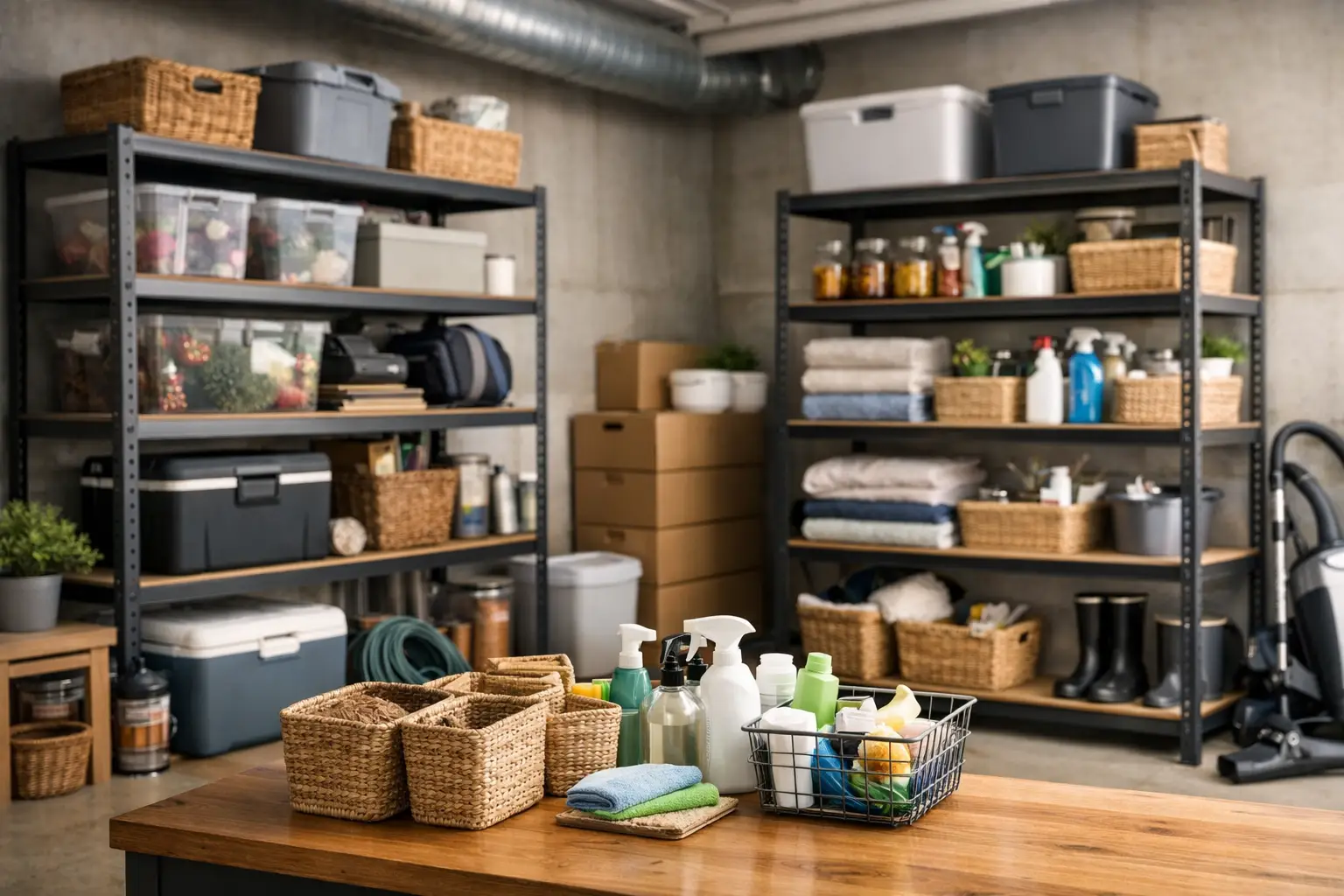
A basement can hold a home's most useful things - holiday décor, tools, family keepsakes, bulk supplies, sports gear, and seasonal clothing - or it can become the place where those items disappear. The best basement shelving makes the difference. It gives every category a defined home, keeps belongings off the floor, and turns an underused lower level into storage that works for your family.
For Quad Cities homeowners, basement storage also has to account for real conditions. Changes in humidity, occasional moisture concerns, concrete walls, exposed utilities, and uneven floor space can all affect which shelving system will perform well over time. A few inexpensive freestanding shelves may solve a short-term problem, but a thoughtful plan delivers a basement that stays organized season after season.
What Makes the Best Basement Shelving?
The right shelving is not necessarily the system with the most shelves. It is the one that fits what you store, where you store it, and how often you need to reach it. Before choosing materials or finishes, take an honest look at the basement's purpose. A finished basement used for family time needs a different approach than an unfinished utility area holding paint, tools, and bins.
Start with capacity. Heavy items such as canned goods, power tools, storage totes, and small appliances require shelves with appropriate weight ratings and secure support. Lighter items, including linens, paper goods, and decorations, can be stored on more flexible shelving. Mixing everything on the same shelf often wastes vertical space and makes it harder to find what you need.
Accessibility matters just as much. Frequently used items should be between waist and shoulder height. Less-used seasonal items can go higher, while large or heavy containers belong on lower shelves. This simple arrangement prevents the familiar cycle of pulling down half the basement just to find one box.
Finally, leave room to move. Shelving that fills every wall can look efficient on paper, but narrow walkways create frustration and make maintenance harder. A clear path to the furnace, water heater, electrical panel, sump pump, and other service areas should always remain open.
Choose Materials That Fit Basement Conditions
Basements can be dry, comfortable spaces, but they are still below grade. That makes material selection especially important. If your basement has a history of dampness, water intrusion, or high humidity, address that issue before installing permanent storage. Shelving can protect belongings from minor everyday risks, but it cannot solve an active moisture problem.
Metal Shelving for Utility Storage
Powder-coated steel or heavy-duty wire shelving is a practical choice for unfinished basements, workshop areas, and utility rooms. It is strong, easy to clean, and less vulnerable to moisture than unfinished wood. Open wire shelves also promote air circulation, which can be useful where humidity is a concern.
The trade-off is appearance. Wire shelving is functional but can make a basement feel more industrial. Small objects may also tip through wire openings unless they are kept in bins. For homeowners storing tools, bins, cleaning supplies, or bulky household items, that may be a reasonable compromise.
Wood or Laminate Shelving for Finished Spaces
Custom wood-based shelving and durable laminate systems are often the better choice for finished basements, storage rooms, hobby spaces, and family areas. They create a cleaner, more built-in look and can be designed around exact wall dimensions, ceiling heights, and awkward corners.
Quality matters here. Materials should be selected with the basement environment in mind, and shelving should not sit directly on a potentially damp concrete floor. A properly designed system can include elevated bases, finished edges, adjustable shelves, drawers, and closed cabinets that keep stored items looking orderly.
Plastic Shelving for Temporary Needs
Plastic shelving can work for lightweight supplies in a dry basement, particularly as a quick solution. It is easy to move and will not rust. However, it usually lacks the load capacity and long-term stability needed for larger household storage projects. It can be useful as a supplement, but it rarely provides the polished, dependable organization most homeowners want from a permanent basement setup.
Plan the Layout Before You Buy Shelves
The most successful basement storage projects begin with a plan rather than a shopping trip. Measure the wall lengths, ceiling height, windows, ductwork, support posts, and mechanical equipment. Note where doors swing and where stairs enter the room. These details determine what can realistically fit without making the area difficult to use.
Then sort what you plan to store by category. Holiday decorations, children's keepsakes, camping equipment, pantry overflow, home maintenance supplies, and laundry items should not be treated as one large pile of "basement stuff." Grouping them first helps you decide how much shelf depth, hanging space, cabinet storage, or drawer space each category needs.
A good basement layout usually places long-term storage along perimeter walls while keeping central areas open. Deep shelves can be helpful for large totes, but they are not ideal for every item. When shelves are too deep, smaller boxes disappear behind larger ones. In many cases, a combination of shallow adjustable shelves and a designated section for large bins is more useful than one wall of extra-deep storage.
If your basement includes a laundry area, consider storage designed around that routine. Cabinets for detergents and cleaning supplies, shelves for towels, and a designated spot for baskets can make a basic utility space far more comfortable to use. For a finished basement, closed storage can keep games, electronics, crafts, and children's items out of sight without making the room feel like a warehouse.
Details That Keep Basement Storage Safer and Easier
Even the best basement shelving needs a few practical safeguards. Keep boxes and loose belongings off the floor whenever possible. Elevating items protects them from minor leaks, condensation, or cleaning water and makes it easier to inspect the floor around walls and mechanical equipment.
Use clear, sturdy bins for items you access often, and label them on the front rather than the lid. You should be able to identify a container without pulling it down. For records, photographs, and family keepsakes, use sealed containers and place them in the driest, most temperature-stable area available.
Avoid storing flammable products, harsh chemicals, or paint near heat-producing equipment. Keep those products in their original containers, follow manufacturer storage directions, and maintain access to any equipment that may need repair or inspection. A well-organized basement should support safe home maintenance, not complicate it.
It also helps to build in room for change. Families accumulate new gear, children outgrow items, and seasonal needs shift. Adjustable shelves make it easier to adapt without replacing the entire system. This is one reason custom storage can be a smart investment: it can be designed for how your household lives now while allowing flexibility for what comes next.
When Custom Basement Shelving Is Worth It
Freestanding shelving works well for some homeowners, especially when storage needs are modest or temporary. Custom shelving becomes more valuable when the basement has odd angles, low ceilings, support columns, limited wall space, or a mix of storage needs. It is also a strong option when you want the area to look finished and intentional rather than crowded with mismatched racks and bins.
A custom design can make use of wall space around obstacles, add storage where standard shelving will not fit, and create a clear system for different categories. Rather than guessing at shelf sizes and hoping everything fits, you can plan for actual household items and the way your family uses the space.
Comfort Concepts QCA helps homeowners create storage solutions that fit the room, the household, and the long-term goal for the home. Whether your basement needs durable utility storage, a better laundry setup, or polished built-ins for a finished living area, professional planning can bring order to a space that has been difficult to manage.
A basement does not need to be perfect to be useful. Start by clearing one wall, identifying what truly belongs there, and choosing shelving that keeps those belongings protected, visible, and within reach. That small change can make the rest of the home feel easier to live in.