
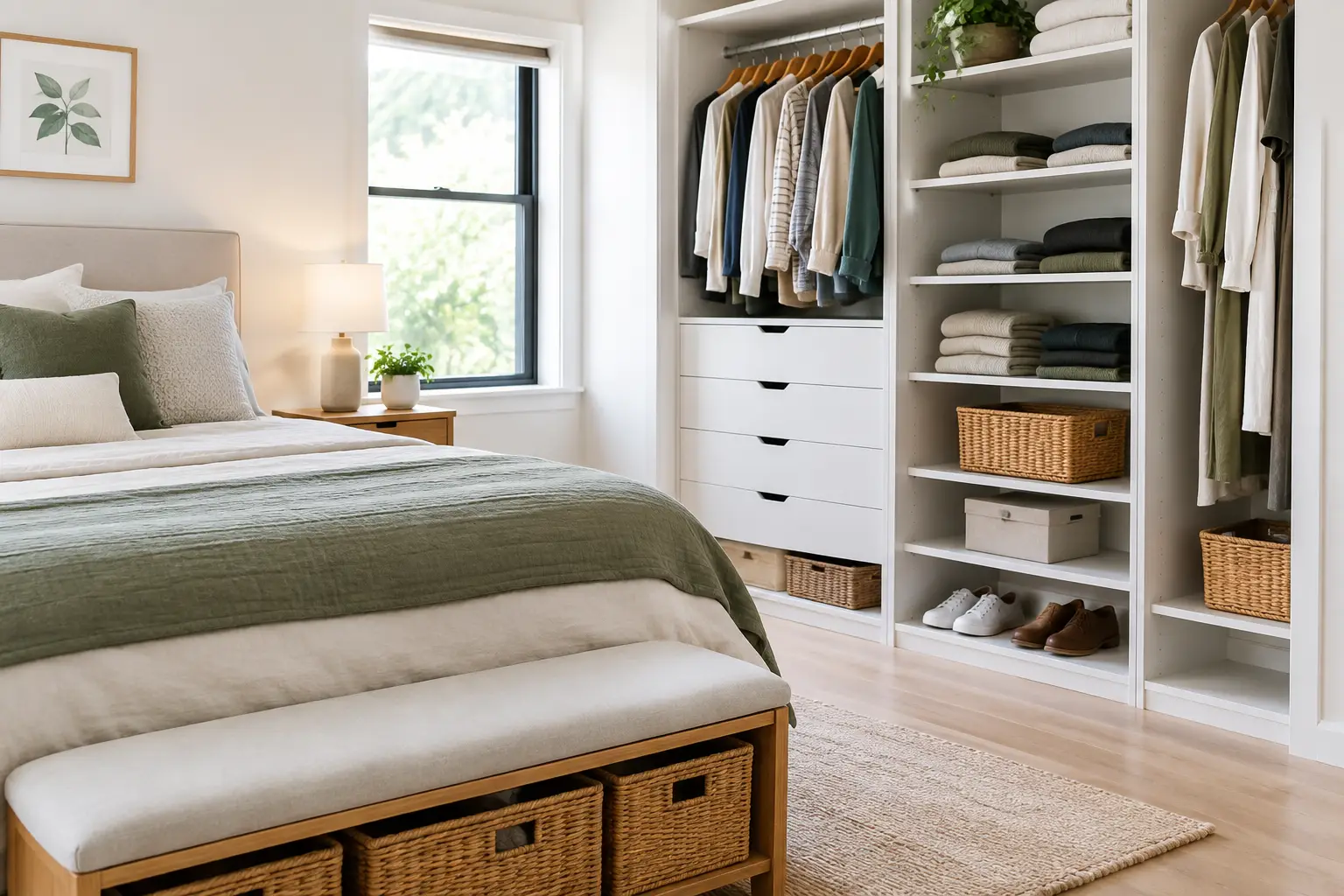
A bedroom can look tidy for an afternoon and still fail you every morning. If getting dressed means moving laundry from a chair, searching through overstuffed drawers, or digging through a closet floor, the issue is not a lack of effort. It is a storage plan that does not match real life. The best bedroom storage ideas make the room calmer because the things you use have an easy, dependable place to go.
For many Quad Cities homeowners, bedroom storage also has to work through changing seasons, busy family schedules, and homes with closets that were built for a different era. A few baskets may help temporarily, but lasting organization starts by deciding what needs to live in the room and how often you need to reach it.
Start With How You Use the Bedroom
Before buying bins or adding furniture, take a clear look at the room's daily traffic. Most bedrooms hold more than clothing. They may need space for extra bedding, off-season wardrobes, shoes, handbags, jewelry, books, workout clothes, laundry, or a child's changing needs.
Separate belongings into three simple groups: items used every day, items used weekly, and items used only seasonally. Daily items deserve the most convenient locations, usually between waist and eye level. Weekly items can go on higher shelves, in drawers, or in nearby furniture. Seasonal items belong in less accessible areas, such as top closet shelves or under-bed storage.
This step keeps a storage project practical. There is no value in creating beautiful shelves that hold items you rarely use while everyday clothes still pile up on a bench or chair.
Bedroom Storage Ideas That Begin in the Closet
A closet is often the hardest-working storage area in the bedroom, yet many are limited to one rod and one shelf. That arrangement wastes vertical space and offers little flexibility for different types of clothing. A better closet layout gives each category its own zone.
Use Double Hanging Space Where It Makes Sense
Shirts, folded pants, skirts, and children's clothing often fit well on two levels of hanging rods. Adding a second rod can nearly double the usable hanging area in part of a reach-in closet. Keep one full-height section for dresses, coats, long garments, or a laundry hamper.
The trade-off is that double hanging does not work for every wardrobe. If you own many long dresses or wear uniforms that must stay wrinkle-free, protect enough full-height space first. The goal is not to fit the most items possible. It is to make getting ready easier.
Add Drawers for Small Clothing and Personal Items
Built-in drawers can solve the common problem of small items drifting from dresser tops to closet shelves. Socks, undergarments, pajamas, workout gear, accessories, and even everyday medications can be organized behind closed fronts instead of in visible piles.
Drawers are especially helpful in smaller bedrooms where a large standalone dresser takes up valuable floor space. They also give children a simple system: one category per drawer, with clothing within reach as they learn to put things away.
Put Shelves to Work, Not Just Storage Bins
Adjustable shelves make a closet more useful as needs change. Folded sweaters, handbags, linens, and labeled bins all need different shelf heights. Shallow shelves are often more useful than deep ones because items do not disappear behind one another.
Open shelves are convenient, but they require a little discipline. If visual clutter bothers you, use matching bins for less attractive items or choose a mix of shelving and closed storage. A custom closet can combine both, giving frequently used items quick access while keeping extras out of sight.
Do Not Ignore the Closet Door and Back Wall
The back of a closet door can hold lightweight accessories, scarves, belts, or shoes when space is limited. It is a good option for a rental or a quick update, but it should not interfere with the door closing or make the closet feel crowded.
In a deeper reach-in closet, the back wall may be the right place for shelves, shoe storage, or a narrow vertical section. Careful measurements matter here. Storage that sticks out too far can make hanging clothes difficult to reach.
Make the Space Under the Bed Earn Its Keep
The area under a bed is valuable, especially in bedrooms without large closets. Low-profile drawers or lidded containers can hold off-season clothing, spare blankets, guest linens, or extra pillows. Choose containers that slide out easily and have a solid lid if dust is a concern.
Under-bed storage works best for items you do not need every day. It is less helpful for belongings that must be retrieved frequently, since repeated lifting and sliding quickly becomes frustrating. If the bed frame sits too low, risers can create extra clearance, but make sure the new height is still comfortable and safe for everyone using the bed.
For a more finished look, consider a bed frame with integrated drawers. This can replace a bulky dresser in a small room, although it requires clear floor space beside the bed for drawers to open fully.
Choose Furniture That Adds Storage Without Adding Clutter
Bedroom furniture should solve a specific storage problem. A storage bench at the foot of the bed can hold extra throws, blankets, or seasonal bedding while providing a place to sit when getting dressed. A nightstand with drawers is usually more useful than a small open table because it keeps chargers, reading glasses, and personal items contained.
In a larger primary bedroom, a dresser or chest of drawers may be the right choice for folded clothing. Tall, narrow chests use less floor area than wide dressers, but wider drawers can be easier for organizing bulky items. Measure wall space, door swings, and walking paths before bringing in another piece of furniture.
Avoid buying storage furniture just because it has compartments. A room crowded with cabinets can feel smaller and become harder to clean. One well-chosen piece that fits the room and supports your routine is better than several pieces that create obstacles.
Create a Better System for Shoes, Laundry, and Bedding
These three categories cause a surprising amount of bedroom clutter because they do not always have an obvious home. Shoes often end up on the floor, laundry collects on chairs, and spare bedding gets crammed wherever it fits.
Give shoes a defined limit, such as a shelf section, cubbies, or a shoe rack at the bottom of the closet. Keep the pairs you wear most often accessible and move special-occasion or off-season shoes higher up. If shoes are stored in boxes, label the front so you can identify them without opening every container.
Use one sturdy laundry hamper where clothes naturally come off, not where you think they should go. For some households, that means inside the closet; for others, it means beside the dresser or bathroom door. A divided hamper can help sort lights and darks, but only if it will actually be used.
Store spare sheets near the bedroom when possible. A labeled closet shelf, drawer, or storage bench keeps linen changes simple. Keeping each sheet set folded inside one of its pillowcases is an easy way to prevent matching pieces from getting separated.
Use Vertical Space Carefully in Small Bedrooms
When floor space is tight, look up. Wall-mounted shelves above a desk, dresser, or nightstand can hold books, framed photos, or a few attractive containers. High shelves around the perimeter of a room can store items used only occasionally, though they should never be overloaded or difficult to access safely.
A wardrobe cabinet can add hanging and drawer storage where a closet is too small or missing. This is often a practical choice in older homes, but it needs to be secured properly, especially in children's rooms. Consider how it will affect natural light, outlet access, and the path around the bed before committing.
Mirrored closet doors and lighter finishes can help a compact bedroom feel more open, but appearance should follow function. A beautiful room still needs enough concealed storage to stay restful.
Plan for Change Instead of Organizing Once
A storage system should be able to change with your household. Children's clothing sizes change quickly. A guest room may become a home office, nursery, or shared bedroom. Retirement, a new hobby, or a move can change what belongs in the primary bedroom.
That is why adjustable shelving, movable dividers, and a mix of hanging, drawer, and shelf storage are worth considering. They allow the room to adapt without requiring a complete rebuild. For homeowners who are ready to make better use of an existing closet or redesign a bedroom storage area, Comfort Concepts QCA can help create a custom arrangement based on the room, the household, and the way it is actually used.
A well-organized bedroom does not need to look like a showroom. It should let you start and end the day without hunting for necessities or stepping around clutter. Choose one trouble spot, give it a clear purpose, and build from there. Small improvements made around your real routine can make the whole room feel more comfortable.